Personality Types Explained: A Comprehensive Guide
Personality Types Explained helps you explore frameworks like MBTI and Big Five. Gain self-awareness and improve relationships by understanding these models.

You’ve probably taken a personality quiz before and wondered, ‘Is this really me?’ Personality types are frameworks that group people by shared patterns of thinking, feeling, and behaving. They simplify human complexity into digestible categories, giving you a starting point for self-awareness and understanding others. This article walks you through the most popular systems, from the ancient four humors to modern assessments like the Big Five, so you can explore which one feels right for you.
Key Takeaways
- Personality types are tools for self-reflection, not rigid labels that define your identity.
- The Big Five (OCEAN) is the most scientifically accepted model in academic psychology.
- Your personality can evolve over time with life experiences and intentional growth.
- No single personality type is inherently better than another, each has unique strengths.
- Use insights from personality types to improve communication, not to stereotype others.
What Are Personality Types?
Personality types are frameworks that group people by shared patterns of thinking, feeling, and behaving. They simplify human complexity into digestible categories, giving you a starting point for self-awareness and understanding others. My tip: treat them as tools for insight, not rigid labels. Every person is more nuanced than any single type, so use these models to explore, not to define yourself or anyone else.
The Roots of Personality Typing
The Roots of Personality Typing
The idea of sorting personalities goes back to ancient Greece. Hippocrates proposed the four humors, sanguine, choleric, melancholic, and phlegmatic, linking temperament to bodily fluids. Fast forward to the 20th century, and Carl Jung introduced concepts like introversion and extraversion, plus thinking, feeling, sensing, and intuition functions. His work became the foundation for many modern systems. These early ideas paved the way for the detailed frameworks we use today, from MBTI to the Big Five.
1. Myers-Briggs Type Indicator (MBTI)
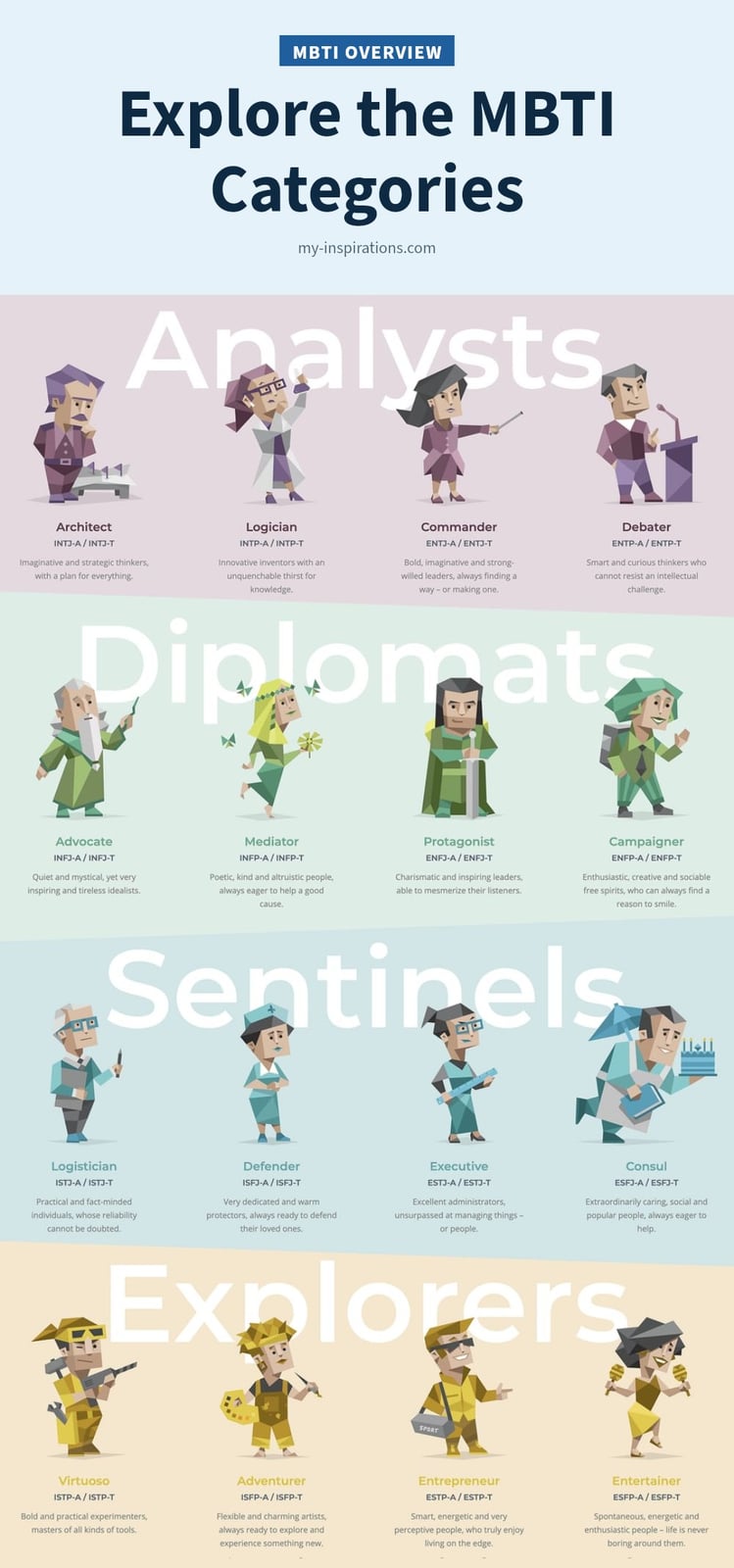
Myers-Briggs Type Indicator (MBTI)
Based on Jung’s theories, the MBTI sorts people into 16 personality types. It uses four dichotomies: Introversion (I) versus Extraversion (E), Sensing (S) versus Intuition (N), Thinking (T) versus Feeling (F), and Judging (J) versus Perceiving (P). Your type is a four-letter code, like INTJ or ESFP. It’s one of the most popular assessments out there, but it does face criticism from researchers about its scientific validity and reliability. Still, many find it a useful starting point for self-reflection.
2. The Big Five Personality Traits (OCEAN)
The Big Five Personality Traits (OCEAN)
In academic psychology, the Big Five model is the gold standard. It’s remembered by the acronym OCEAN (or CANOE): Openness to Experience, Conscientiousness, Extraversion (on a spectrum), Agreeableness, and Neuroticism. Unlike type-based systems that put you in a box, the Big Five measures each trait on a continuum. You might be high in conscientiousness but moderate in extraversion, for example. This gives you a far more nuanced and personalized profile than a single label can offer.
3. The Enneagram of Personality
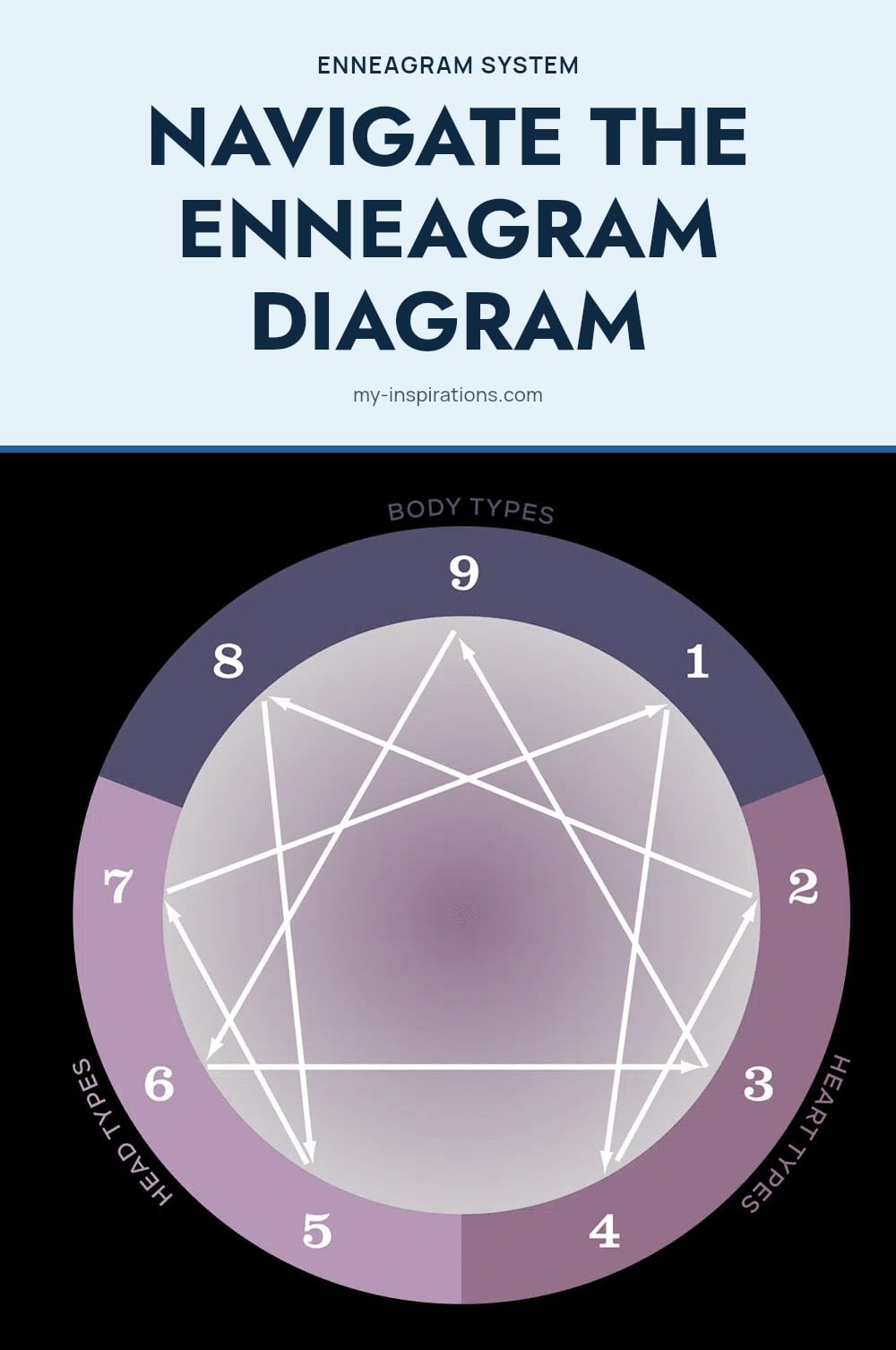
The Enneagram uses a nine-pointed diagram to map nine interconnected personality types. Each type is defined by a core motivation, fear, or desire, not just by surface behaviors. For example, Type 1 is driven by a need to be good and correct, while Type 8 is motivated by a desire for control and independence. Understanding your core drive can reveal why you react the way you do in certain situations. My tip: read the descriptions for all nine types before deciding which one fits you best.
4. DISC Assessment
The DISC assessment sorts behavior into four types: Dominance, Influence, Steadiness, and Conscientiousness. Dominance focuses on results and direct action, Influence on persuasion and enthusiasm, Steadiness on cooperation and reliability, and Conscientiousness on accuracy and structure. It’s widely used in workplaces to improve how teams communicate and handle challenges. Tip: DISC is about observable behavior, not deep personality, so it works well for role-specific feedback.
How Personality Types Can Help You
Understanding personality types gives you a practical lens for everyday interactions. When you know someone’s likely perspective, you can adjust your communication to reduce friction and build trust. Self-awareness is another payoff: recognizing your strengths and blind spots helps you make better decisions in work and relationships. Conflict resolution also becomes easier when you see that a disagreement may stem from different core motivations, not personal flaws. Approach these frameworks as a shortcut to empathy, not a final verdict.
Common Mistakes When Exploring Personality Types
Believing types are fixed: Your personality can shift with life experiences and intentional growth. A label shouldn’t box you in permanently.
Stereotyping others: Use types to understand, not to judge or assume someone will act a certain way every time.
Confusing types with diagnoses: Personality frameworks are not mental health assessments. They describe tendencies, not disorders.
Overlooking nuance: No single type captures every detail of a real person. Treat each framework as a general guide, not a perfect replica.
Ignoring external factors: Environment, upbringing, and current stress levels also shape behavior, so don’t attribute everything to personality alone.
Making the Most of Personality Type Insights
Approach as a tool: Treat personality types as guides for self-reflection, not definitive labels. They offer a starting point, not a final verdict on who you are.
Explore multiple frameworks: Try MBTI, Big Five, or Enneagram to see which system resonates most with your experience. Each highlights different aspects of personality.
Observe and reflect: Use insights to understand others’ perspectives and communication styles. Notice how your own type influences your choices in work and social settings.
Focus on growth: Your personality is dynamic and can change over time. Use these frameworks to identify areas for personal development, not to stay stuck in a box.
Consider career and relationships: Think about how your type might align with certain career paths or relationship dynamics. This can help you make choices that feel more natural and fulfilling.
Frequently Asked Questions
What is the oldest known personality type system?
The oldest known system dates back to ancient Greece. Hippocrates proposed the four humors, sanguine, choleric, melancholic, and phlegmatic, linking temperament to bodily fluids. It’s the earliest recorded framework for sorting personalities.
Can my personality type change over time?
Yes. Your personality can shift with life experiences and intentional personal growth. A label shouldn’t box you in permanently. Think of personality types as a snapshot of where you are now, not a permanent verdict.
Are online personality tests accurate?
Online quizzes can give you a general idea, but they vary widely in quality. For a more reliable result, look for assessments based on established frameworks like the Big Five or MBTI. Even then, use the results as a starting point for reflection, not a definitive answer.
How can understanding personality types help my career?
Knowing your personality type can help you identify work environments and roles that play to your strengths. For example, if you’re more introverted, you might thrive in a focused, independent role. It also improves teamwork by helping you understand colleagues’ communication styles.
Is one personality type better than another?
No. Every personality type has its own strengths and potential challenges. The goal isn’t to rank types but to understand your own patterns and how they interact with others. What matters is how you use that self-awareness.
Final Thoughts
If you’re curious about where to start, I’d suggest reading up on the Big Five traits first. It’s the model most backed by research and gives you a spectrum rather than a single label. Just remember: no framework will capture every part of you. Expect to see some patterns that ring true and others that feel off. That’s normal. The real value is in what you learn about yourself along the way.