Hair Type Chart Guide: The Easy Way to Identify Your Hair Type
Unlock your best hair! Use this hair type chart guide to easily identify your curl pattern, density, and porosity for a tailored hair care routine.

Have you ever felt like your hair care routine just isn’t working, no matter what products you try? The problem might not be you, it could be that you’re treating your hair as a mystery instead of understanding its type. A hair type chart is your first step to decoding your strands, helping you pick the right products and techniques for your unique hair.
This article walks you through the most recognized classification system, the Andre Walker method, and goes beyond curl pattern to cover porosity, density, and strand thickness. You’ll learn how to identify your hair type at home, avoid common mistakes, and get pro tips for accuracy.

Key Takeaways
- Andre Walker’s system categorizes hair into types 1 (straight), 2 (wavy), 3 (curly), and 4 (coily).
- Each type has subcategories A, B, C based on curl tightness.
- Porosity, density, and strand thickness matter as much as curl pattern.
- Observe your hair over a week for an accurate type reading.
- Your hair type can change, so re-evaluate periodically.
What is a Hair Type Chart and Why Do You Need One?
A hair type chart is a classification system that helps you understand your hair’s unique characteristics, primarily curl pattern, but also thickness, density, and oil production. The most recognized system is Andre Walker’s, which categorizes hair into types 1 (straight), 2 (wavy), 3 (curly), and 4 (coily), with further subdivisions (A, B, C). Knowing your hair type is the foundational step to choosing the right products and routines, leading to healthier, more manageable hair that truly thrives.
Step-by-Step: How to Identify Your Hair Type at Home
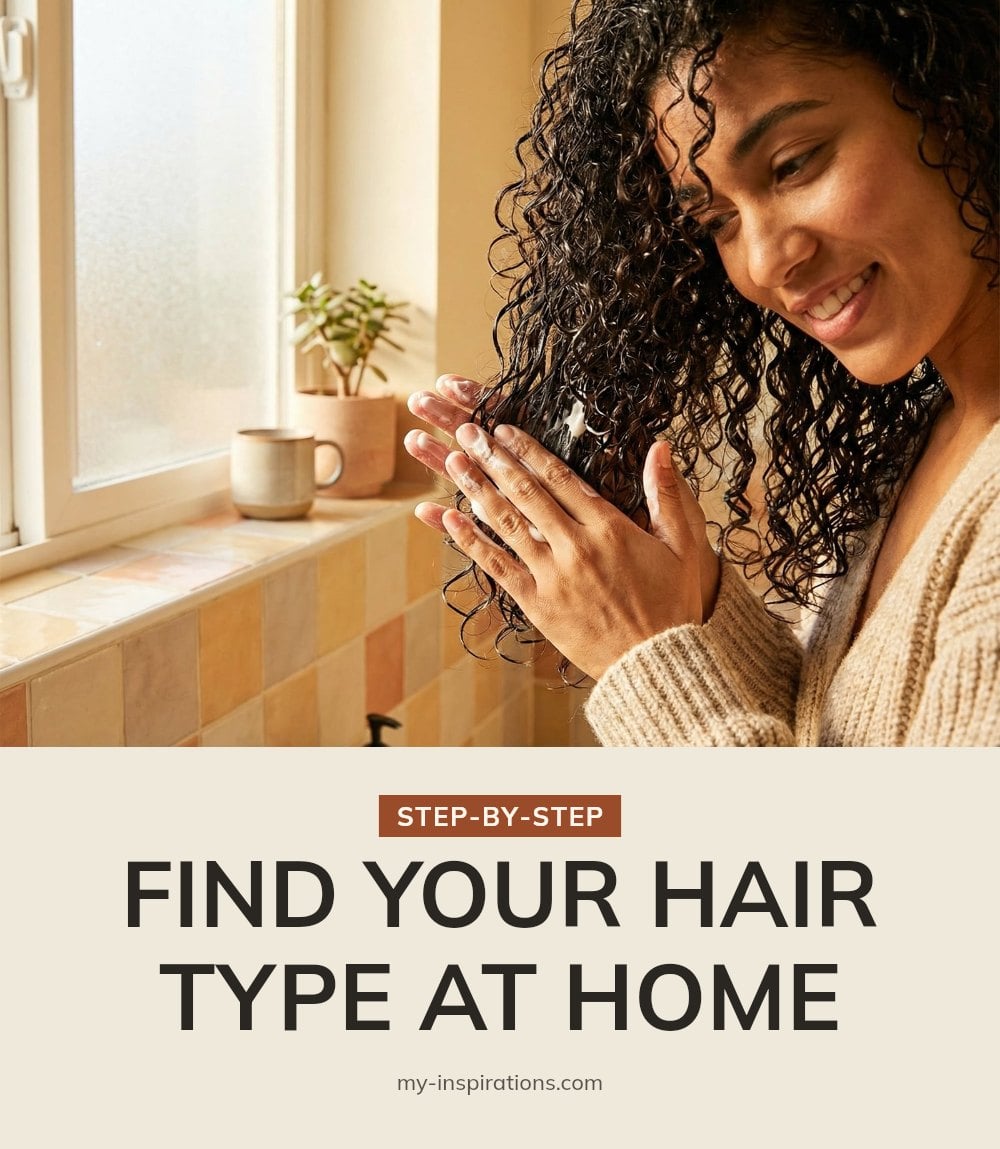
Start with clean, product-free hair. Observe its natural pattern both wet and dry, over a few days for consistency.
- Determine your curl pattern: Use the Andre Walker system: Type 1 (straight), Type 2 (wavy), Type 3 (curly), or Type 4 (coily). Then refine with A, B, or C subdivisions based on tightness.
- Assess strand thickness: Feel a single strand between your fingers. It will feel like a fine thread (fine), a medium strand (medium), or a thick wire (coarse).
- Measure hair density: Part your hair in its natural state and see how much scalp is visible. Little scalp shows = thick density; more scalp = thin density.
- Perform a porosity test: Place a single strand in a glass of water. If it floats, you have low porosity. If it sinks slowly, medium porosity. If it sinks quickly, high porosity.
- Consider your scalp type: Note how quickly it becomes oily or dry. This helps choose the right shampoo and conditioner.
If you learn better by watching, this 18-minute video from Brad Mondo shows every step. The how-to part starts at 1:06.
Understanding the Andre Walker Hair Typing System
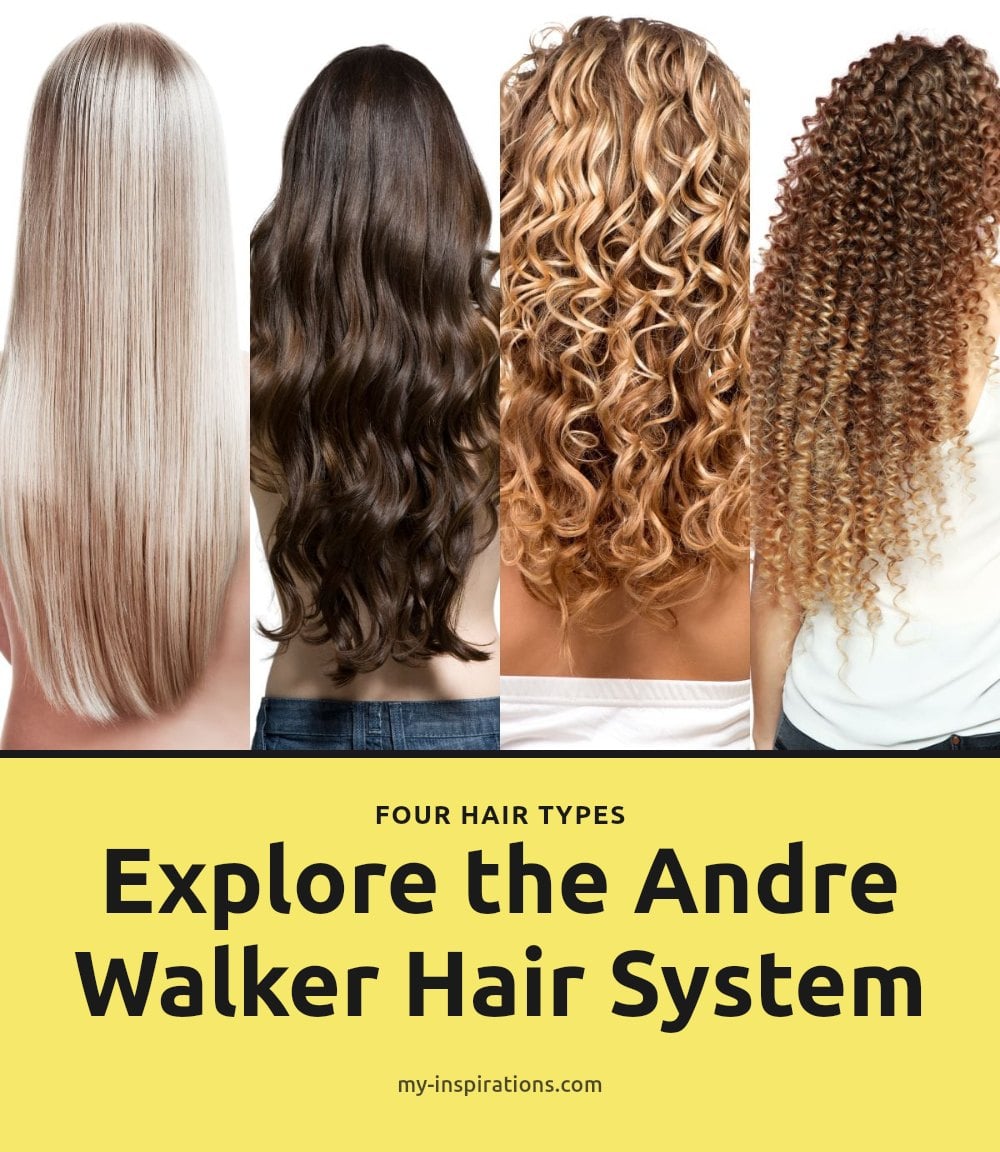
Type 1: Straight
Straight hair reflects light well, making it appear shiny. It is typically resistant to curling and holds styles less easily.
Type 2: Wavy
Wavy hair ranges from a loose ‘S’ shape to more defined waves. It is often prone to frizz and can have a mix of textures.
Type 3: Curly
Curly hair forms distinct loops and spirals. The tightness and bounce vary, with subcategories A (loose curls), B (medium curls), and C (tight curls).
Type 4: Coily
Coily hair has very tight, small, often zig-zag patterns. It is typically the most fragile and prone to shrinkage, requiring extra moisture and gentle handling.
Subcategories A, B, and C within each type denote the tightness or looseness of the curl or wave pattern, with A being the loosest and C the tightest.
Beyond Curl: Porosity, Density, and Strand Thickness
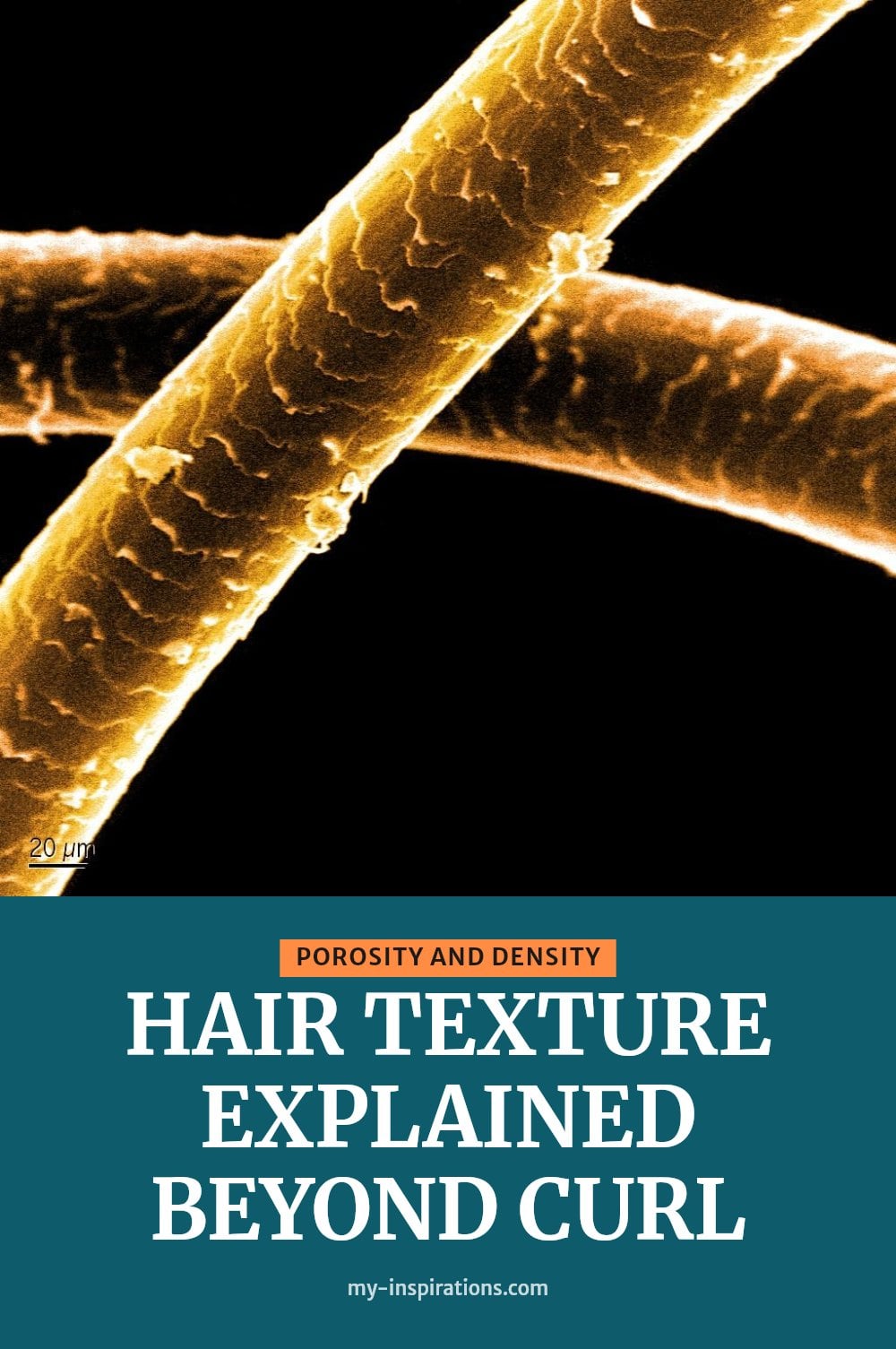
Beyond curl pattern, three other factors are just as crucial for tailoring your hair care routine.
Porosity
Hair porosity refers to how well your hair absorbs and retains moisture. It is categorized as low (cuticles lie flat, resists moisture), medium (balanced moisture absorption), or high (cuticles are raised, absorbs moisture quickly but loses it fast).
Density
Hair density is the number of individual hair strands per square inch of your scalp. It ranges from thin (less strands, more scalp visible) to medium to thick (many strands, little scalp visible).
Strand Thickness
Hair strand thickness refers to the diameter of an individual hair strand: fine, medium, or coarse. Fine hair is fragile and prone to breakage; coarse hair is strong and can handle heavier products.
Common Mistakes When Identifying Your Hair Type
Confusing density with thickness: This is the most common mix-up. Density is how many strands you have on your scalp; thickness is the diameter of one strand. My tip: don’t mix them up, because a person with fine strands can still have thick density, and they need different products than someone with coarse, thin hair.
Ignoring other factors: Focusing only on curl pattern and neglecting porosity or density will give you an incomplete picture. A low-porosity Type 2 wave needs very different products than a high-porosity Type 2 wave.
Assuming one size fits all: Just because you are a Type 3 does not mean all Type 3 products will work for you. Sub-types and other characteristics matter a lot.
Relying solely on styled hair: Always observe your hair’s natural pattern when it is clean and free of products. Styling can temporarily alter your curl pattern and lead to a mistaken identification.
Expecting perfection: It is common to have multiple hair types on one head, especially different curl patterns in different sections. Don’t get discouraged if you don’t fit perfectly into one box.
Pro Tips for Pinpointing Your Hair Type Accurately

Observe over time: Your hair can act differently on various days. Watch it for a week to get a consistent picture of its natural behavior.
Use a magnifying glass: For a closer look at your curl pattern or strand thickness, a magnifying glass can be surprisingly helpful. You might see subtle waves or kinks you missed with the naked eye.
Consult multiple resources: If you’re still unsure, compare information from a few reputable hair typing charts. Different charts sometimes show slightly different examples for the same type.
Experiment with products: Once you have an idea, try products designed for that type and see how your hair responds. That is the ultimate test.
Don’t be afraid to re-evaluate: Hormonal shifts, damage, or even age can change your hair type. It is okay to re-assess every now and then.
Frequently Asked Questions
Can my hair type change over time?
Yes, your hair type can change due to hormonal shifts, aging, heat damage, or chemical treatments. For example, curly hair can become looser or straighter. Re-evaluating your hair type every few months or when you notice changes helps keep your routine effective.
Why is understanding hair porosity important?
Porosity affects how well your hair absorbs and retains moisture. Low porosity hair resists moisture, while high porosity hair loses it quickly. Knowing your porosity helps you choose the right conditioners and treatments, preventing dryness or product buildup.
What’s the difference between hair density and strand thickness?
Density is how many hair strands you have per square inch of scalp, ranging from thin to thick. Strand thickness is the diameter of a single hair, from fine to coarse. They’re independent, so you can have fine strands but thick density.
How often should I re-evaluate my hair type?
There’s no strict schedule, but it’s wise to reassess whenever you notice significant changes in texture, oiliness, or curl pattern. Major life events like pregnancy, illness, or heat damage can shift your hair type, so check in every few months.
Final Thoughts
Start by identifying your curl pattern using the Andre Walker system, then refine with subcategories. My tip: don’t stop there, check your porosity, density, and strand thickness, because they’re just as important for choosing products. Expect to spend a few days observing your hair in its natural state, and be open to adjusting as your hair changes over time. With this knowledge, you’ll finally build a routine that works for you.