
How to Distance Yourself from Toxic People and Protect Your Peace
Learn to identify toxic people and their behaviors. Implement strategies to set boundaries and protect your mental and emotional well-being from draining.

You know that feeling when you walk away from a conversation and feel completely drained, anxious, or small. That’s often a sign you’re dealing with someone whose behavior consistently leaves you devalued. This article breaks down what toxic behavior really looks like, why it’s so exhausting, and practical strategies to protect your peace and create distance without losing yourself.

Key Takeaways
- Recognize that toxic behavior is a consistent pattern, not a one-time mistake.
- Set clear, firm boundaries and communicate them calmly using ‘I’ statements.
- Limit contact with the person, both in frequency and duration, when boundaries aren’t respected.
- Focus on what you can control: your reactions and your own well-being.
- Seek support from a therapist or counselor if the relationship involves abuse or persistent distress.
What Does ‘Toxic People’ Really Mean?
The term ‘toxic people’ gets thrown around a lot, but it’s not a clinical diagnosis. It describes a pattern of consistently damaging behaviors, like manipulation, constant criticism, or gaslighting, that leave you feeling drained and devalued. The real problem is the impact: these repeated interactions can seriously wear down your mental and emotional health over time.
Why Toxic Relationships Are So Draining
What makes these relationships so exhausting
It’s the specific behaviors that chip away at you. Manipulation makes you question your own judgment. Constant criticism erodes your self-worth. Gaslighting, where someone denies reality to the point you doubt yourself, is especially destabilizing. A lack of empathy means your feelings are never validated.
When you’re exposed to this regularly, your body stays in a low-grade stress response. The result is increased anxiety, persistent fatigue, and a creeping sense of low self-esteem. You may find yourself second-guessing everything or feeling emotionally drained after even short interactions. That’s not a sign of weakness; it’s a natural reaction to sustained emotional pressure.
Effective Strategies to Manage Toxic Interactions
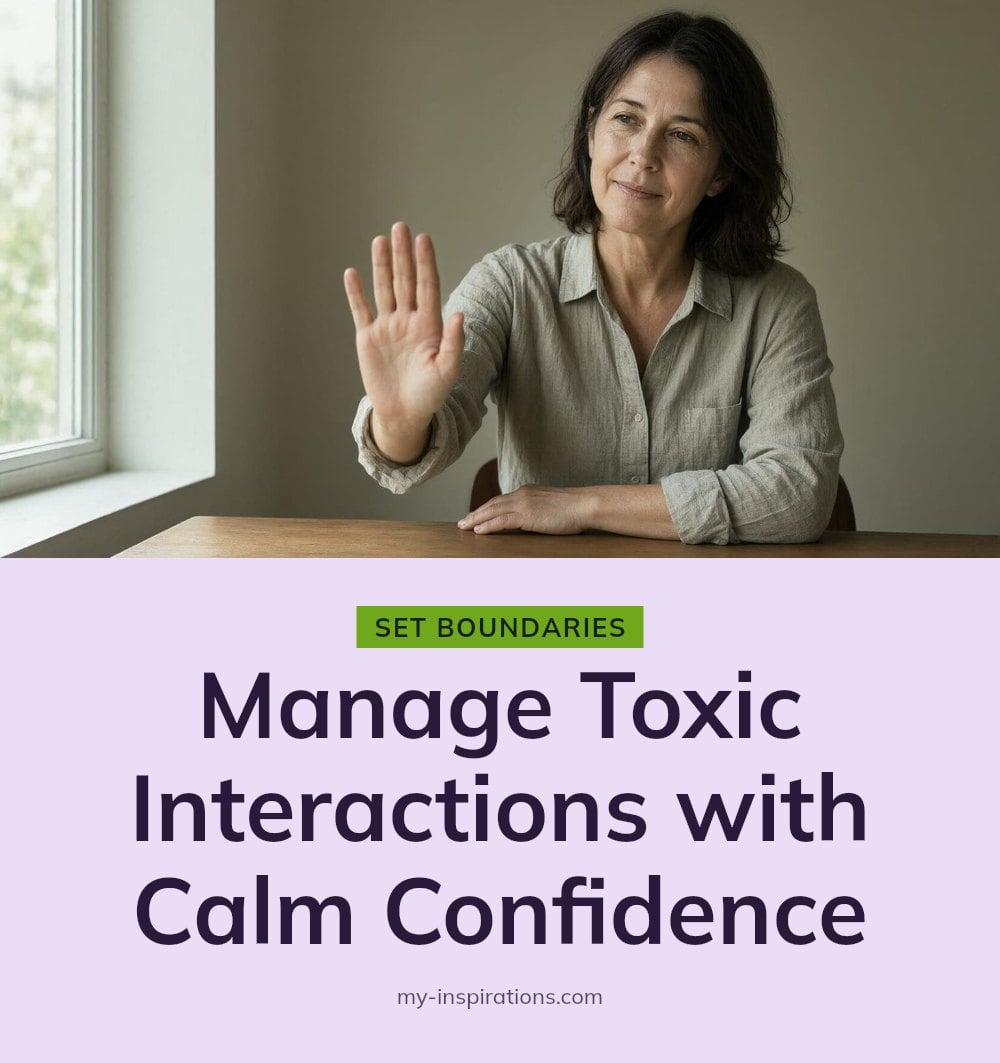
Effective strategies to manage toxic interactions
You can’t control another person’s behavior, but you can control how you engage. Here are the methods that actually work.
Set clear, firm boundaries. Decide what you will and won’t tolerate, then state it calmly. For example: ‘I can’t discuss this topic with you’ or ‘If you raise your voice, I will end the conversation.’ Tip: Write your boundary down before you say it so you stay on point. This helps you communicate clearly without getting sidetracked.
Practice emotional detachment. This means not taking their behavior personally. Remind yourself that their criticism or drama is a reflection of them, not you. My tip: Repeat a short phrase like ‘This is not my burden’ in your head during interactions to reinforce the separation.
Use the ‘gray rock’ method. When a manipulative person tries to provoke a reaction, become as uninteresting as a gray rock. Give short, neutral answers. Don’t share personal details or show emotion. The goal is to make engaging with you unrewarding. Caution: This method works best with people who feed on emotional reactions, not in all situations.
Limit contact. If boundaries are repeatedly ignored, reduce how often and how long you interact. For a coworker, keep conversations to work topics only. For a family member, schedule shorter visits or take breaks between them. Tip: Before each interaction, write down your boundary and your exit plan so you’re prepared to enforce it calmly. Not every relationship can be cut off completely, especially with family or colleagues, so focus on what you can control: the frequency and depth of contact.
Step-by-Step: Creating Healthy Distance for Your Well-being

- Identify specific harmful behaviors. Be precise about what’s hurting you. Is it the constant criticism? The gaslighting? Write down the patterns so you know exactly what you’re dealing with.
- Set clear, firm boundaries and communicate them calmly using ‘I’ statements. Say ‘I need to step away when conversations turn critical’ instead of ‘You’re always criticizing me.’ Keep it short and firm.
- Limit exposure physically and emotionally. Reduce time spent together and avoid sharing vulnerable information. If you must be in the same space, keep interactions surface-level. Pro move: Have an exit plan, a reason to leave after a set time.
- Practice self-care to replenish your energy. After a draining interaction, do something that restores you: a walk, deep breathing, or a favorite hobby. This isn’t optional; it’s maintenance for your emotional reserves.
- Seek support from trusted individuals or professionals. Talk to a friend who understands, or consider a therapist who can give you personalized strategies. You don’t have to navigate this alone.
Common Mistakes When Dealing With Toxic People
Trying to fix them: You cannot change another person’s behavior. Believing you can ‘save’ them only drains your energy and prolongs the damage. Focus on protecting yourself instead.
Constantly explaining your feelings: When your explanations are met with dismissal or gaslighting, you are just feeding their narrative. Stop justifying yourself and redirect your energy elsewhere.
Blaming yourself: Their behavior is not your fault. Taking responsibility for their actions keeps you stuck in a cycle of guilt and self-doubt. Recognize the pattern for what it is.
Letting boundaries slide: Allowing boundaries to be crossed without consequence teaches the person that your limits are negotiable. Limit contact with the person, both in frequency and duration, when boundaries aren’t respected.
Best Tips for Protecting Your Energy

Put your health first: Your mental and emotional well-being is non-negotiable. Before engaging with a draining person, ask yourself if it serves your peace.
Focus on what you can control: You can’t control their words or actions, but you can control your reactions and your boundaries. That is your power.
Invest in other relationships: Strengthen connections with supportive friends and family. Positive interactions can buffer the negative impact of toxic ones.
Let go of changing them: Accepting that you cannot change another person is freeing. My tip: once you stop expecting them to be different, you can focus on what actually works for you.
When to Seek Professional Support
If you feel unsafe: If you experience physical threats or fear for your safety, contact law enforcement or a domestic violence hotline immediately. Do not confront the person alone.
If abuse is present: Physical, emotional, verbal, or financial abuse requires professional support. A therapist or counselor can help you navigate the situation safely.
If your mental health suffers: Persistent anxiety, depression, or hopelessness related to a relationship warrants professional help. A mental health professional can provide tools to protect your well-being.
The Journey of Protecting Your Peace
Protecting your peace is an ongoing practice, not a one-time fix. Some days your boundaries will feel solid; other days you may second-guess yourself. That is part of the process, not a failure.
Consistency matters, but so does self-compassion. When you slip, acknowledge it without judgment and return to your boundaries. The goal is not to change the other person. It is to preserve your own energy and emotional health.
This is self-preservation, not punishment. Every time you choose your well-being over their demands, you reinforce your own worth. Be patient with yourself. You deserve relationships that build you up, not drain you.
Frequently Asked Questions
Can toxic people change their behavior?
Change is possible, but it’s not something you can force or control. Real change requires the person to recognize their own harmful patterns and actively work to change them, often with professional help. Your energy is better spent protecting yourself than waiting for them to change.
Is it always necessary to cut off a toxic person completely?
No. The best strategy depends on the relationship. With a coworker or acquaintance, limiting contact and keeping interactions brief may be enough. With a family member you can’t avoid, you might use the gray rock method or keep conversations superficial. Complete cutoff is an option when boundaries are repeatedly violated or if you feel unsafe.
How do I deal with a toxic family member I can’t avoid?
Focus on controlling your exposure. Keep interactions short, use the gray rock method (being unresponsive and uninteresting), and have an exit plan ready. Set firm boundaries like ‘I can’t talk about that topic’ and stick to them. Prioritize self-care before and after contact to replenish your energy.
What is ‘gaslighting’ and how do I respond to it?
Gaslighting is when someone denies reality or twists facts to make you doubt your own memory, perception, or sanity. Respond by trusting your own experience and keeping a private record of events. You can say something like ‘I remember it differently’ without getting drawn into an argument. The goal is to stay grounded in your own truth, not to convince them.
What are the signs of a toxic person?
Common signs include manipulation, constant criticism, gaslighting, excessive negativity, and a lack of empathy. The key is consistency: it’s a pattern of behavior that repeatedly leaves you feeling drained, devalued, or anxious. If you notice these behaviors happening over and over, it’s a red flag.
Final Thoughts
Protecting your peace is an ongoing practice, not a one-time fix. Some days you’ll feel confident in your boundaries; other days you might slip. That’s normal. The real win is consistently choosing yourself over the cycle of draining interactions. My tip: keep a short list of your non-negotiable boundaries written down and review it before any contact with the person. Over time, the distance you create will let your energy return to the relationships and activities that truly support you.
This article is for informational purposes only and does not constitute medical or professional mental health advice. If you are experiencing persistent anxiety, depression, or feel unsafe in a relationship, please consult a licensed therapist, counselor, or appropriate support organization.