Dermaplaning: How to Dermaplane Safely at Home for Brighter Skin
Discover the steps for safe at-home dermaplaning to achieve smoother, brighter skin. Learn the technique for better makeup application and product absorption.

If you have ever wondered how to get that smooth, glowing skin that seems to catch the light just right, dermaplaning might be the missing step in your routine. It is a gentle exfoliation technique that removes dead skin cells and peach fuzz, leaving your face brighter and your serums working harder. In this article, I walk you through exactly how to dermaplane safely at home, what tools you need, and the simple steps to avoid common mistakes.

Key Takeaways
- Use a clean, dry face and a sterile dermaplaning tool for each session.
- Hold the skin taut and use short, downward strokes at a 45-degree angle.
- Never dermaplane over active acne, rosacea, eczema, or sunburned skin.
- Apply a hydrating serum, moisturizer, and daily sunscreen afterward.
- Repeat dermaplaning every 3 to 4 weeks for best results.
What Is Dermaplaning and How Does It Work?
Dermaplaning uses a specialized tool to gently remove the outermost layer of dead skin cells and vellus hair, commonly called peach fuzz. The result is noticeably smoother, brighter skin that absorbs your serums and moisturizers more effectively. You can have it done professionally by a licensed esthetician, or you can do it carefully at home with the right tools and technique.
Essential Tools for At-Home Dermaplaning

You only need a few items to get started, and each one serves a specific purpose.
- Gentle facial cleanser: Prepares your skin by removing makeup, oil, and dirt without stripping it.
- Specialized dermaplaning tool: A small, single-blade facial razor designed for skin, not a regular body razor. The blade is smaller and sharper for precise control.
- Hydrating serum and moisturizer: Replenish moisture immediately after exfoliation to calm and protect your skin.
- Broad-spectrum sunscreen (SPF 30 or higher): Essential after dermaplaning because fresh skin is more vulnerable to UV damage. Apply it daily, even if you are indoors.
Step-by-Step Guide to Safe At-Home Dermaplaning
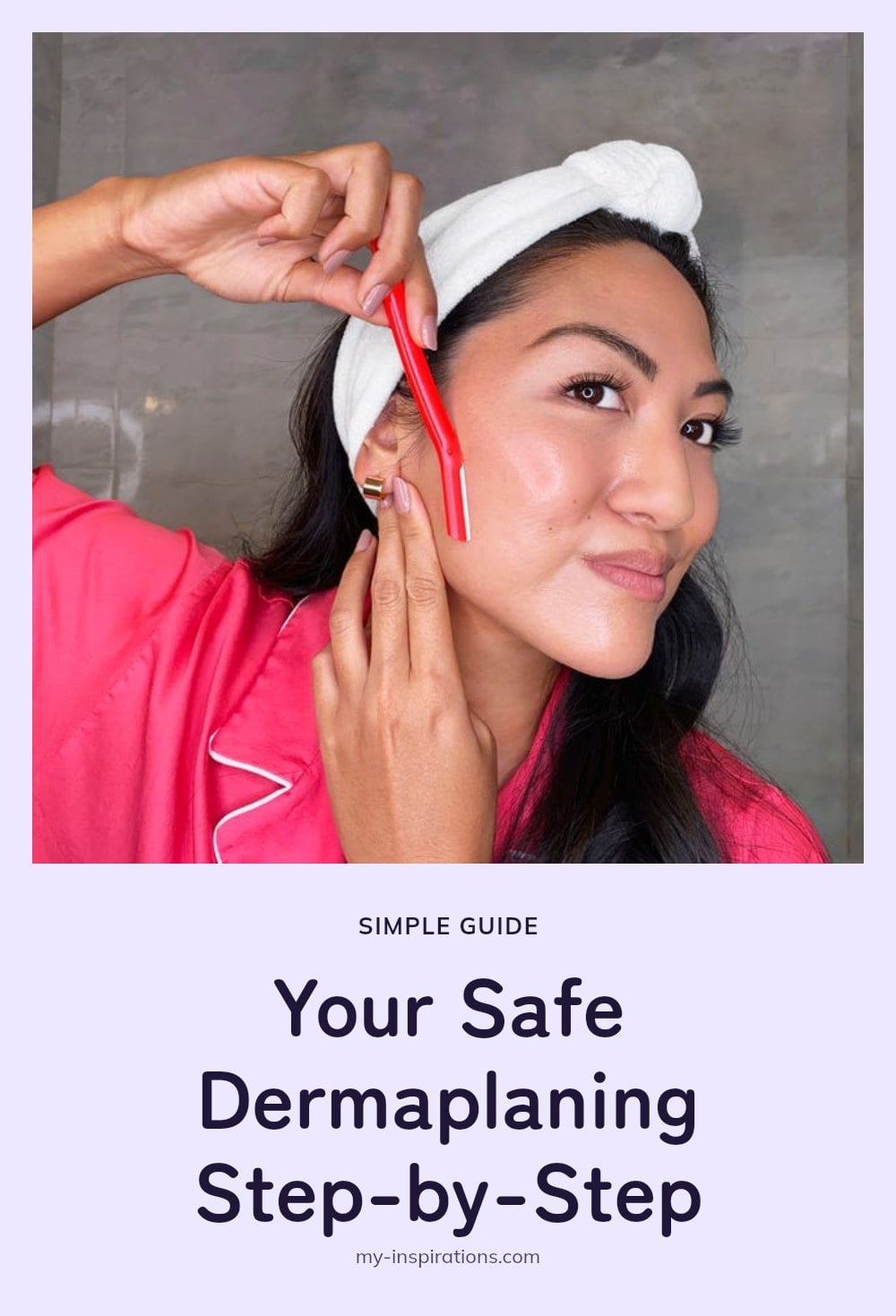
Follow these steps in order for a safe and effective at-home dermaplaning session.
- Cleanse and dry your face: Wash your face with a gentle cleanser, then pat it completely dry. The blade works best on dry skin, and wet skin increases friction and irritation.
- Hold the skin taut: Use the fingers of your free hand to pull the skin tight in the area you are working on. This prevents the blade from catching on loose skin and causing cuts.
- Position the blade at a 45-degree angle: Hold the tool so the blade meets your skin at a shallow angle, not straight on. This angle allows the blade to skim off dead cells and peach fuzz without digging in.
- Use light, short, downward strokes: Gently glide the blade in the direction of hair growth, using strokes about 1-2 inches long. Let the tool do the work, do not press down.
- Avoid going over the same area multiple times: One or two passes per spot is enough. Repeating strokes can over-exfoliate and irritate your skin.
- Follow up with hydrating products: Immediately apply a hydrating serum and a moisturizer to soothe and protect the fresh skin. The next morning, apply a broad-spectrum sunscreen.
Common Dermaplaning Mistakes to Avoid
Even with the right tools, a few common missteps can ruin your results or cause irritation. Here is what to avoid.
- Using a dull or dirty blade: A dull blade tugs at the skin and increases the risk of irritation or infection. Always use a fresh, sterile blade for each session.
- Applying too much pressure: Pressing hard can cause nicks, cuts, or scratches. The blade should feel like a light scraping sensation, not pain.
- Dermaplaning on wet skin: Wet skin creates more friction and makes the blade skip instead of gliding smoothly. Always work on a clean, dry face.
- Not holding the skin taut: Loose skin can fold into the blade, leading to uneven exfoliation or accidental cuts. Keep the skin stretched tight with your free hand.
- Using a traditional razor: Body razors have wider blades and different angles that are too aggressive for facial skin. Stick to a tool made specifically for dermaplaning.
- Skipping sun protection afterward: Freshly exfoliated skin is more sensitive to UV rays. Without daily sunscreen, you risk sun damage and hyperpigmentation.
Post-Dermaplaning Skincare and Maintenance

Right after dermaplaning, your skin is primed to absorb products. Apply a hydrating serum with ingredients like hyaluronic acid, then lock it in with a gentle moisturizer. This helps calm the skin and prevent dryness.
Sun protection is non-negotiable for the next few days. Use a broad-spectrum sunscreen with at least SPF 30 every morning, even if you stay indoors. UV exposure on freshly exfoliated skin can cause irritation or discoloration.
Tip: Skip harsh exfoliants, retinoids, or acids (like glycolic or salicylic acid) for 48-72 hours after treatment. Let your skin barrier recover fully before your next session, which should be 3-4 weeks later.
Dermaplaning Myths Debunked
Myth: Hair grows back thicker or darker.
Reality: The vellus hair (peach fuzz) removed by dermaplaning has a blunt tip when it grows back, which can feel slightly coarser for a day or two. But it does not change the hair’s color, thickness, or growth rate. The texture returns to normal quickly.
Myth: It is painful.
Reality: When done correctly, dermaplaning should feel like a light scraping or tickling sensation. You should not feel pain. If you do, you are likely using too much pressure or the blade is dull. Stop and adjust your technique.
How Often to Dermaplane and Expected Results
You can repeat dermaplaning every 3-4 weeks to match your skin’s natural exfoliation cycle. Results are visible immediately after the procedure: smoother texture, a brighter complexion, and a more even makeup application.
At-home vs. professional: At-home tools are more affordable and convenient for regular maintenance. Professional treatments use a sterile surgical scalpel for deeper exfoliation and are ideal if you want a more thorough result or prefer expert handling.
Good to know: Consistency matters. A single session gives a temporary glow, but regular treatments build cumulative benefits for skin tone and texture over time.
When to Consult a Professional or Avoid At-Home Dermaplaning
Do not attempt at-home dermaplaning if you have active acne, rosacea, eczema, or psoriasis on the face. The blade can spread bacteria or aggravate inflammation. Also avoid it on sunburned skin or within 48 hours of waxing.
Caution: Stop immediately if you experience persistent redness, breakouts, or signs of infection after the procedure. Consult a dermatologist in these cases.
Consider professional treatment if you are unsure about your technique, want deeper exfoliation, or have sensitive skin that needs a gentler touch. A licensed esthetician can assess your skin and adjust the pressure and angle accordingly.
Frequently Asked Questions
Does dermaplaning make hair grow back thicker?
No, it does not. This is a common myth. The vellus hair (peach fuzz) that dermaplaning removes grows back with a blunt tip, which can feel slightly coarser for a day or two, but it does not change the hair’s color, thickness, or growth rate.
How often can I dermaplane at home?
You can safely repeat dermaplaning every three to four weeks. This matches your skin’s natural exfoliation cycle and gives your skin time to recover. Doing it more often than that may cause irritation or over-exfoliation.
Can I dermaplane if I have sensitive skin?
It depends on the level of sensitivity. Dermaplaning is generally not recommended if you have active rosacea, eczema, or psoriasis on the face. If your skin is mildly sensitive, do a small patch test first and stop at the first sign of irritation.
What should I do if my skin gets irritated after dermaplaning?
Stop dermaplaning immediately. Apply a gentle, hydrating moisturizer and avoid any active ingredients like retinol or acids for a few days. If redness or irritation persists, consult a dermatologist for personalized advice.
Final Thoughts
For most people, dermaplaning is a safe, effective way to reveal smoother, brighter skin at home when you follow the right technique. My tip: keep your sessions simple and consistent. Stick to the 45-degree angle, use light pressure, and never skip sunscreen for the next few days. With proper care, you will see immediate results that last until your next session, usually three to four weeks later.
This article provides general information for educational purposes and is not a substitute for professional medical or dermatological advice. Skin care routines can affect individuals differently. If you have a persistent skin condition, active acne, or any concerns about your skin’s reaction, please consult a licensed dermatologist or healthcare professional.