
11 Focus Tips to Get More Done and Boost Productivity
Feeling distracted? Learn 12 practical focus tips and strategies to improve concentration, manage distractions, and significantly boost your daily productivity.

If you feel like your mind is constantly wandering and you can’t get into a productive groove, you’re not alone. The good news is that focus is a skill you can build with the right strategies. This article covers 11 practical tips to help you manage distractions, train your attention, and get more done without burning out.

Key Takeaways
- Turn off non-essential notifications to avoid switch-tasking, which can cut productivity by up to 40%.
- Use the Pomodoro Technique: 25 minutes of work followed by a 5-minute break, with longer breaks every four cycles.
- Prioritize 7-9 hours of sleep per night to support memory, decision-making, and emotional regulation.
- Stay hydrated throughout the day, as even mild dehydration can impair attention and mental clarity.
- Set clear, specific goals for each task to help your brain filter out irrelevancies and stay on track.
What is Focus and Why Does It Matter?
Focus is the ability to direct and sustain your attention on a specific task, filtering out distractions. It’s crucial for productivity, learning, and reaching your goals, helping you work more efficiently and effectively. The good news is that focus is a skill you can develop, not just an innate trait. Improving it isn’t about eliminating every distraction, but about managing them and training your attention through consistent practice.
1. Create a Dedicated Workspace

A cluttered physical environment can contribute to a cluttered mental state, making sustained focus harder. Designate a specific area for work and keep it tidy. Even a small corner of a room can become your ‘focus zone’ if you consistently use it for concentrated tasks.
- Clear your desk of non-essential items.
- Keep only what you need for the current task within reach.
- Use a comfortable chair and good lighting to reduce physical strain.
2. Silence Non-Essential Notifications
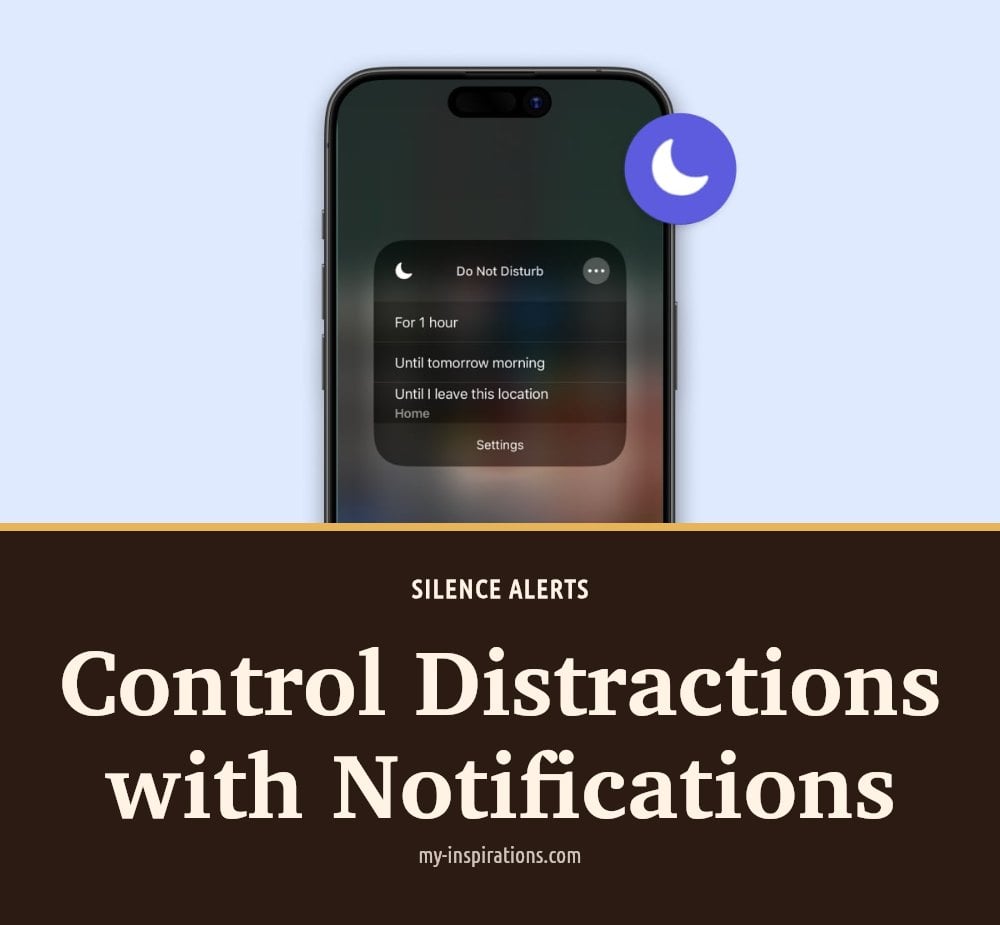
Turning off notifications for non-essential apps on your phone and computer is a game-changer. Each notification creates a ‘switch-tasking’ moment, reducing productivity by up to 40% as your brain reorients. My tip: Use ‘Do Not Disturb’ modes or schedule specific times to check messages and emails.
- Disable notifications for social media, news, and shopping apps.
- Keep only essential calls and messages on your lock screen. That means calls from your partner, kids, or employer and messages from your childcare provider or urgent work contacts.
- Set a dedicated time, like mid-morning and mid-afternoon, to check everything.
3. Try the Pomodoro Technique

Try the Pomodoro Technique: work for 25 minutes, then take a 5-minute break, with longer breaks after every four cycles. It helps you break down large tasks and prevents burnout, training your brain to focus in short, intense bursts. My tip: Use a physical timer for a more satisfying ‘ding’ and to avoid digital distractions from your phone.
- Pick one task and set your timer for 25 minutes.
- Work without interruption until the timer rings.
- Take a 5-minute break to stretch or walk, then repeat.
4. Prioritize Quality Sleep

Sleep is when your brain consolidates memories and clears out metabolic waste, so skimping on it directly undermines your ability to concentrate. Most adults need 7-9 hours per night; getting less impairs decision-making, memory, and emotional regulation, making it harder to stay on task.
My tip: Go to bed and wake up at the same time every day, including weekends. A consistent schedule anchors your circadian rhythm, so you fall asleep faster and wake up feeling more refreshed.
5. Incorporate Movement Breaks

Short bursts of movement increase blood flow to the brain, which can sharpen concentration and stave off mental fatigue. Sitting still for hours makes your mind wander, so build intentional movement into your day.
My tip: Every hour, stand up and stretch, walk around your living room, or do a few squats. Even two minutes of activity can reset your attention and make the next block of work feel more manageable.
6. Practice Mindfulness Daily

Mindfulness meditation, practiced regularly, can strengthen the brain regions responsible for attention regulation. It trains you to notice when your mind drifts and gently bring it back, which is exactly the skill you need for focused work.
Tip: Start with just 5-10 minutes a day. Use a guided meditation app or simply sit quietly and focus on your breath. When your thoughts wander, acknowledge them and return to breathing.
7. Stay Hydrated Throughout the Day
Even mild dehydration can impair attention, memory, and mental clarity, leaving you feeling foggy and sluggish. Your brain depends on adequate fluid to function efficiently, so staying hydrated is a simple way to support focus.
Good to know: Keep a water bottle within reach and sip from it regularly. Set a reminder on your phone if you tend to forget. Aim to drink steadily throughout the day rather than all at once.
8. Set Clear, Specific Goals
Set clear, specific goals: When you know exactly what you need to achieve, your brain is better able to filter out irrelevancies and direct attention toward the task. Vague intentions like “work on the report” leave too much room for mental wandering. Pro move: Before each focus session, write down 1-3 concrete tasks you want to complete. That list becomes your roadmap and a quick check-in point when your mind starts to drift.
9. Manage Background Noise
Manage background noise: Some people need total silence to concentrate, while others find ambient sounds like white noise, rain, or instrumental music helpful for focus. The key is experimenting to find what works for you. Quick tip: Noise-canceling headphones can be a lifesaver in a busy environment. Alternatively, try a focus playlist on Spotify or a white noise app to create your optimal sound environment.
10. Get Natural Light Exposure
Get natural light exposure: Natural light helps regulate your circadian rhythm, which directly impacts your energy levels and alertness throughout the day. It also reduces eye strain compared to harsh artificial lighting. Tip: Position your workspace near a window if possible. If that’s not an option, take short breaks outside during the day, even 5 minutes can help reset your focus and reduce eye fatigue.
11. Avoid Multitasking on Complex Tasks
Avoid multitasking on complex tasks: Your brain doesn’t actually do multiple things at once. It rapidly switches attention between tasks, a process called switch-tasking. This can reduce productivity by up to 40% because each switch costs time and mental energy. Good to know: Focus on one demanding task at a time, giving it your full attention until it’s complete or until you reach a planned break. You’ll finish faster and with fewer errors.
Common Mistakes That Sabotage Your Focus
Believing you can effectively multitask: Your brain isn’t actually doing two things at once. It’s rapidly switching attention between tasks, which reduces efficiency and can cut productivity by up to 40%. Focus on one demanding task at a time until it’s done or you hit a planned break.
Not taking regular breaks: Pushing through for hours leads to mental fatigue and worse concentration. Short, intentional breaks every 25 minutes, following the Pomodoro Technique, prevent burnout and improve sustained attention. Stand up, stretch, or walk around for a few minutes.
Underestimating sleep deprivation: Lack of sleep severely impairs cognitive function, making it much harder to concentrate, remember, and make decisions. Prioritize 7-9 hours of quality sleep each night, and keep a consistent schedule even on weekends.
Ignoring environmental distractions: Trying to force focus in a chaotic space is an uphill battle. Tidy your workspace, minimize noise, and address what you can control in your surroundings before you start working.
Expecting instant results: Building focus is like building a muscle. It takes consistent practice over several weeks to see noticeable improvement. Be patient with yourself and keep applying your techniques, even on rough days.
Frequently Asked Questions
How long does it take to improve focus?
Most people start to see noticeable improvements after consistently applying focus techniques for several weeks. The key is regular practice, whether it’s daily mindfulness, using time-blocking methods, or adjusting your environment. Don’t expect instant results; focus is a skill that strengthens over time.
Can multitasking ever be effective?
For complex tasks, multitasking is rarely effective because your brain is actually switch-tasking, which can reduce productivity by up to 40%. However, combining a simple, automatic activity like walking with listening to a podcast may work for some people. For demanding work, focus on one task at a time.
Does diet affect my ability to focus?
Yes, what you eat can influence your concentration. A balanced diet with steady blood sugar levels supports mental clarity, while heavy meals or high sugar intake can cause energy crashes. Staying hydrated is also crucial, as even mild dehydration can impair attention and memory.
Is it normal to lose focus sometimes?
Absolutely. Momentary lapses in concentration are a normal part of human attention. The goal isn’t to eliminate them entirely but to notice when your mind drifts and gently guide it back. Techniques like mindfulness can help you become better at this redirection over time.
What’s the best way to handle digital distractions?
Start by turning off non-essential notifications on your phone and computer. Use ‘Do Not Disturb’ modes during focus sessions and schedule specific times to check messages and social media. This reduces the constant switch-tasking that drains your mental energy and cuts productivity.
Final Thoughts
One of the most effective changes you can make is to pick just one or two techniques from this list and practice them consistently for several weeks. Expect gradual improvements rather than an overnight transformation. With regular effort, you’ll find it easier to concentrate and accomplish your goals.
This article is for general informational purposes only and does not constitute medical or professional advice. If you experience persistent difficulty focusing, extreme fatigue, or other concerning symptoms, please consult a healthcare professional or mental health provider for personalized guidance.