Calming Down: How to Calm Down When You Feel Overwhelmed Fast
Discover effective strategies for calming down when overwhelmed. Learn techniques to reduce stress, regain control, and find peace in difficult moments.

When you feel completely overwhelmed, your mind can race and your body tenses up, making it hard to think clearly. The good news is you can calm down fast by using simple techniques that interrupt that stress cycle. This article covers the quickest ways to regain composure, practical methods to try, and common mistakes to avoid so you can feel more in control again.
Key Takeaways
- Focus on slow, deep belly breaths to activate your body’s natural ‘rest and digest’ response.
- Use the 5-4-3-2-1 grounding technique to bring your attention to the present moment.
- Step away from the stressful situation for a few minutes to give your brain a reset.
- Engage in light movement like stretching or a short walk to reduce stress hormones.
- Acknowledge your feelings without judgment instead of trying to push them away.
How to Immediately Calm Down When You Feel Overwhelmed
When overwhelm hits, your body goes into a stress response that can feel impossible to stop. The fastest way to calm down is to interrupt that cycle with a quick physical or mental technique. Focus on regulating your breathing with slow, deep inhales through your nose and long exhales through your mouth. Ground yourself in the present moment, and gently shift your attention away from the source of stress. These small actions can reduce your body’s stress response and help you regain a sense of control.
Proven Techniques to Regain Your Composure
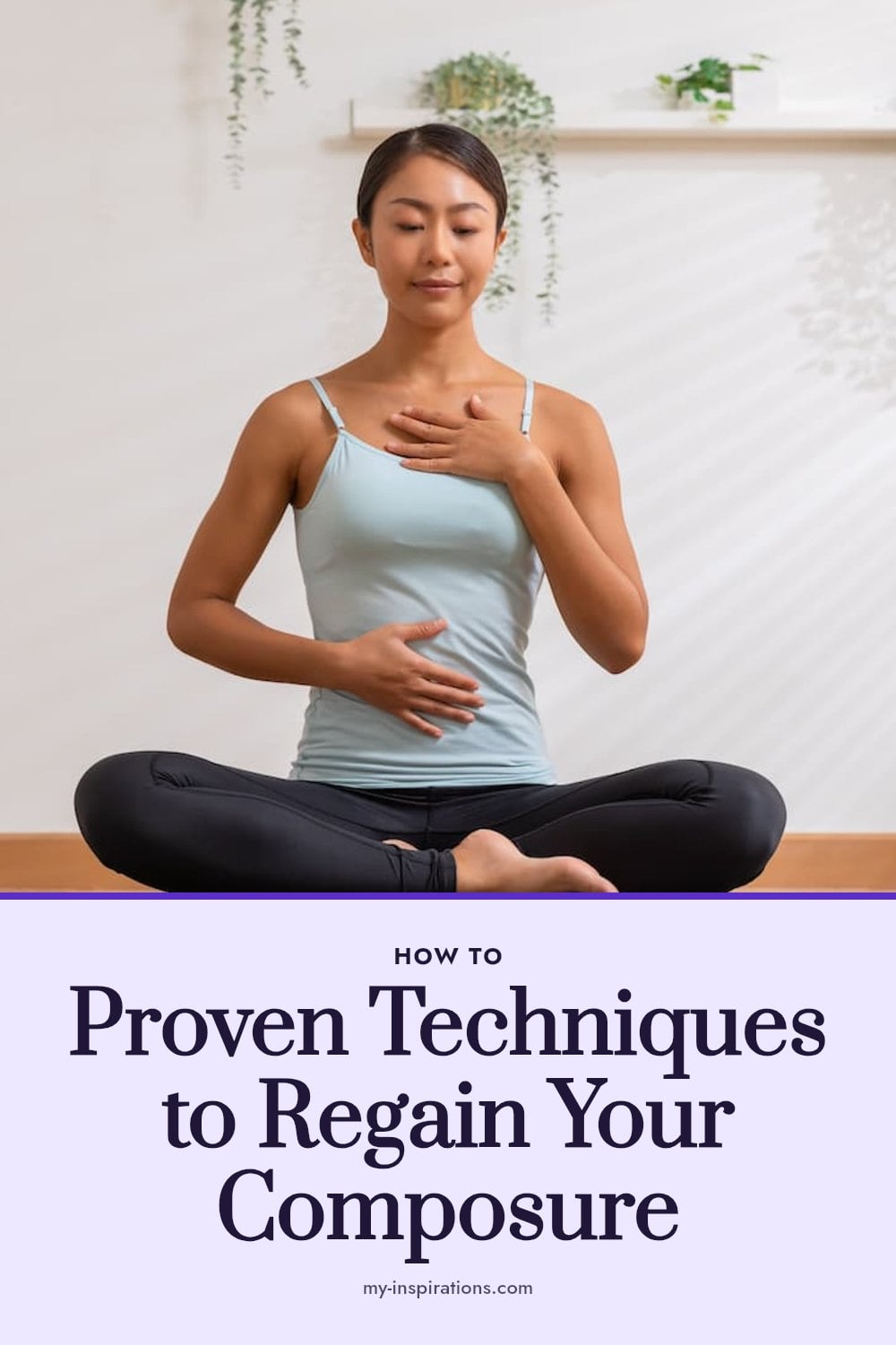
Diaphragmatic Breathing
This technique uses deep belly breaths to activate your parasympathetic nervous system, the part of your body responsible for rest and digest. Place one hand on your chest and the other on your belly. Inhale slowly through your nose so your belly rises, then exhale fully through your mouth. My tip: Aim for 5 to 10 breaths, focusing on the movement of your belly rather than your chest.
4-7-8 Breathing
A structured pattern can help slow your heart rate and calm your mind. Inhale quietly through your nose for 4 counts, hold your breath for 7 counts, and exhale completely through your mouth for 8 counts. Repeat this cycle three to four times. The long exhale is key for triggering relaxation.
5-4-3-2-1 Grounding
This technique pulls your attention away from anxious thoughts and into your immediate environment. Name 5 things you can see, 4 things you can touch, 3 things you can hear, 2 things you can smell, and 1 thing you can taste. Tip: Say the items out loud if you can, or whisper them to yourself. It forces your brain to process sensory input instead of stress signals.
Progressive Muscle Relaxation
Physical tension often accompanies mental overwhelm. Starting at your toes, tense each muscle group for 5 seconds, then release for 10 seconds. Work your way up through your legs, abdomen, arms, shoulders, and face. The contrast between tension and relaxation helps your body recognize and let go of stress.
Mindfulness Practice
Mindfulness means focusing on the present moment without judging your thoughts. Pick one simple anchor, like the sensation of your breath entering and leaving your nostrils, or the feeling of your feet on the floor. When your mind wanders, gently bring it back to that anchor. Pro move: Set a timer for 2 minutes so you don’t have to watch the clock.
Simple Tools to Help You Find Your Calm
Having a few simple items on hand can make calming down easier when stress hits.
- Comfortable clothing: Wear loose, soft fabrics that allow free movement and deep breathing.
- A quiet space (optional): A room or corner with minimal distractions helps you focus on your technique.
- A water bottle: Dehydration can worsen stress, so sip water throughout the day.
- A journal and pen: Writing down your thoughts can help you process and release what’s overwhelming you.
- Headphones: Calming music or a guided meditation can lower your heart rate and shift your focus.
Common Mistakes to Avoid When Trying to Calm Down
When you’re trying to calm down, certain habits can actually make things worse. Here’s what to watch for.
- Believing you need to ‘power through’: Pushing yourself without a break only builds more tension. Taking a short pause is crucial for resetting.
- Suppressing feelings: Ignoring or pushing away your emotions can make them stronger. Acknowledge how you feel without judging yourself.
- Expecting instant, complete calm: No single technique will erase overwhelm in seconds. Progress is gradual, so focus on small steps.
- Comparing yourself to others: Everyone copes differently. What works for someone else may not work for you, and that’s okay.
- Neglecting basic needs: Lack of sleep, poor nutrition, and dehydration make emotional regulation harder. Address these foundations first.
Quick Tips for Managing Overwhelm in the Moment
Step Away: If you can, physically remove yourself from the situation for a few minutes. Even stepping into another room or stepping outside can give your brain a reset and a new perspective.
Light Movement: Gentle activity like stretching, a short walk, or rolling your shoulders can lower cortisol and release endorphins. You don’t need a full workout, just a few minutes of movement helps.
Connect with Others: Reach out to a trusted friend or family member if you feel comfortable. A quick text or a short phone call can provide support and remind you that you’re not alone.
Practice Gratitude: Shift your focus by naming a few things you’re grateful for right now. It can be as simple as a warm cup of coffee or a comfortable chair. This can help interrupt the stress cycle.
Hydrate: Keep a water bottle handy and take slow sips. Dehydration can worsen feelings of stress, so staying hydrated supports your body’s ability to regulate emotions.
When to Seek Professional Help for Overwhelm
If feelings of overwhelm are constant, severe, or interfere with your daily life, consult a healthcare professional or mental health expert. This is a sign that you may need additional support beyond self-care techniques.
Seek immediate medical attention if you experience physical symptoms like chest pain, severe dizziness, or difficulty breathing. These may indicate a more serious condition that requires urgent care.
If self-calming techniques are not consistently effective, it’s a clear sign to seek professional guidance. A therapist or counselor can help you develop personalized strategies and address underlying causes.
Frequently Asked Questions
How long does it take to calm down?
Some techniques, like deep breathing or the 5-4-3-2-1 grounding method, can provide immediate relief within a few minutes. However, consistent practice of other strategies, such as journaling or progressive muscle relaxation, can lead to better long-term emotional regulation. It’s normal to need a few tries to find what works best for you.
Can certain foods help me calm down?
While specific foods aren’t a quick fix for overwhelm, maintaining good hydration and stable blood sugar can help your body handle stress better. Dehydration can make feelings of stress worse, so drinking water is a good start. A balanced diet with plenty of fruits, vegetables, and whole grains supports overall emotional well-being.
Is it normal to feel overwhelmed often?
Feeling overwhelmed from time to time is a normal response to life’s challenges. However, if it happens frequently or starts to interfere with your daily activities, sleep, or relationships, it may be a sign to seek professional support. Persistent overwhelm can be a symptom of an underlying condition like anxiety or depression.
What is the best way to prevent feeling overwhelmed?
Prevention often involves building good habits like regular physical activity, adequate sleep, staying hydrated, and practicing mindfulness. Setting realistic expectations and learning to say no to unnecessary commitments can also help. The goal isn’t to avoid stress entirely but to build resilience so you handle it better when it comes.
When should I seek professional help for feeling overwhelmed?
If feelings of overwhelm are constant, severe, or interfere with your daily life, consult a healthcare professional or mental health expert. Seek immediate medical attention if you experience physical symptoms like chest pain, severe dizziness, or difficulty breathing. Professional guidance can provide you with personalized strategies and support.
Final Thoughts
My tip: Pick one technique from this list, like the 4-7-8 breathing or the 5-4-3-2-1 grounding method, and practice it when you’re not overwhelmed first. That way, when stress hits, it will feel more natural to use. Expect that some techniques may provide relief within minutes, while others work better with regular practice over time. The key is to start small and be patient with yourself as you find what works for you.
This article is for informational purposes only and is not a substitute for professional medical or mental health advice. If you are experiencing persistent or severe feelings of overwhelm, or if you have physical symptoms such as chest pain or difficulty breathing, please consult a doctor or mental health professional.