20 Simple Bantu Knots Hairstyles 2027 with Middle Parts
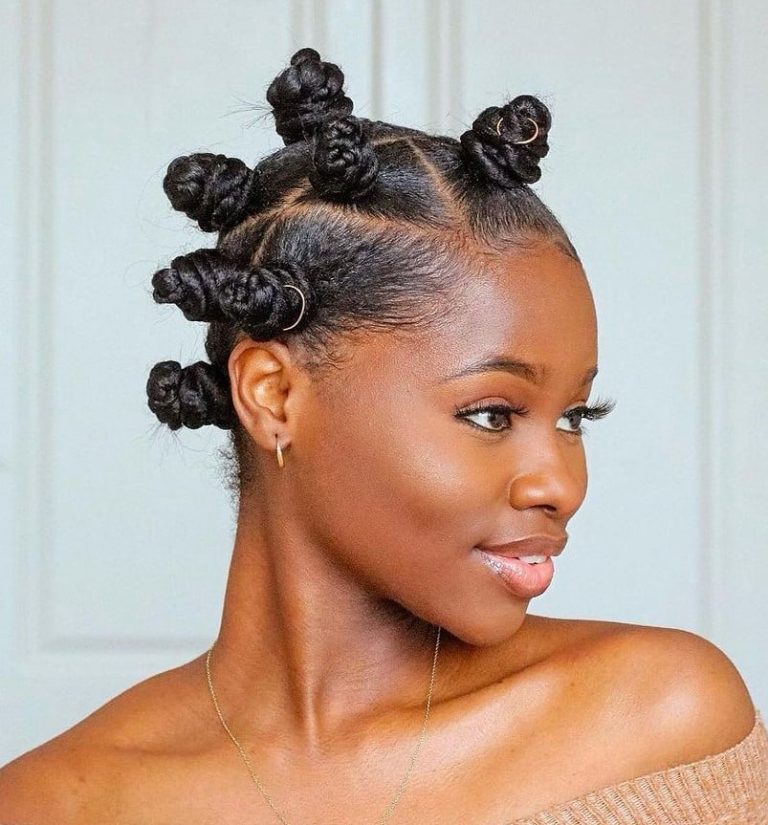
Simple Bantu Knots Hairstyles 2027 featuring mini bantu knots and small bantu knots styled with baby hairs, for a polished look.

Bantu knots are a protective style that twists sections of hair into coiled buns against the scalp, creating a neat, sculptural finish that lasts for days. Right now, mini knots and yarn versions are trending, while the classic middle part and uniform grid patterns remain the foundation for most looks.
This collection of 20 Simple Bantu Knots Hairstyles covers everything from quick DIY sets to intricate patterns for weddings, so you can find the right hold for your texture and length. Whether your hair falls flat in a standard twist-out or you need a style that stays put through a workweek, these ideas solve the real struggle of making a protective style look polished without the salon time.
Mini Bantu Knots with Middle Part
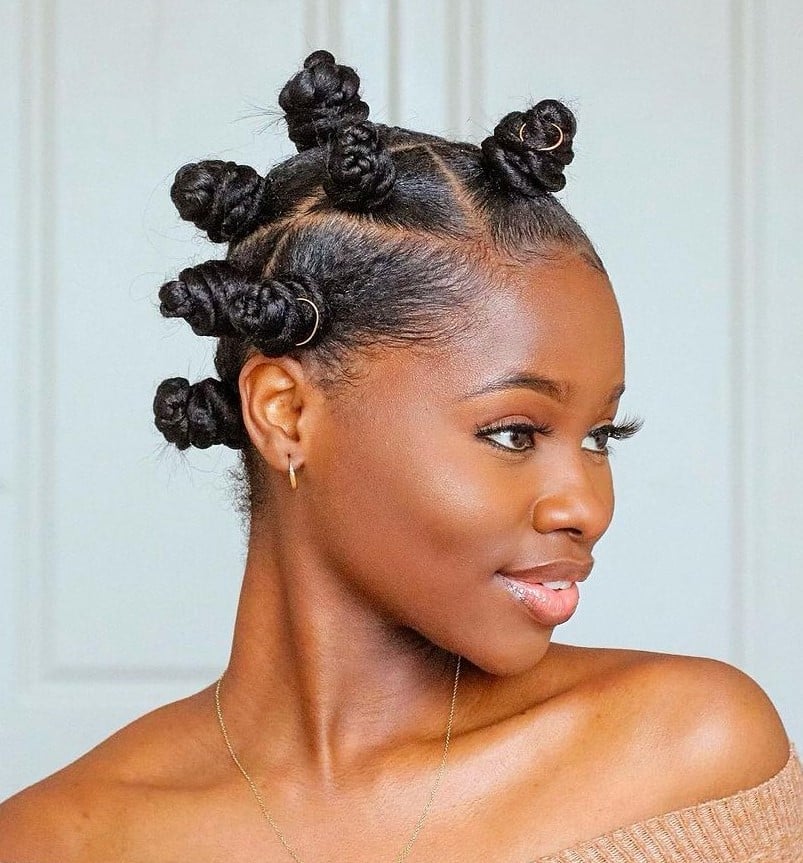
There’s a geometry to mini knots that a standard size misses, and this version commits fully: a dozen or more small coils set in even rows, split by a dead-straight middle part that runs from forehead to nape. The symmetry does the talking, so it suits thick, coily hair at collarbone length or longer where the weight of each knot stays uniform. Ask your stylist for mini bantu knots with a precise middle part. The part needs to be cut in, not just combed, to hold its line for the week or two you’ll keep the style. Even tension when twisting each knot keeps the pattern from going lopsided, and untwisting after 7 to 10 days gives you a defined curl that lasts another few days.
Bantu Knots with Shoulder Length Box Braids
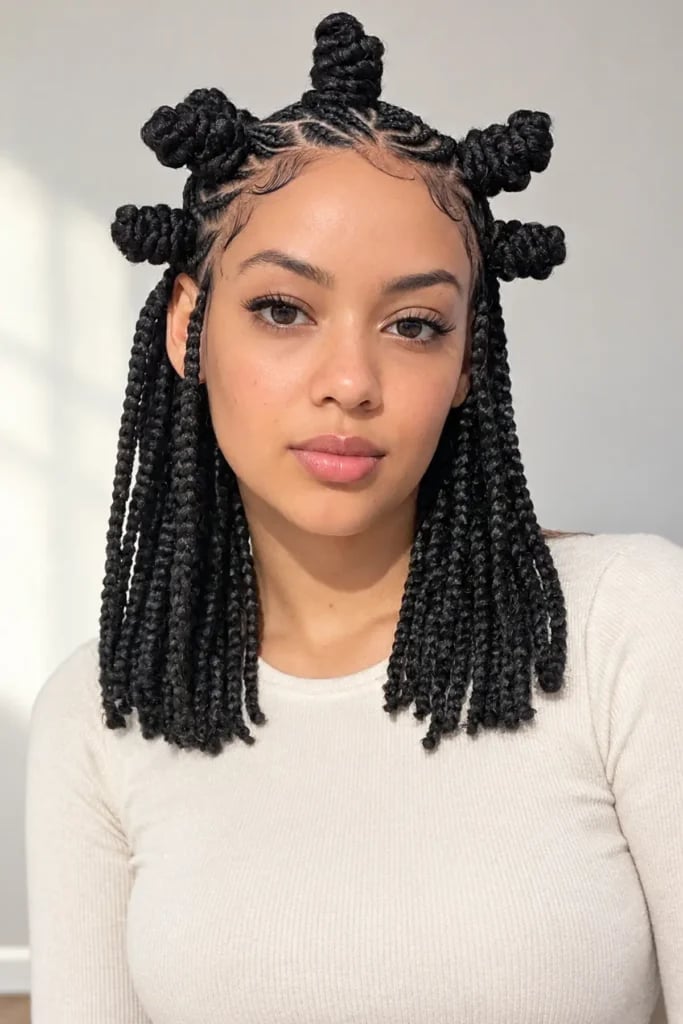
If plain knots feel too uniform, this hybrid splits the difference: knots on the crown, shoulder-length box braids everywhere else. The braids add movement and weight below, while the knots keep the top neat, so it suits thick, coily hair that can handle both braiding and knotting without strain. Ask your stylist for bantu knots on the crown with shoulder-length box braids. The middle part keeps the two textures from competing, and styled edges tie it together. Because the knots sit where braids usually start, keep the scalp clean to prevent buildup at the junction, and re-braid any ends that fray after a few weeks.
Small Bantu Knots with Side Part
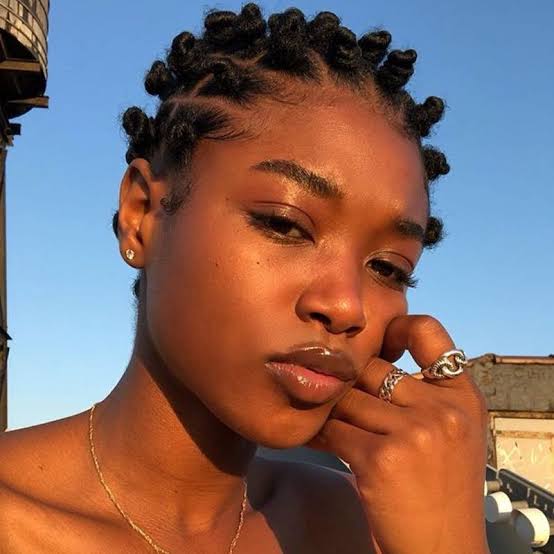
What if the part isn’t in the middle? A deep side part turns the same small knots into an asymmetrical layout that reads more relaxed and less ceremonial. It works on thick, coily hair of any length that can hold a side-swept line. Ask your stylist for small bantu knots with a deep side part, and be specific about which side you part on, since the knot placement shifts with it. You can also request a zigzag part for extra visual interest. A light mist of water in the morning refreshes the part without loosening the knots.
Uniform Bantu Knots Chin Length
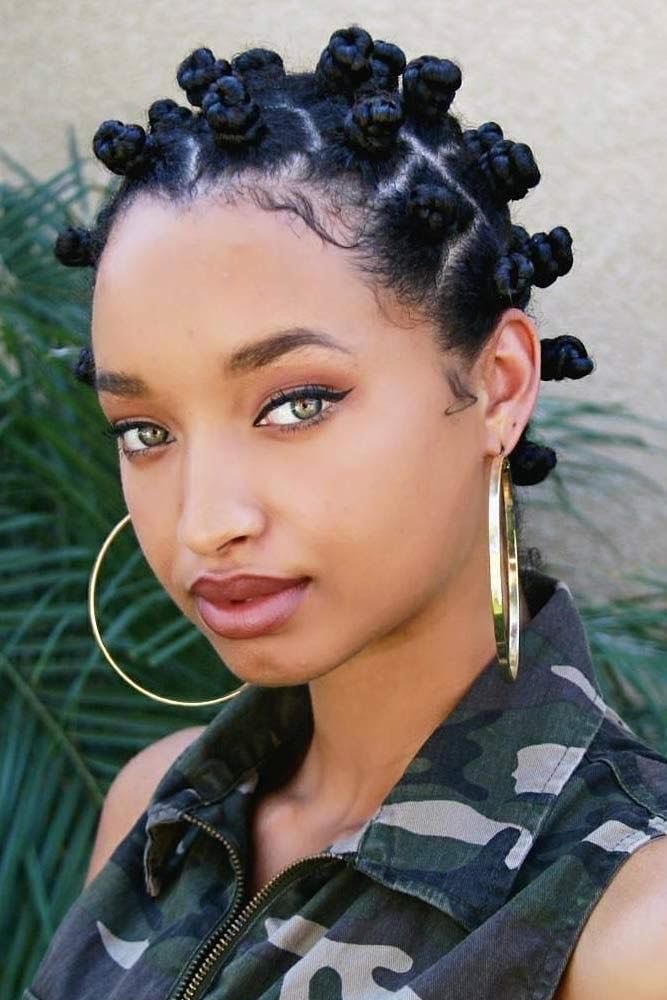
When every knot is the same size and the part is dead center, the result is almost architectural, and chin length keeps the whole thing from feeling heavy. It suits thick, coily hair that reaches at least the chin, since shorter hair won’t have enough to twist into a knot that holds. Ask your stylist for uniform small bantu knots, chin length. The even sizing means each knot needs the same tension when twisted, so the pattern stays consistent. Trim split ends before styling, because ragged tips make the knots look fuzzy by day three.
Bantu Knots with Styled Baby Hairs
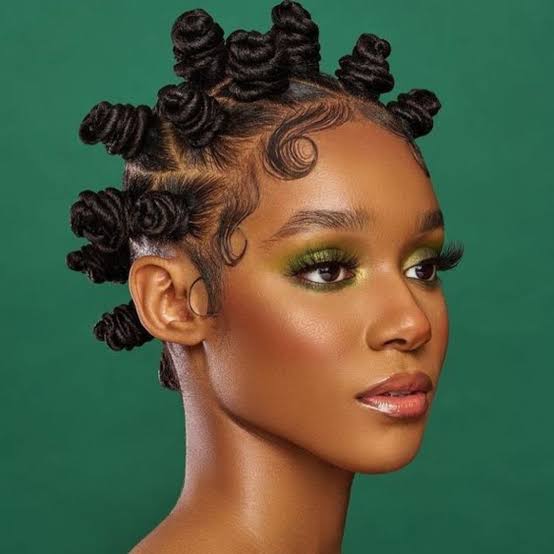
The knots themselves are straightforward, but the baby hairs are the point here. Styled into smooth swirls along the hairline, they frame the whole style without a single loose strand escaping. You need short, thick, coily hair for this to work, because the baby hairs have to be long enough to sculpt but not so long they overwhelm the knots. Ask your stylist for bantu knots with swirled baby hairs.
This is a salon sit, not a fifteen-minute home job. The stylist sets the knots first, then shapes the baby hairs with a soft brush and a light gel, working section by section so the swirls dry in place. Expect to be in the chair for a couple of hours, and keep the baby hairs moisturized with a light product so they don’t crisp up by the end of the week.
Mini Bantu Knots Side View
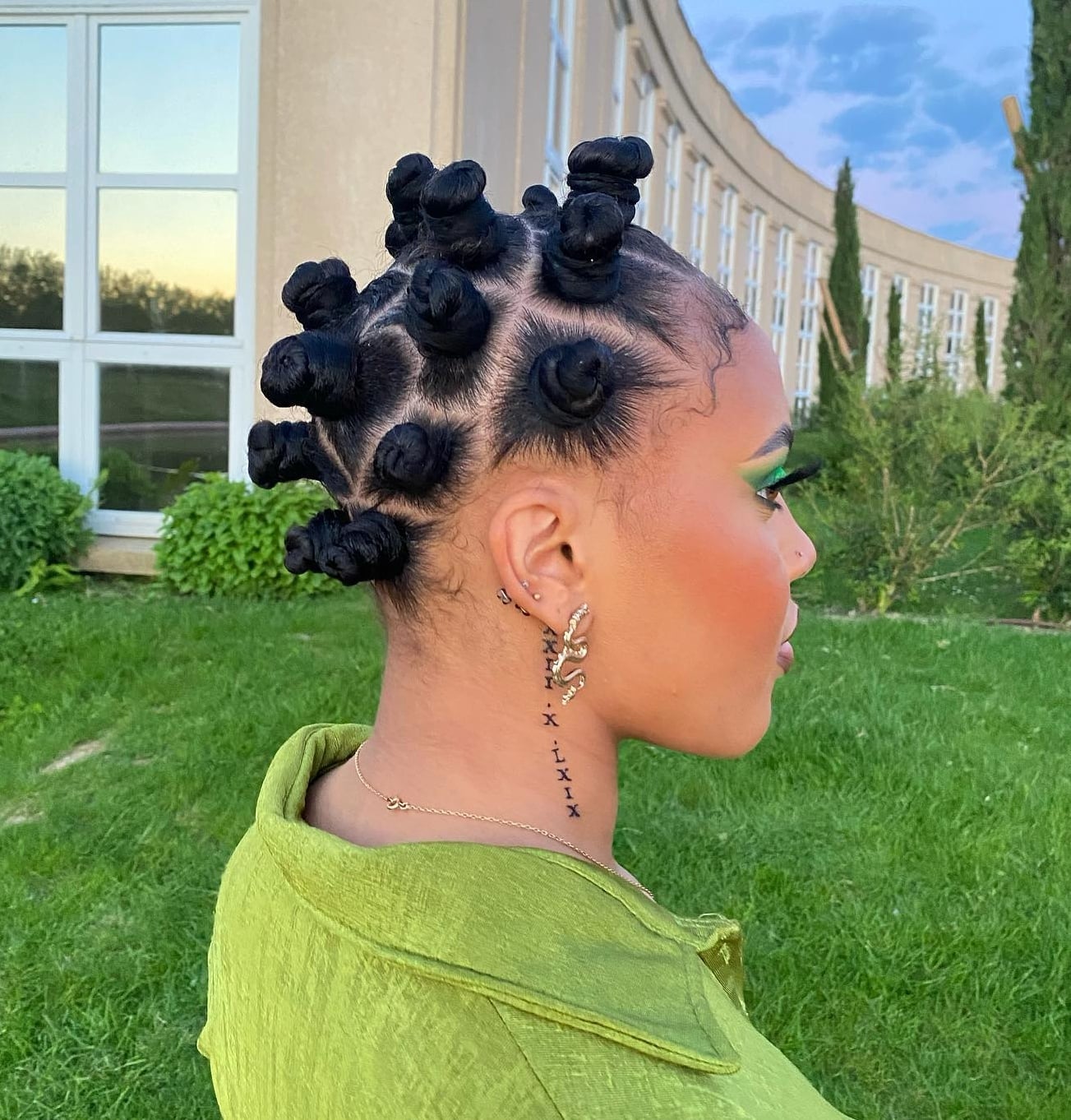
The side view of these tightly wound mini bantu knots reveals the geometry of the style: each knot sits flush against the scalp, with the coily texture creating a uniform, almost sculptural surface. The middle parting runs cleanly from forehead to nape, and the mid-back length gives the arrangement enough canvas to read as deliberate rather than random. This structure holds best on thick, coily hair that can grip the twist without slipping. Ask your stylist for tight mini bantu knots, mid-back length. A side view like this lands especially well for outdoor events or warmer weather, where the raised knots keep the hair off the neck and the pattern stays readable from any angle. Untwist carefully when taking it down to preserve the curl memory.
Bantu Knots in Crown Formation
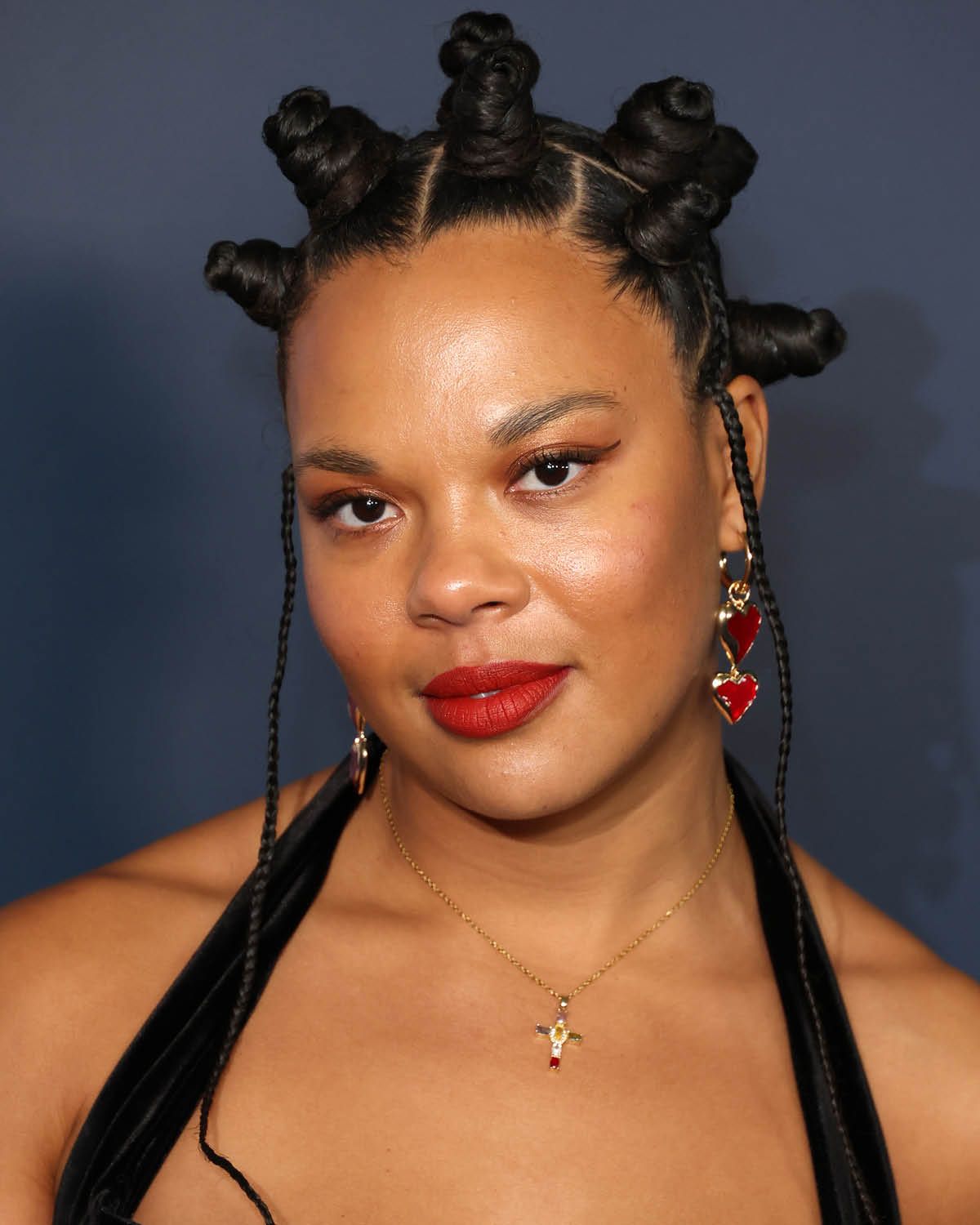
Can a protective style also read as ornate? This crown formation of mini bantu knots, parted in the middle and raised along the top of the head, answers with a clear yes. The thick, wavy texture gives each knot enough body to hold its shape without collapsing into the next. Wavy hair in particular grabs the twist well, creating a rounded silhouette that registers as intentional from the front view. This arrangement suits any length that can be sectioned into small, even squares; very short hair may not provide enough hair to form the knot. Ask your stylist for bantu knots styled in a crown pattern. The hold is sturdy, so the shape stays intact through a full day or evening.
Rose-Shaped Bantu Knots Warm Brown
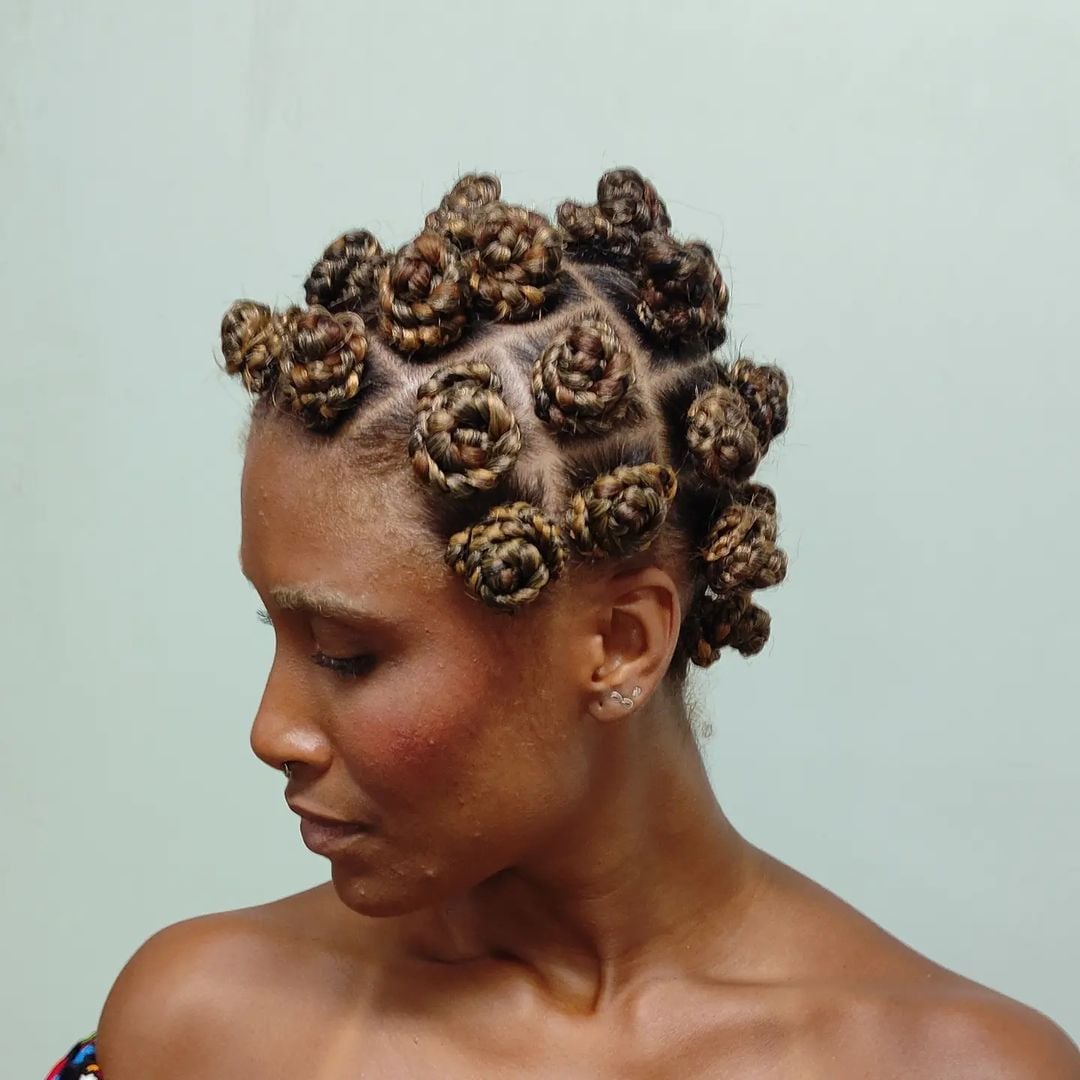
The rose shape is built by wrapping each section of hair around itself in a tight spiral rather than a simple twist, then tucking the end under the base. Seen from the side, the warm brown color and wavy texture give each knot a soft, dimensional look that reads more like a floral pattern than a standard protective style. The collarbone length is long enough to form the spiral but short enough that the knots sit close to the head without drooping. Thick, wavy hair holds the rose silhouette best; fine or slippery textures may unravel. Ask your stylist for rose-shaped bantu knots in warm brown. The result demands a salon-level hand for the shaping but rewards with a style that looks finished from every angle.
Bantu Knots with Styled Baby Hairs, Close-Up Take
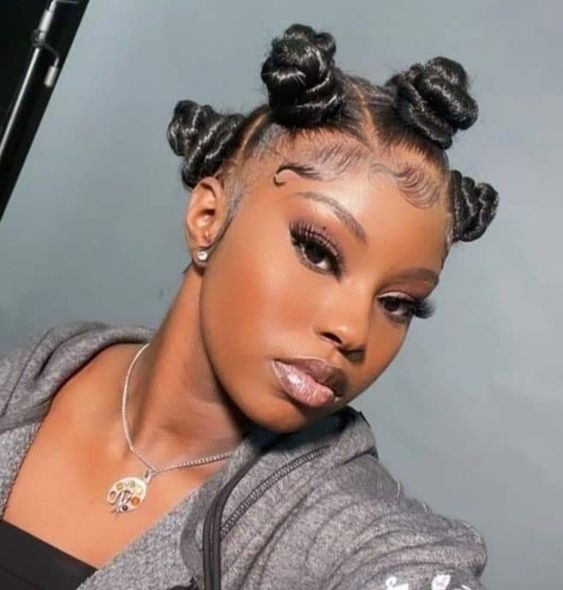
The bantu knots themselves are neat and uniform, but the real work is in the baby hairs. Each swirl along the hairline is shaped with precision, and the middle parting keeps the look balanced. On thick, coily hair, the hold is strong, and the style stays intact for a full day. Setting those baby hairs with a fine-tooth comb and a light-hold gel takes time; a rushed job looks messy, not polished. Ask your stylist for neat bantu knots with swirled baby hairs. This is a style that looks simple but is not quick to execute.
Side Part Bantu Knots with Baby Hairs
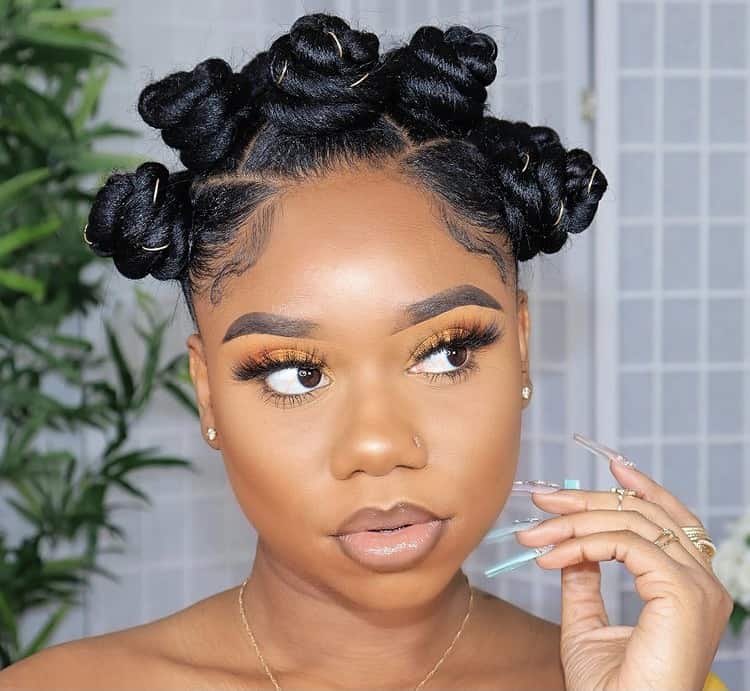
A side part changes the whole feel of bantu knots. Where a middle part is symmetrical and formal, the side part angles the knots across the scalp, making the arrangement feel looser and more casual. The short length keeps the knots compact and close to the head, and the thick, coily texture gives each knot a firm base. The baby hairs along the hairline are sculpted to follow the part, not fight it. Ask your stylist for bantu knots with a side part and styled baby hairs. A satin scarf overnight keeps those baby hairs smooth, and a light mist in the morning refreshes the hold without redoing the whole style.
Uniform Bantu Knots Back View
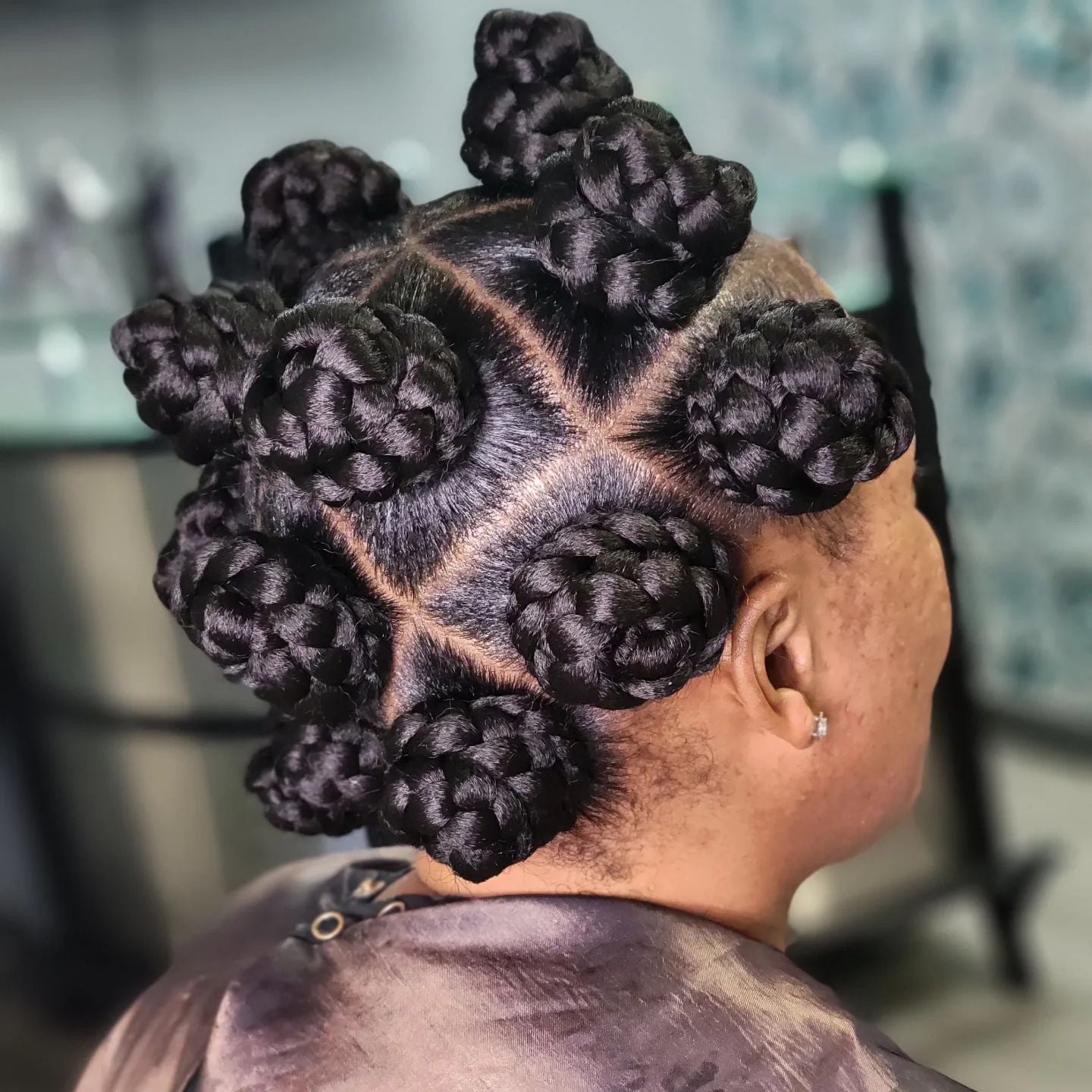
A back view of uniform bantu knots reveals the true geometry of a precise middle parting and consistent twisting. This arrangement works best on thick, coily hair where each section holds its shape without slipping. Ask your stylist for: uniform bantu knots, back view. The knots should be twisted firmly to the scalp so the pattern stays crisp from every angle. A well-executed set like this can hold for up to two weeks with minimal touch-ups, though the scalp may need a dry shampoo refresh around day five.
Mini Bantu Knots with Pigtail Braids
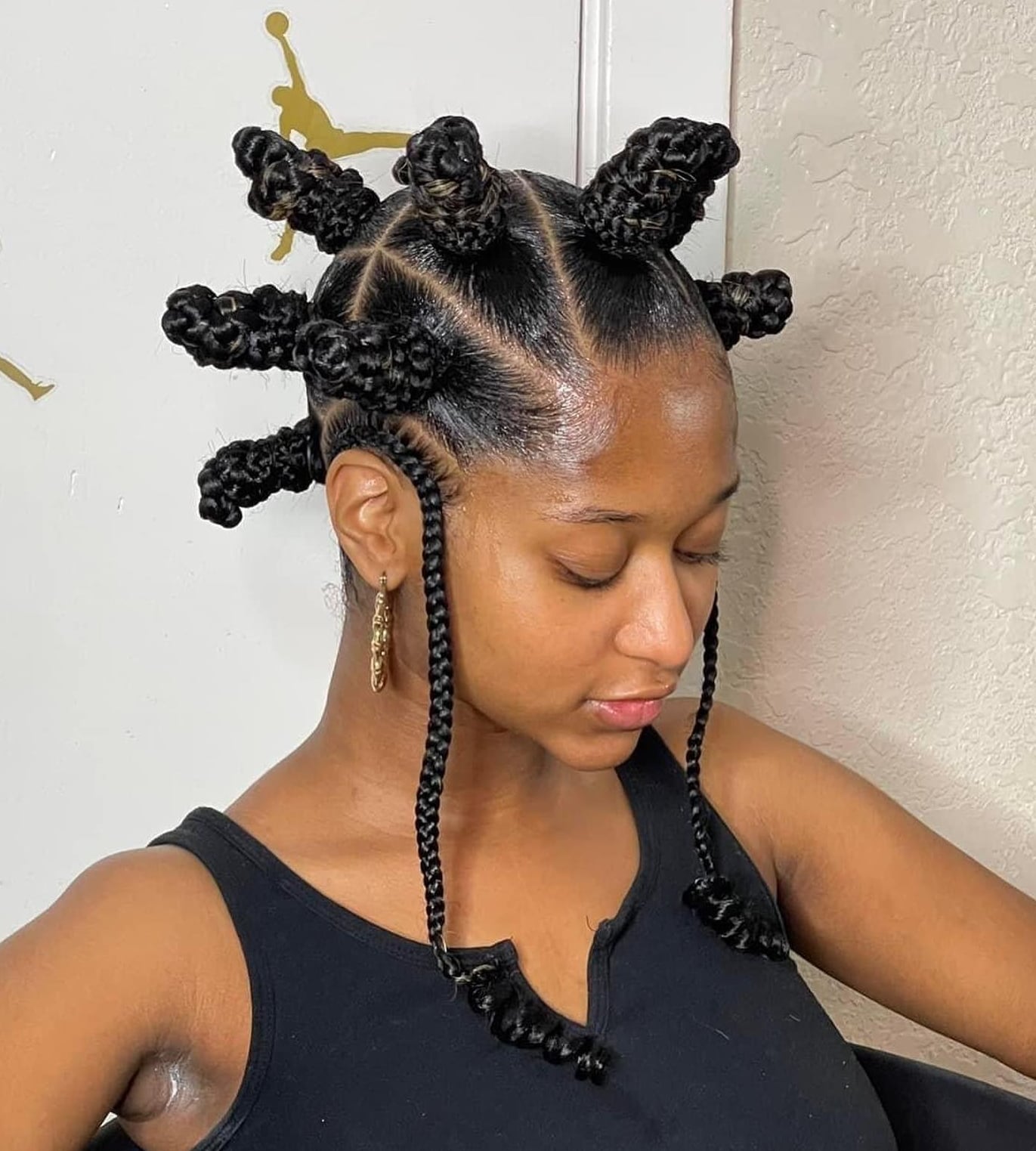
Can you combine mini bantu knots with braids and still have it look like one cohesive style? Yes, and the trick is in the transition. The top section is divided into small, uniform knots along a middle part, while the back hair falls into two pigtail braids that land around mid-back. Ask your stylist for: mini bantu knots with forward-falling pigtail braids. This combination works on thick, coily hair that has enough length to braid cleanly. The black base color highlights the texture and the structural contrast between the knotted crown and the braided lengths.
The pigtail braids should be taut but not tight enough to pull at the edges of the knots. A light oil on the braided sections prevents frizz from blurring the line between the two techniques.
Neat Bantu Knots Chin Length
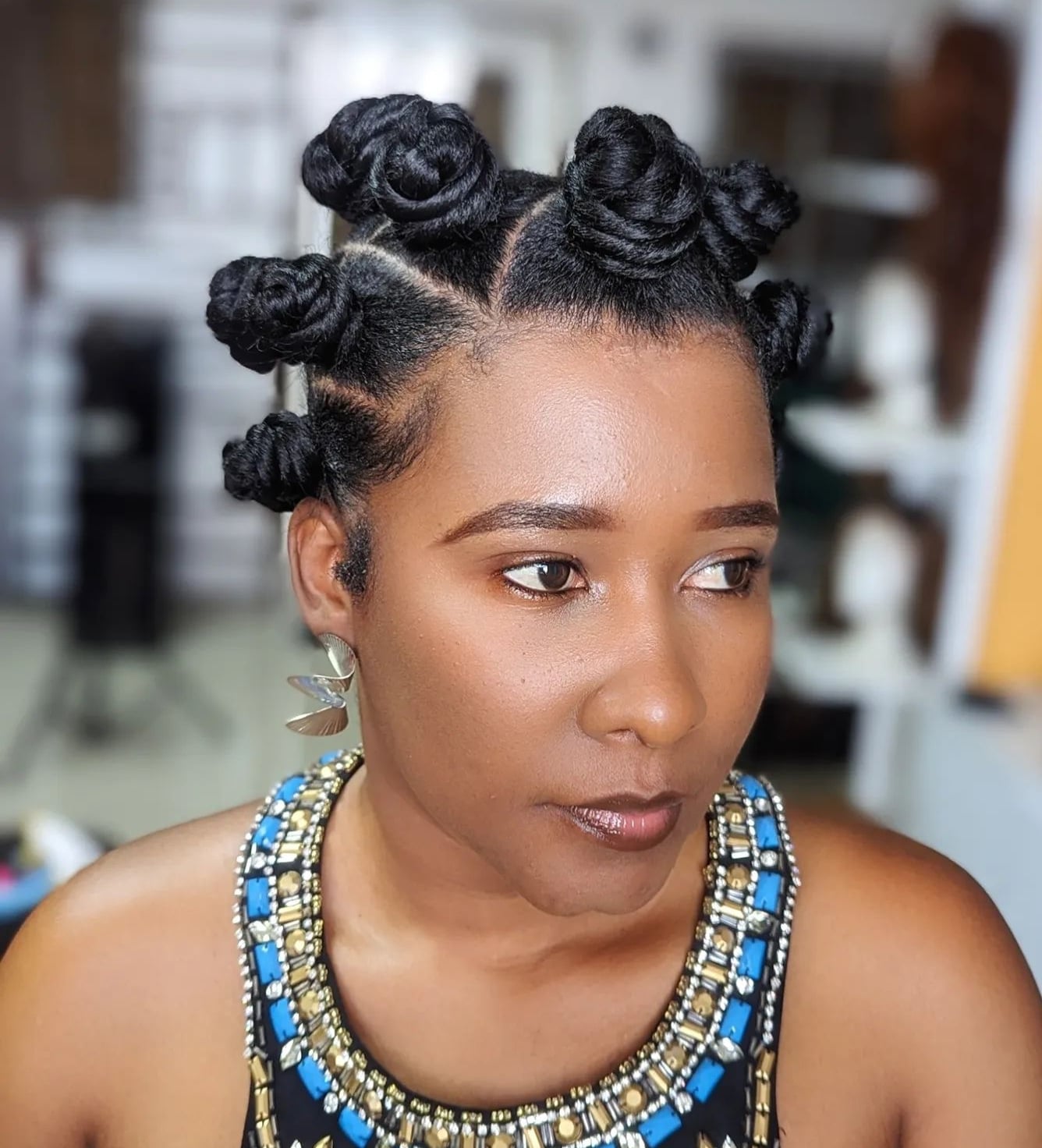
Neat bantu knots on chin-length hair prove that short length does not limit the style. The middle part divides the scalp into symmetrical sections, and each knot is small enough to sit flat against the head. This setup suits thick, coily hair that can hold a twist without pins slipping. Ask your stylist for: small neat bantu knots, chin length. The black base color keeps the silhouette clean, which matters more when the hair is short and every knot is visible. A middle part elongates a round face here, since the knots add height without widening the sides.
Vibrant Purple Yarn Bantu Knots
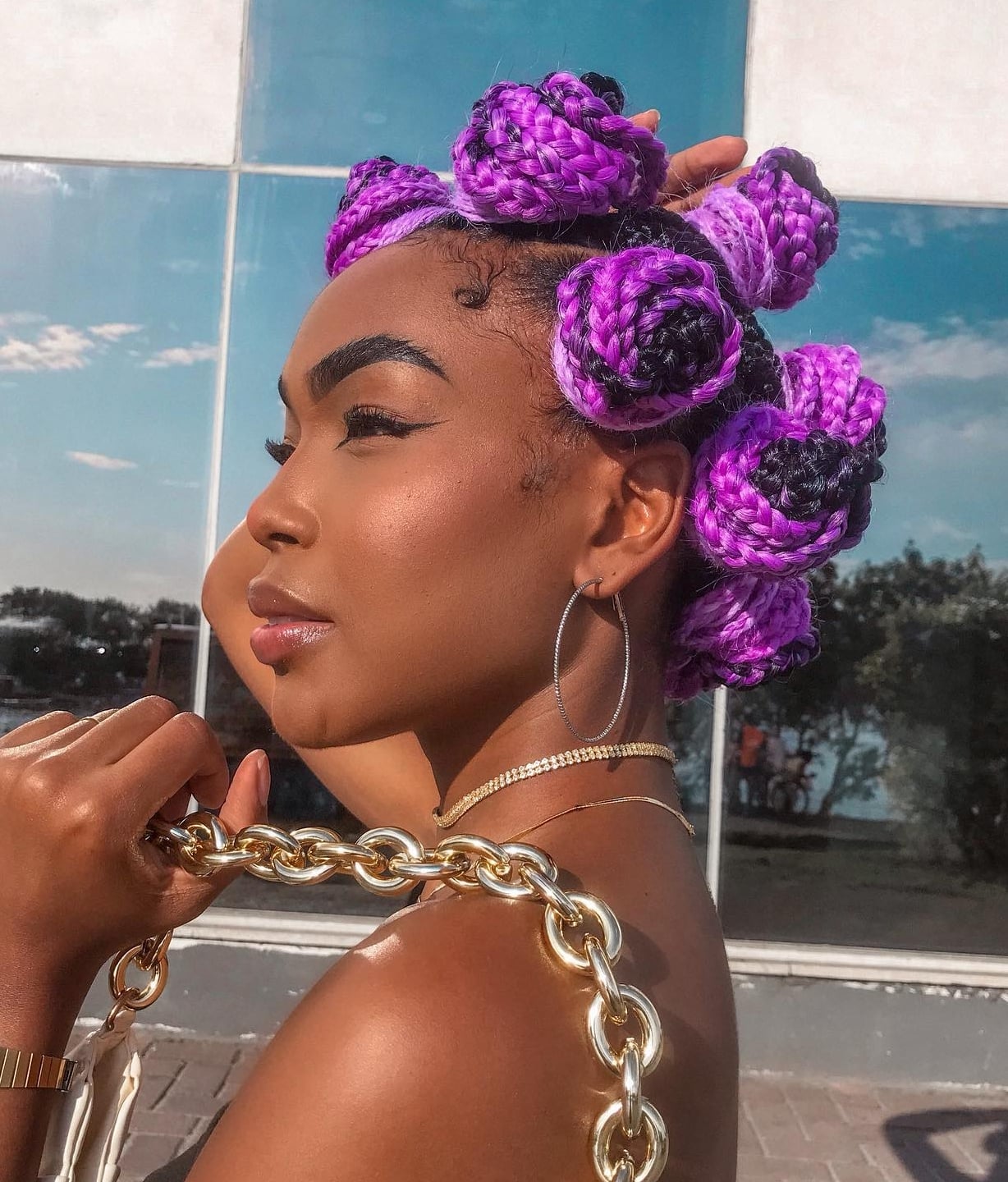
Vibrant purple yarn woven into bantu knots creates a color contrast that is bold but not chaotic. The black base anchors the bright purple strands. This style works well at summer festivals or any occasion where the hair is the accessory. Ask your stylist for: bantu knots with purple and black yarn. The knots are densely packed across the entire head, which means the pattern holds even during active days outdoors. Mid-back length gives enough weight to keep the yarn-wrapped sections secure, and the middle part adds symmetry to an otherwise saturated color story.
A side view shows how the purple yarn catches light differently than natural hair, which is the point. The baby hairs along the hairline are styled smooth to frame the density above.
Mini Bantu Knots Front View
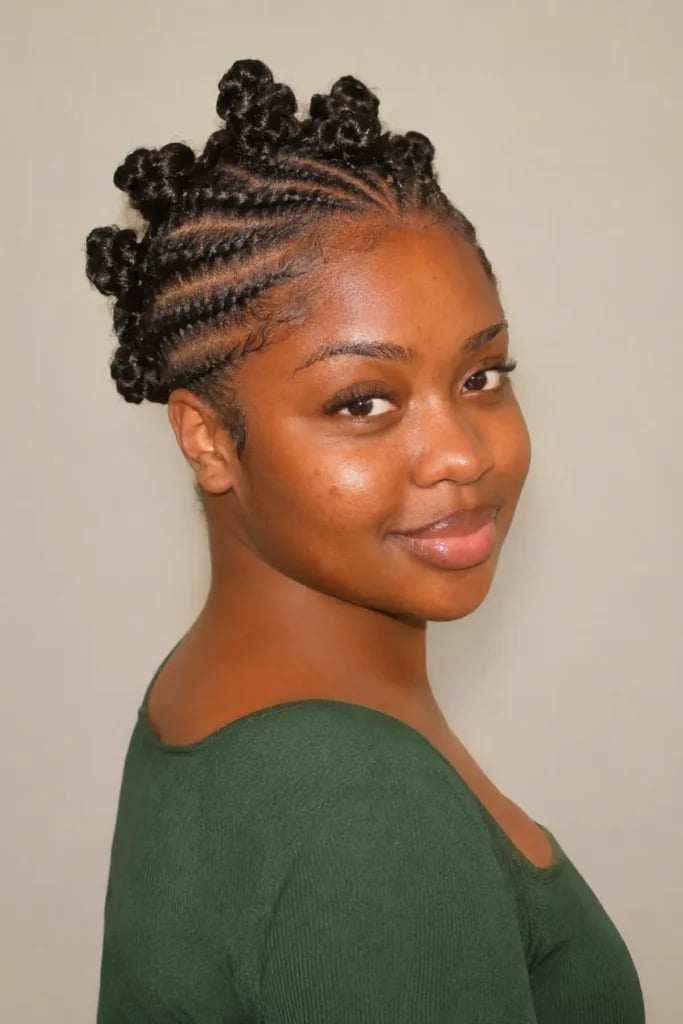
A front view of mini bantu knots on chin-length hair shows how the middle part anchors the symmetry. Each knot is small enough that the spacing between them matters more than the knot itself. This is a salon-level technique: sectioning must be precise for the knots to sit evenly across the front hairline. Ask your stylist for: mini bantu knots, chin length. The black coily texture grips the twist naturally, so the style holds without heavy product. For a DIY attempt, expect the back sections to be harder to see and tension to be uneven. The front view is the payoff, and it is worth having a second mirror or a patient friend.
Bantu Knots with Connecting Braids
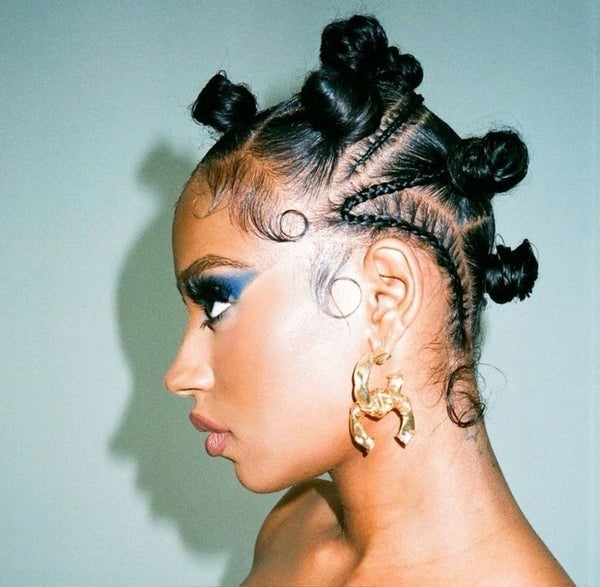
The rule with combining braids and knots is simple: the braids do the holding, so the knots can sit higher without slipping. Thick, coily hair at any length can carry this structure. Ask your stylist for: bantu knots with intricate connecting braids. The side profile shows how the braided sections anchor the knots, meaning the style holds longer than knots alone. Maintain scalp health where the two meet, and check that no braid is tight enough to pull at the root. A middle part keeps the geometry clean.
Mini Bantu Knots Chin Length Front View
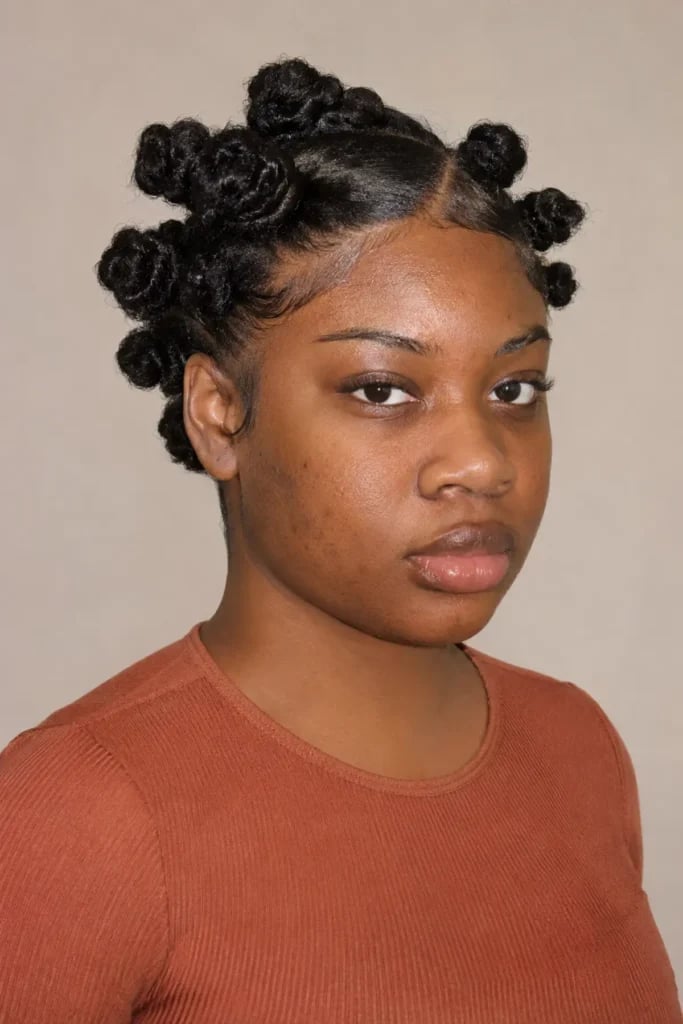
Can you get mini bantu knots on chin-length hair? Yes, if the hair is thick and coily. Ask your stylist for: mini bantu knots, chin length. Start with a middle part, then section each knot from root to tip. Twist each section firmly toward the scalp before wrapping the end into a coil. Tuck the tail under and secure with a small elastic. Repeat until the whole head is covered. A light sheen spray smooths flyaways without weighing the knots down.
Neat Bantu Knots Top of Head
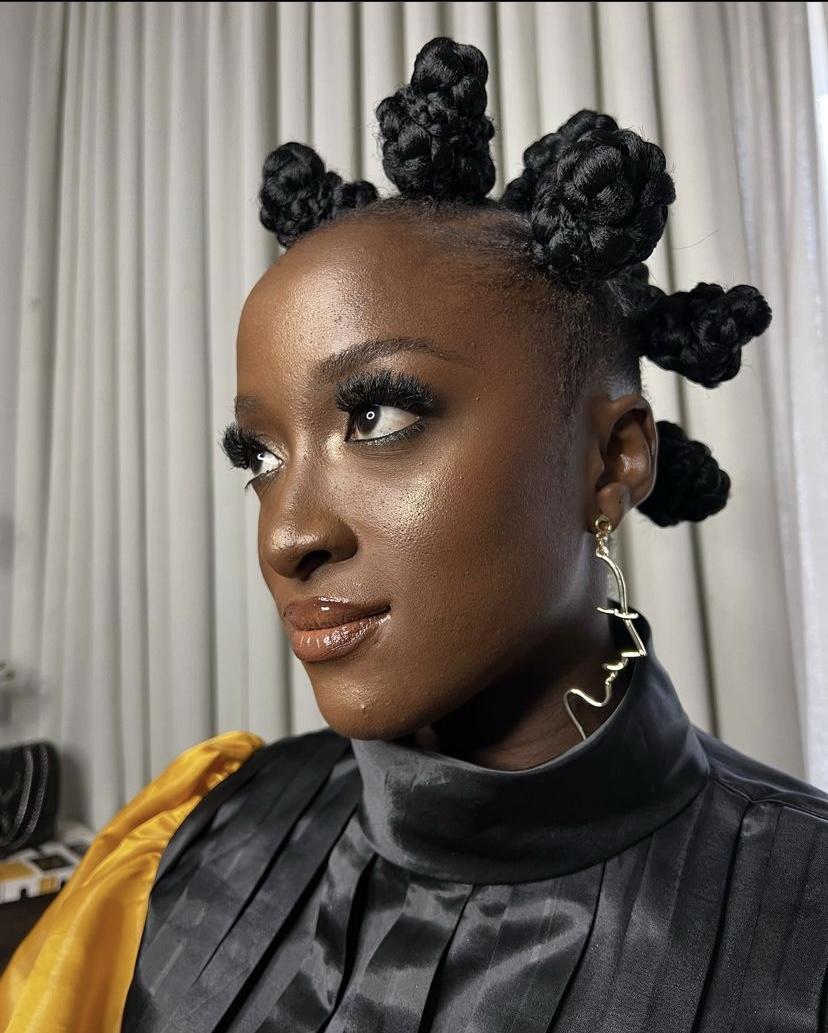
The cleanest version of this style concentrates the knots on the crown and leaves the hairline bare. Thick, coily hair takes the neatest shape here, since each knot has enough density to sit tight against the scalp. Ask your stylist for: neat bantu knots on the crown. The middle part runs straight back, and every knot lines up in even rows. This placement works well for anyone who wants volume at the top without bulk at the sides or nape. A smoothing cream helps each coil hold its shape.
Bantu Knots Heart Shape Pattern
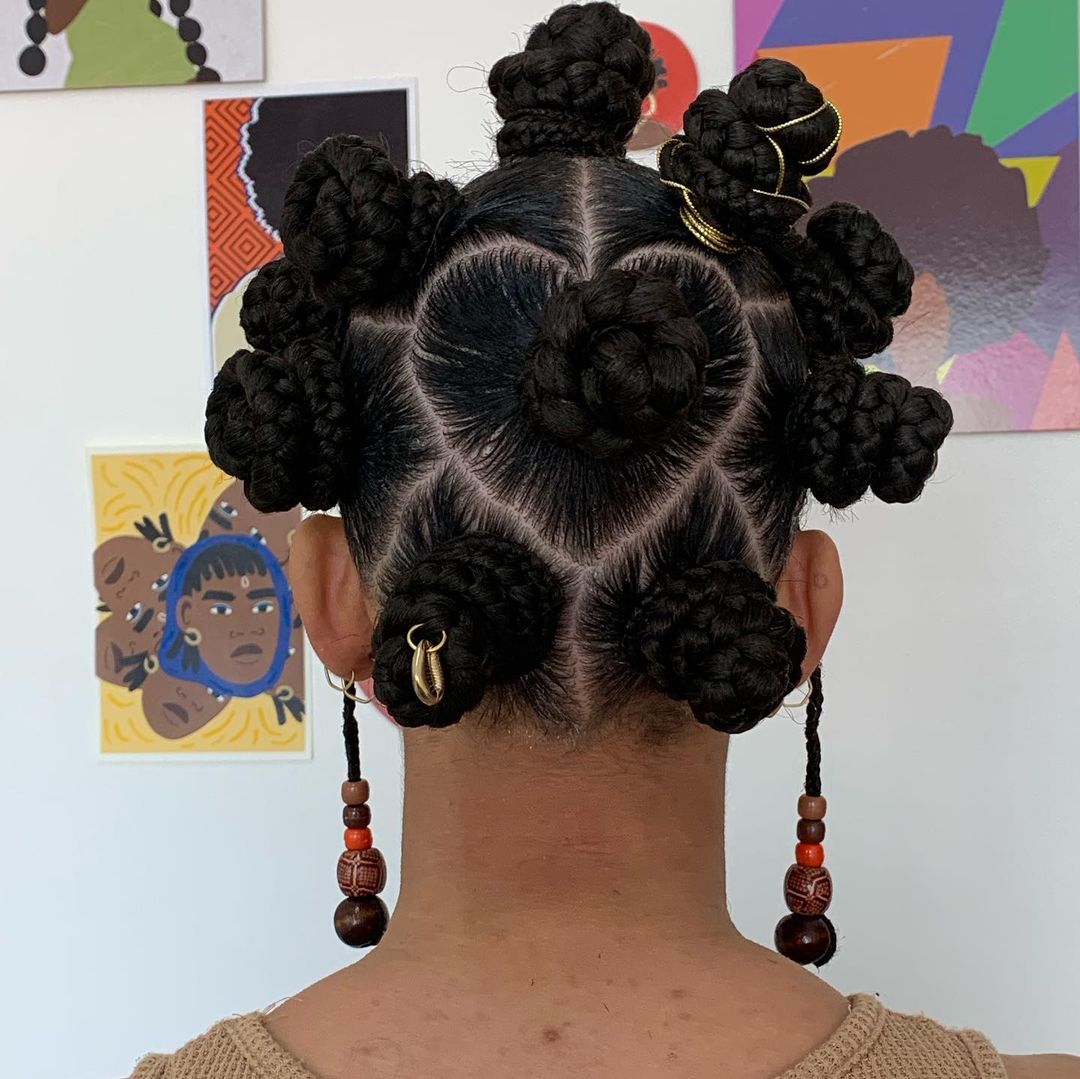
This is a technical style, not a casual one. The parting is precision work: each section is carved into a heart outline before the knot is twisted. Thick, coily hair holds the geometric lines best. Ask your stylist for: bantu knots in a heart shape with gold accents. The back view reveals the full pattern, with small gold accessories clipped into select knots for contrast. Every section must be parted and twisted in the same direction, or the heart shape distorts. Untwist gently to avoid disrupting the pattern.
Oval Earrings with Side Profile Bantu Knots
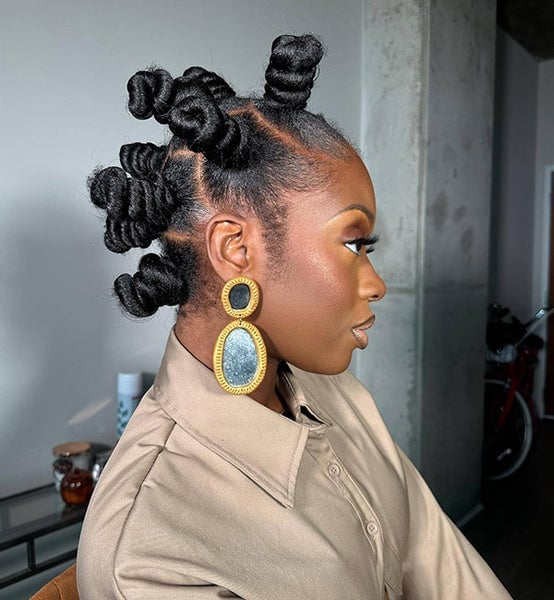
The large oval earrings stand out against the bantu knots. The knots form a simple, even base that lets the ovals take center stage without competition. Thick, coily hair at short length works best for this side-profile view. Ask your stylist for: bantu knots, side profile, with statement earrings. The knots themselves are basic, so if the earrings are small or missing, the style looks unfinished. A clean middle part and neat coils are all this look needs.
Final Thoughts
For a more defined look, ensure each knot is twisted tightly to the scalp. For a softer appearance, allow a little looseness in the twist. Bantu knots offer a beautiful blend of tradition and modern styling.
- Keep knots moisturized with a light oil or serum, focusing on the scalp and ends.
- Sleep with a satin bonnet or scarf to protect the knots and maintain definition.
- Refresh the style by gently smoothing any flyaways with a styling cream.
- Untwist after 1-2 weeks, depending on hair texture and desired outcome, to reveal a defined curl pattern.