
Mastering Communication: Essential Skills for Success
Learn essential communication skills for stronger relationships and success. Understand styles and adapt your message for clearer connections.

Have you ever felt like you’re speaking a different language than the person across from you? That’s because, in a way, you might be. We each have a unique communication style, and when they clash, frustration and misunderstandings follow. The good news is that you can learn to adapt your approach to connect with anyone.
This article breaks down the four communication styles, how to identify your own, and simple ways to adjust your delivery so your message lands. You’ll also find practical tips for active listening, avoiding common pitfalls, and knowing when to seek extra support.

Key Takeaways
- Identify your communication color by asking if you’re introverted or extroverted, logical or emotional.
- Adapt your style to match others: be direct with Reds, engaging with Yellows, calm with Greens, and precise with Blues.
- Practice active listening by paraphrasing what you hear before responding.
- Use ‘I’ statements to express feelings without blaming others.
- Seek professional help if communication leads to distress, fear, or abuse.
Unlock Better Connections by Understanding Communication Styles
Effective communication isn’t about talking more; it’s about understanding the different communication styles people use and adapting your approach. It involves active listening, clear expression, and paying attention to non-verbal cues. When you identify your own style and recognize the styles of others, you can bridge gaps, reduce misunderstandings, and build stronger relationships in your personal and professional life.
Why We Often Miss Each Other in Conversation
The main reason conversations go wrong is that most people communicate only in their own preferred style, expecting others to understand them. One person might be direct and results-focused, while another values connection and fun first. These different priorities lead to frustration and missed messages.
Ignoring non-verbal cues, like body language and tone of voice, makes things worse. So does making assumptions about what the other person is thinking. Without awareness of these differences, you end up talking past each other instead of truly connecting.
Four Steps to Mastering Communication Styles

- Identify the four communication colors: There are four core styles, each with a color. Reds focus on power and results, Yellows on fun and connection, Greens on peace and stability, and Blues on logic and structure. Think of a friend who embodies each style to remember them easily.
- Determine your own dominant style: Ask yourself three questions. Are you more introverted (Blue or Green) or extroverted (Red or Yellow)? Are you more logical (Blue or Green) or emotional (Red or Yellow)? Do you speak more directly or indirectly? Your answers point to your primary color.
- Recognize the core problem: Most people communicate only in their own color. A Red will be direct with everyone, while a Green will seek harmony. This works only when you talk to someone with the same color. With anyone else, it creates disconnect and frustration.
- Adjust your delivery, not your personality: You don’t need to change who you are. Just adapt your approach to match the other person’s color. For a Red, be direct, confident, and give clear frameworks. For a Yellow, bring enthusiasm. For a Green, be patient. For a Blue, provide structure and detail.
If you learn better by watching, this 17-minute video from Vinh Giang shows every step.
Tailoring Your Message to Every Communication Style
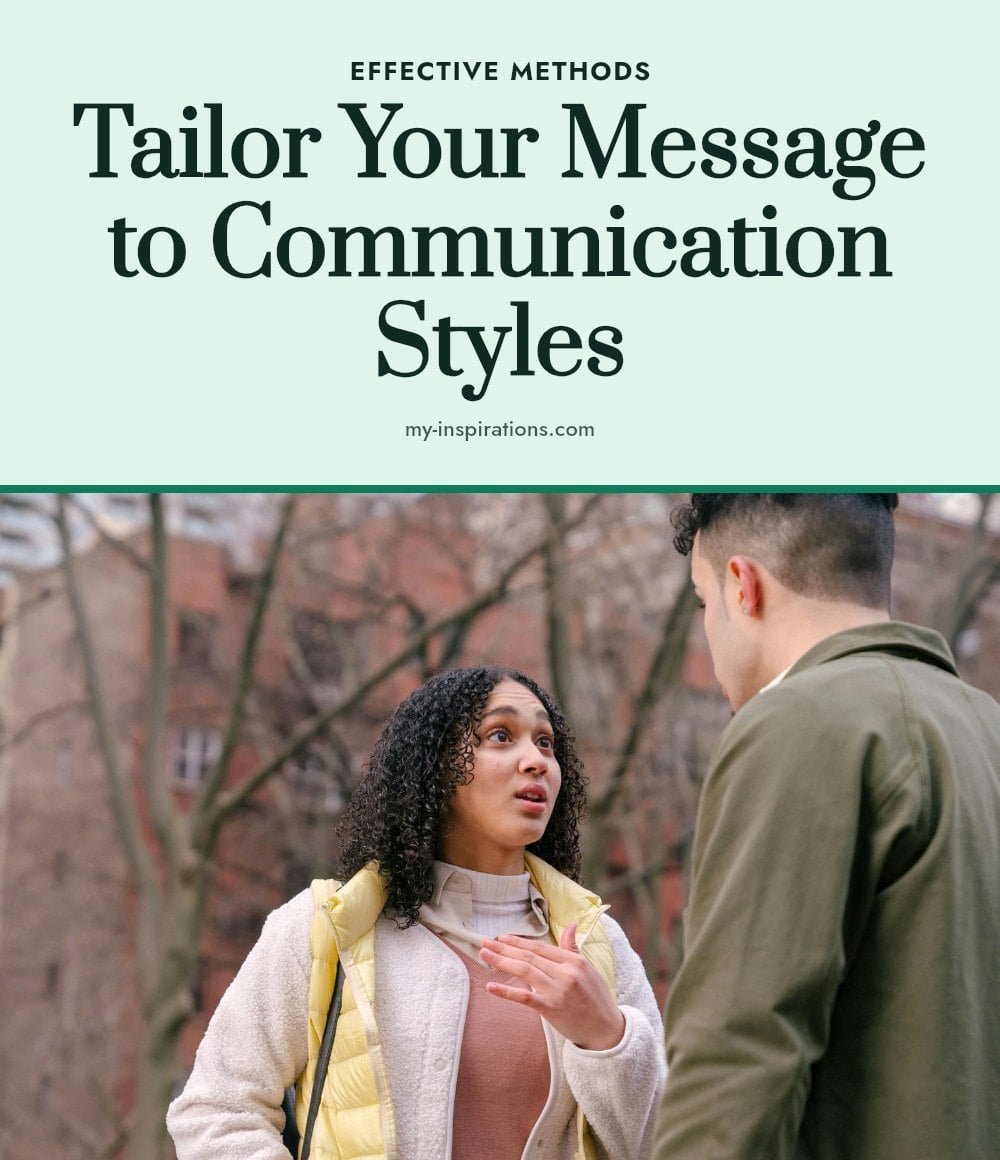
Tailoring Your Message to Every Communication Style
Once you know someone’s color, you can adjust your delivery without changing who you are. Here’s how to connect with each style.
For Reds: Be direct, decisive, and confident. Skip the small talk and get to the point. Present a clear framework with actionable results, so they see the path forward. Avoid over-explaining or hedging, Reds value efficiency and outcomes.
Tip: When speaking with a Red, lead with your conclusion, then offer the supporting steps. They’ll appreciate that you respect their time.
For Yellows: Bring energy and enthusiasm. Focus on connection and fun before diving into details. Allow the conversation to be open and less structured, so they feel free to explore ideas. Use stories or humor to keep them engaged, but keep an eye on the goal so you don’t drift too far.
Caution: Yellows can lose credibility if they seem unfocused. Gently steer back to the topic when needed, but keep the tone light.
For Greens: Prioritize peace and stability. Be patient, avoid conflict, and emphasize harmony and consensus. Ask for their input and show that you value their comfort. Frame changes as opportunities for everyone to feel secure, and give them time to process without pressure.
Tip: If you sense hesitation, offer reassurance that you’ll work through any concerns together. Greens respond well to collaborative language.
For Blues: Be precise, logical, and thorough. Provide structure and detailed information, respecting their need for accuracy. Present facts, data, and a clear rationale. Avoid emotional appeals or vague statements, Blues want to see the logic and structure behind your approach.
Caution: Blues can overcomplicate things or seem critical if you skip details. Prepare ahead with specifics, and invite their questions to show you value their precision.
Smart Tips for Sharpening Your Communication
Practice active listening: Paraphrase what you hear to confirm understanding before you respond. Saying “So what I’m hearing is…” forces you to truly listen, not just wait for your turn to talk.
Observe non-verbal cues: Body language, facial expressions, and tone of voice often carry more meaning than the words themselves. Check in with yourself: is your posture open? Are your arms crossed?
Use ‘I’ statements: Frame your needs without blame. “I feel overwhelmed when plans change last minute” lands much better than “You always mess up the schedule.”
Ask open-ended questions: “What was the hardest part of that project?” invites real conversation. A yes-or-no question shuts it down.
Seek to understand first: Before sharing your own perspective, ask the other person to elaborate on theirs. This builds trust and reduces defensiveness.
Be mindful of your delivery: Your tone and body language can contradict your words. A calm voice and relaxed shoulders make even tough feedback easier to hear.
Common Communication Pitfalls and How to Avoid Them
Assuming understanding: Don’t expect anyone to read your mind. State your thoughts and intentions clearly, even if it feels obvious to you.
Focusing only on speaking: If you’re planning your comeback while the other person is still talking, you’ve stopped listening. Prioritize hearing them fully before you respond.
Letting emotions take over: When anger or frustration spikes, pause. Take a slow breath or excuse yourself for 60 seconds. A short reset prevents a small disagreement from becoming a fight.
Misinterpreting non-verbal cues: A crossed arm might mean cold, not defensiveness. If you’re unsure about someone’s tone or body language, ask: “I’m sensing hesitation, am I reading that right?”
Using vague language: “I need this soon” leaves too much room for error. Say “I need this by 3 p.m. Thursday” instead.
Avoiding direct conversations: Passive-aggressive comments or silence don’t solve anything. Address the issue respectfully and directly, even if it’s uncomfortable.
When to Seek Professional Help for Communication Challenges
If communication in a relationship consistently leads to emotional distress, fear, or abuse, it’s time to involve a professional. A therapist or counselor can give you tools to navigate dynamics that feel impossible to manage on your own.
In situations involving harassment or threats, prioritize your safety first. Seek support from your organization’s HR department, a legal advocate, or local authorities. No communication skill replaces the need for a safe environment.
The Journey of Improving Your Communication
Improving your communication isn’t a one-time fix. It’s an ongoing process that requires consistent practice and self-awareness. The main investment is your time and willingness to try new approaches in real conversations.
Noticeable improvements usually come with dedicated effort over weeks or months. For deeper learning, consider books or workshops focused on communication skills. The payoff, stronger relationships and fewer misunderstandings, makes the effort worthwhile.
Frequently Asked Questions
What are the most common communication mistakes?
Common communication mistakes include assuming others understand your unspoken thoughts, focusing only on what you want to say rather than listening, letting emotions escalate a conversation, misinterpreting non-verbal cues, using vague language, and avoiding direct communication in favor of passive-aggressive behavior.
How can I improve my non-verbal communication?
To improve non-verbal communication, pay attention to body language, facial expressions, and tone of voice, both yours and others’. Be mindful of your own posture and gestures, and try to read the other person’s cues to better understand their feelings.
Is it possible to have a blend of communication styles?
Yes, it’s possible to have a blend of communication styles. Many people don’t fit neatly into one color. You might be a combination of, say, Red and Blue, or Yellow and Green. The key is to recognize the dominant traits and adapt accordingly.
How do I handle difficult conversations effectively?
To handle difficult conversations, address issues directly but respectfully. Avoid letting emotions dictate your words; take a moment to compose yourself if needed. Use ‘I’ statements to express your feelings without blame, and seek to understand the other person’s perspective before pushing your own.
What are the key components of effective communication?
Key components include active listening, clear and concise speaking, non-verbal awareness, empathy, and the ability to give and receive constructive feedback. Adapting your style to the other person also helps ensure your message is received as intended.
Final Thoughts
Mastering communication is a journey, not a destination. Start by identifying your dominant color, then practice adapting to the people around you. You don’t need to change who you are; just tweak your delivery to build stronger connections.
Expect to see noticeable improvements over weeks or months of consistent effort. Some conversations will still be tricky, but with practice, you’ll handle them with more confidence and empathy. The next time you face a misunderstanding, pause, consider the other person’s style, and adjust your approach. It’s a small shift that can make a big difference.
This article provides general information and is not a substitute for professional advice. If you’re experiencing persistent communication problems that cause distress or harm, consider consulting a therapist or counselor. For safety concerns, seek legal or organizational support.