19 Classy Color Locs 2027
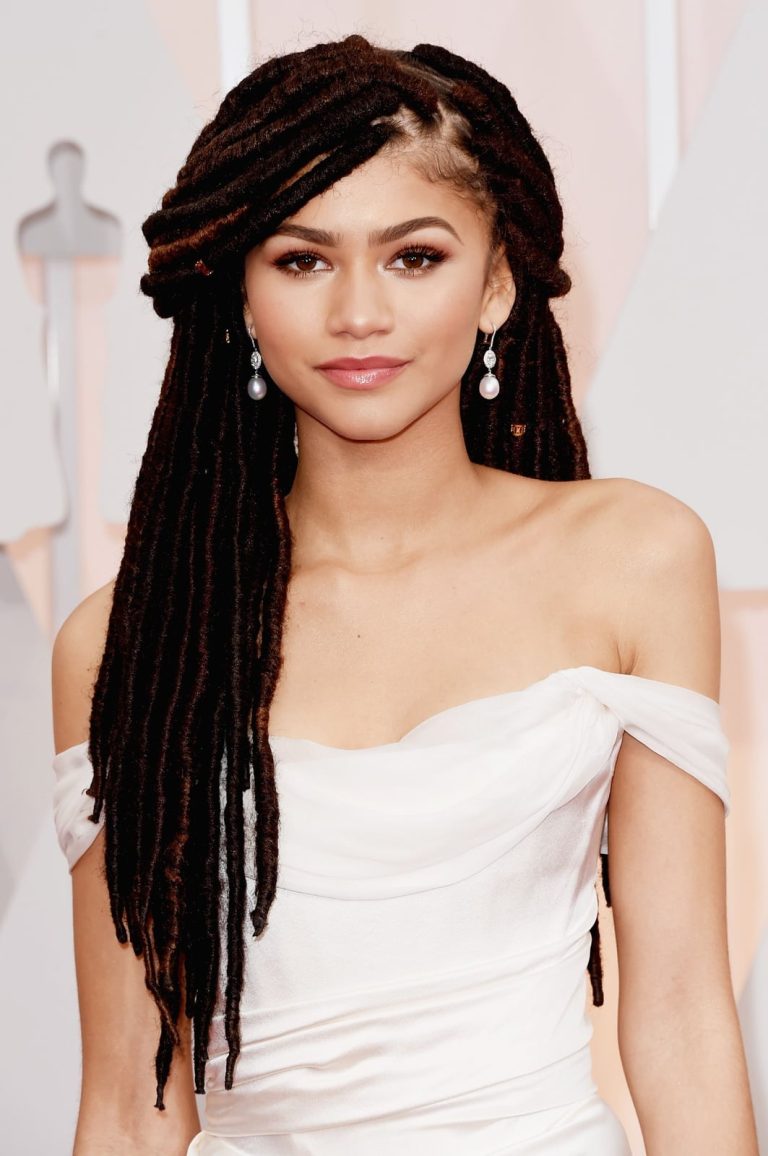
Classy Color Locs 2027 featuring dark brown auburn highlights, black locs with blonde tips, and medium brown locs with lighter shades.

Locs are a natural canvas for color, and the trick is making the shade look intentional rather than accidental. This season, lived-in color and glossy natural texture lead the way, with soft face-framing highlights replacing chunky stripes.
Inside this collection of 19 ideas, you will find options for every loc length and texture, from subtle dark browns with auburn highlights to vibrant red and rainbow gradients. Whether you struggle with a visible grow-out line or want a bold change that still reads as polished, Classy Color Locs offers a practical starting point. Fine locs, thick locs, short and long: there is a shade and technique here that works with your routine.
Dark Brown Locs With Auburn Highlights
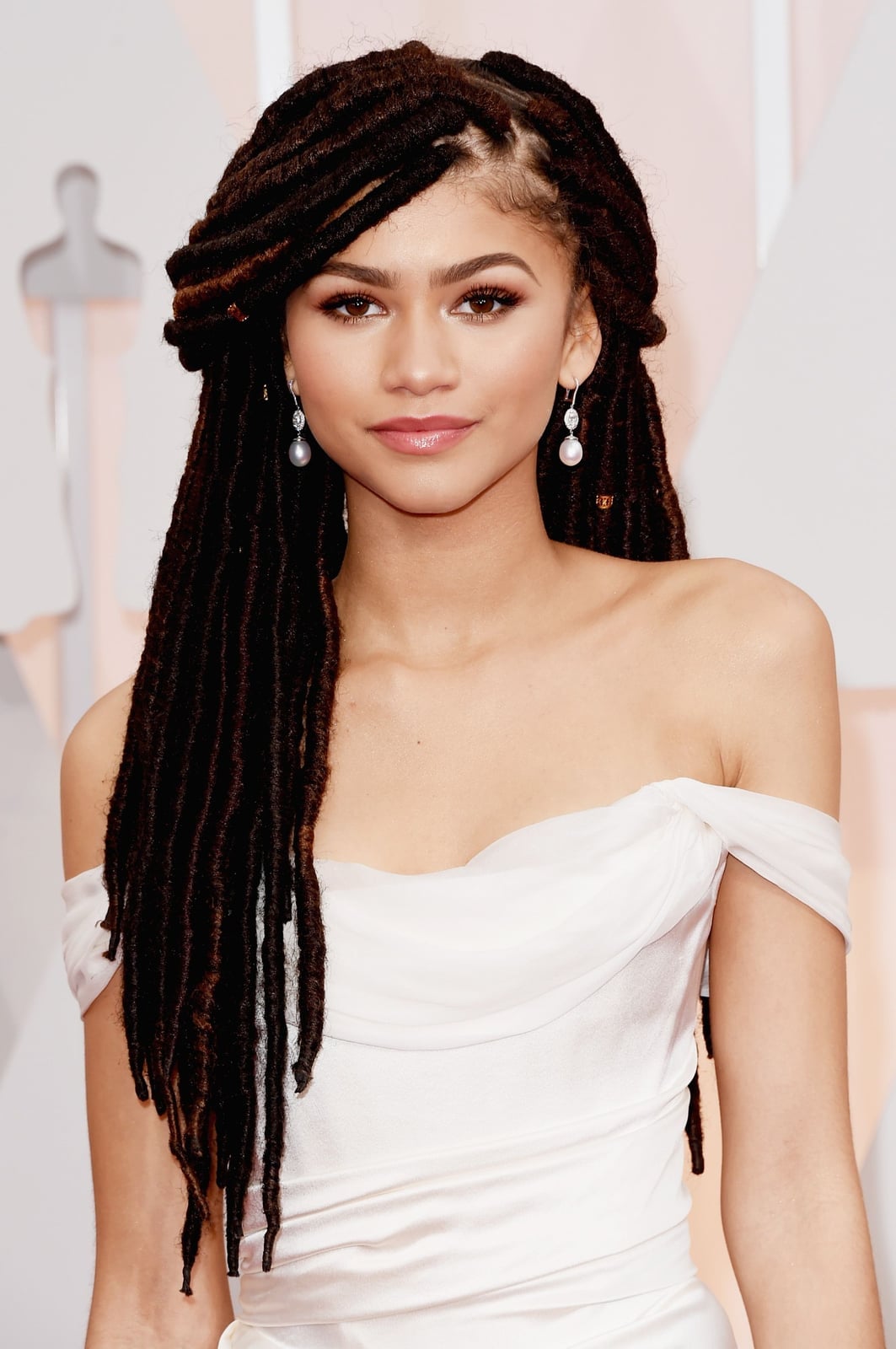
A dark brown base gets its depth from auburn highlights woven through the mid-back braided locs, each warm strand sitting against the rich background rather than blending into it. The technique here is deliberate placement: the auburn pieces land on the surface of each braid, so the color reads as dimension instead of an all-over tint. Thick, wavy locs at this length can carry the contrast without looking busy. Ask your colorist for: dark brown locs with auburn highlights, braided style. A middle parting keeps the color distribution even on both sides.
Black Locs With Blonde Tips
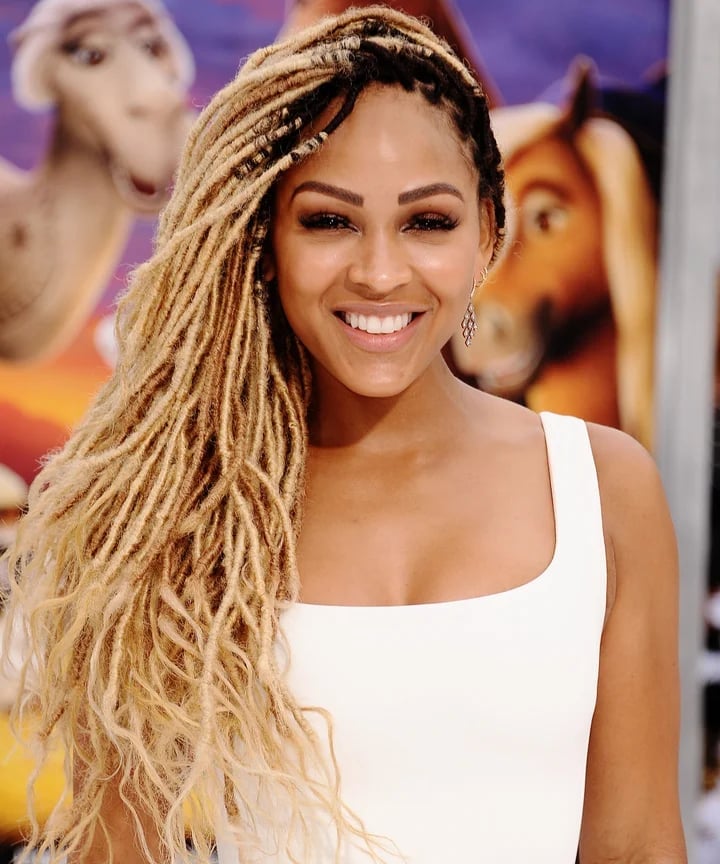
Blonde tips on black locs deliver contrast without the commitment of an all-over light shade. The dark base stays intact, while the ends catch light at the length. It is a different effect than a full balayage, where the color fades gradually from root to tip. Here the transition is sharper, which works best on thick, wavy goddess locs that have enough weight to hold the shape.
Ask your colorist for: black goddess locs with blonde tips. The blonde section sits on the last few inches, so the length stays visible. A toning session every six to eight weeks keeps the tips from pulling brassy, especially if you wash in cool water.
Jet Black Collarbone Locs
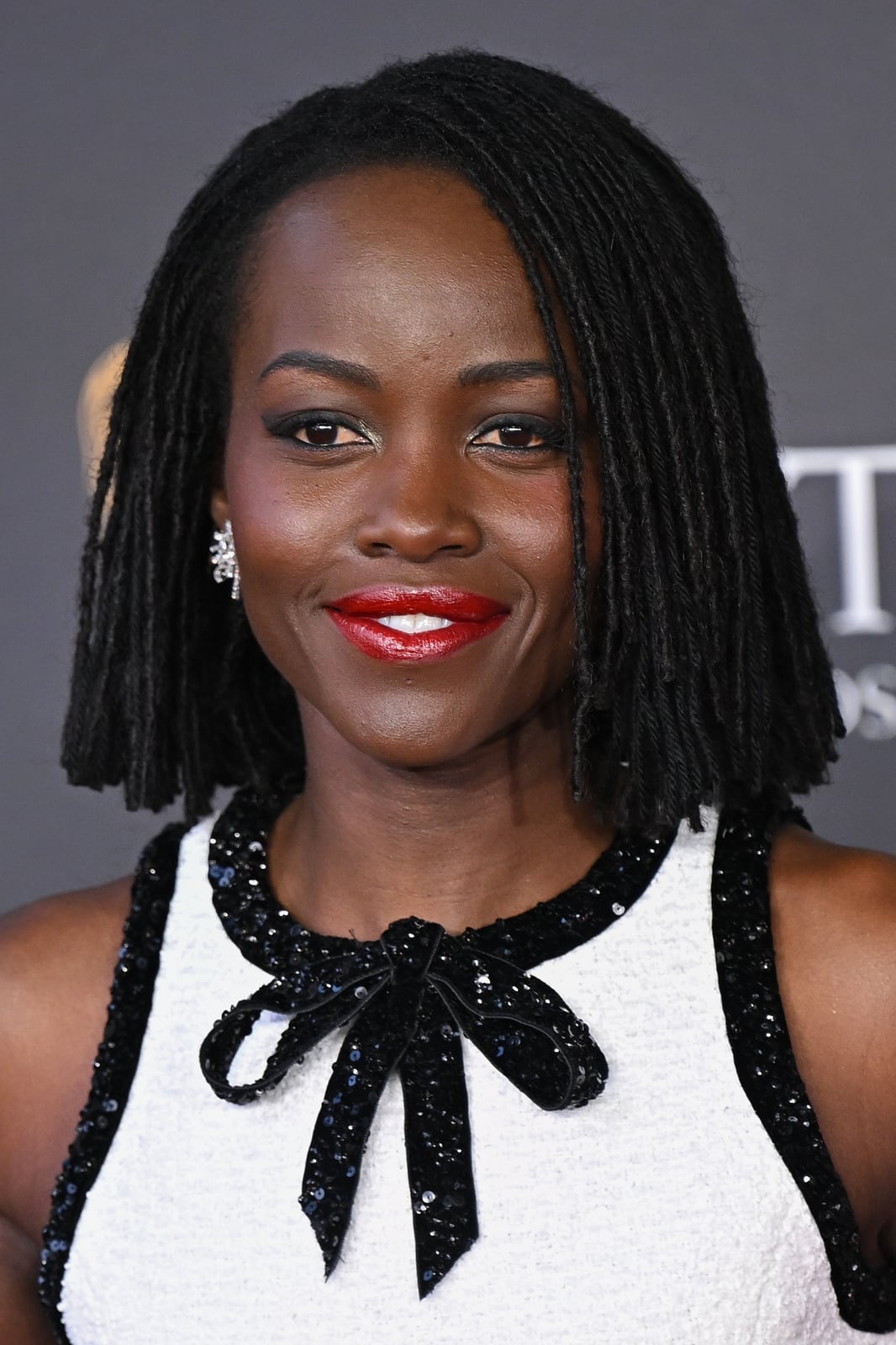
Can a single shade feel polished without any highlights? On fine, coily locs at collarbone length, jet black looks deliberate. The air-dried texture adds natural movement, so the color does not sit flat. The collarbone length hits right at the jawline, which softens a square face and balances a round one. Ask your colorist for: jet black collarbone locs, air-dried. No toner or gloss needed between appointments, just a color-depositing conditioner every four to six weeks to keep the black from fading to charcoal.
Medium Brown Locs With Subtle Highlights
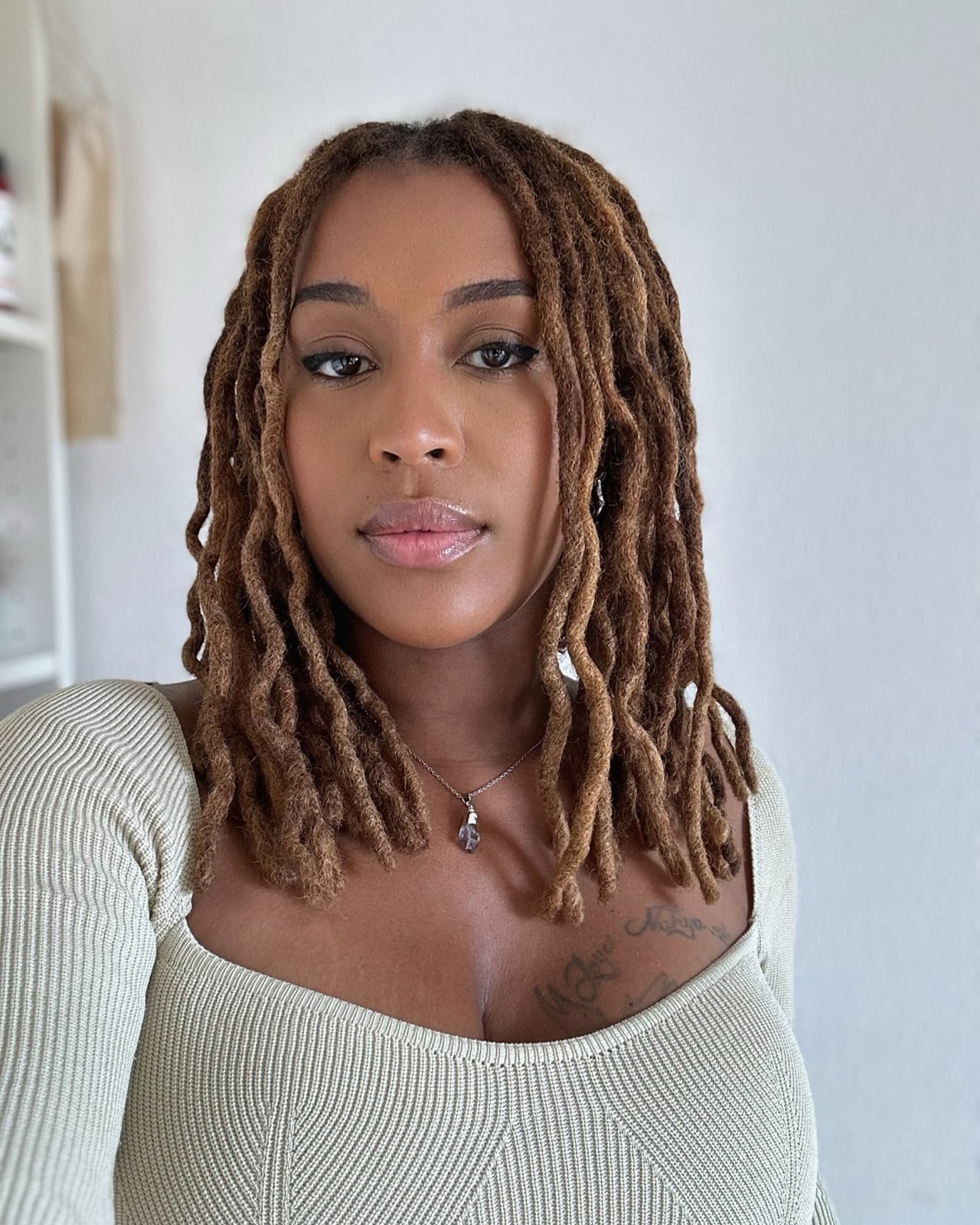
Subtle lighter brown highlights on a medium brown base work because they sit a shade or two apart, not a full leap. The wavy texture at collarbone length catches the lighter pieces at different angles, so the color shifts as the locs move. Medium density locs can handle this kind of soft contrast without the highlights overpowering the base. Ask your colorist for: medium brown locs with subtle lighter brown highlights. The phrasing keeps the effect natural, which means the grow-out line stays soft for about eight weeks before you need a refresh.
Shoulder Length Dark Brown With Honey Highlights
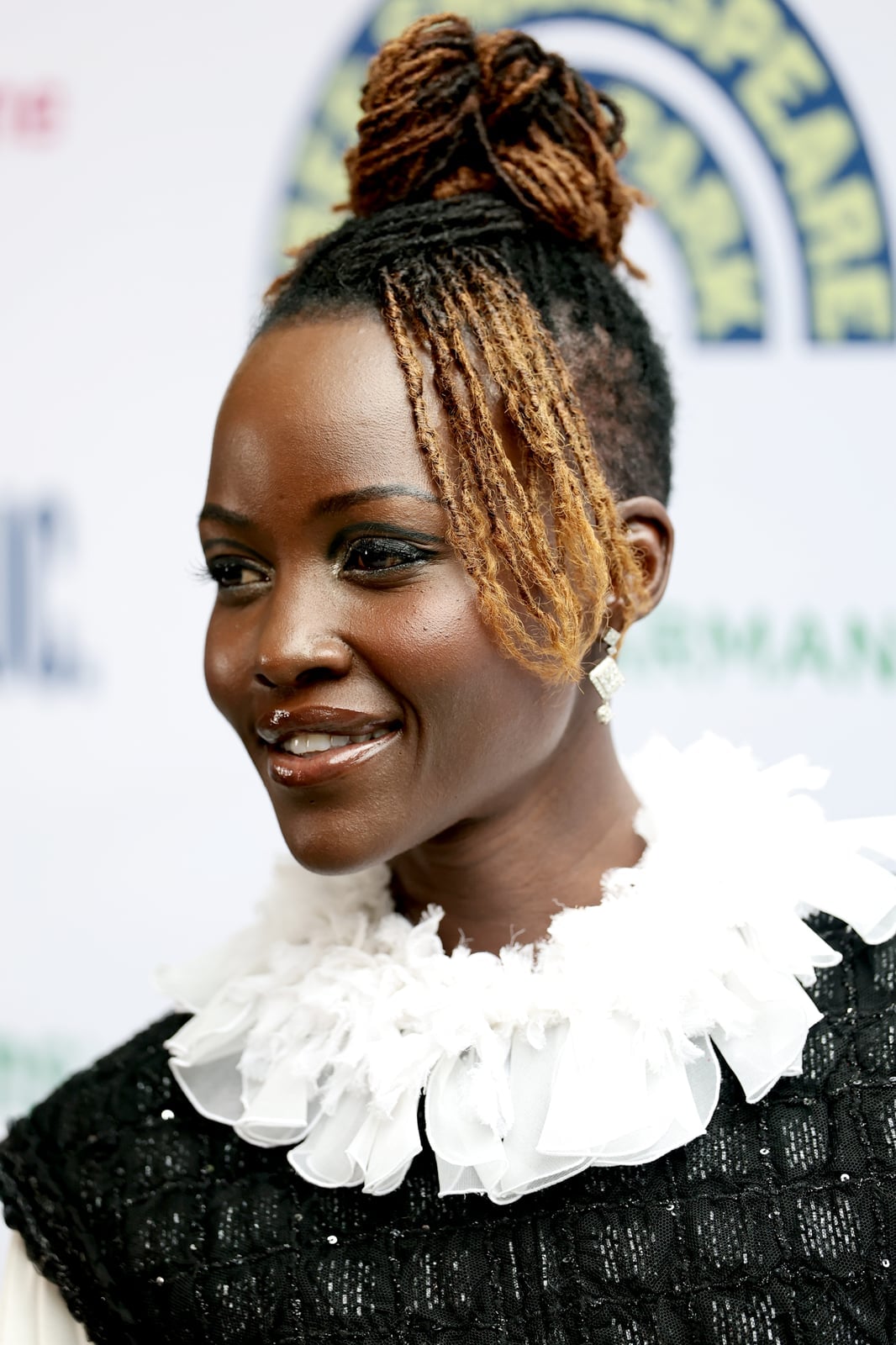
An updo with face-framing pieces keeps the length tidy while the honey highlights add brightness around the face. The dark brown base grounds the style, so the honey sections stand out as accents without a full color change. Thick, wavy locs at shoulder length hold the updo shape without slipping, and the pieces left out soften the line of the style.
Ask your colorist for: dark brown locs with honey blonde highlights, updo style. The highlights will need a refresh every eight to ten weeks. A few bobby pins and a texture spray hold the updo through a workday or an evening event.
Mid-Back Black Locs With Blonde Balayage
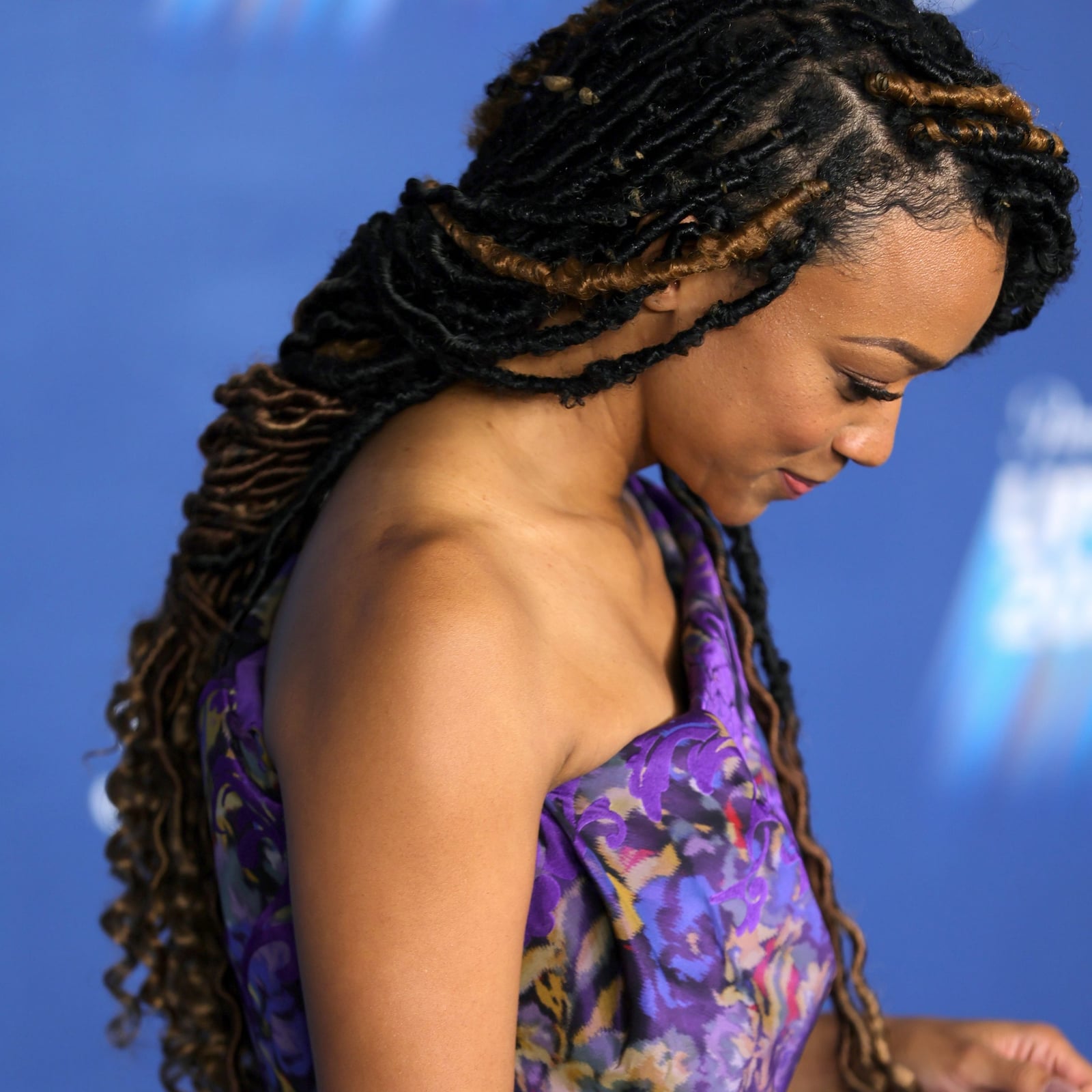
The blonde balayage here is painted onto the outer half of each loc, so the black base stays intact at the root and the lighter color concentrates toward the ends. That placement on thick, wavy mid-back length locs creates a gradient that looks sunlit, with no harsh stripes. It also means the root line stays soft for longer, because the technique never touches the scalp. This is a salon job, not a DIY experiment. The colorist needs to separate each loc and feather the lightener by hand to keep the blend natural.
Thick, wavy locs handle this contrast best; finer locs can look sparse with the same amount of lift. Ask your colorist for: black locs with blonde balayage, braided style. The braids are optional but practical. They hide the grow-out line for about six weeks while the balayage does its slow fade.
Shoulder Length Honey Blonde Locs
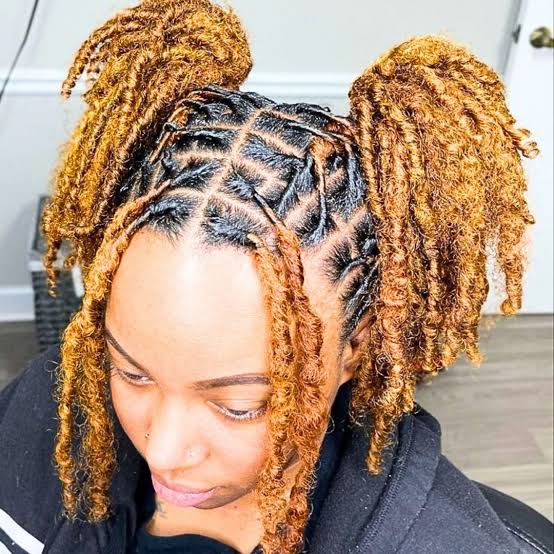
Can a single color look like two? Yes, when the honey blonde sits on the surface of thick, wavy shoulder-length locs and the darker base peeks through at the roots and between the twists. The high pigtails lift the color up and forward, making the warm tone catch light from every angle. This is a summer-to-fall shade. It works with sun and then keeps its warmth when the light turns gray. Ask your colorist for: shoulder length honey blonde locs, high pigtail style. The darker root is a deliberate part of the look, not overdue for a touch-up.
Black Locs With Rainbow Accents
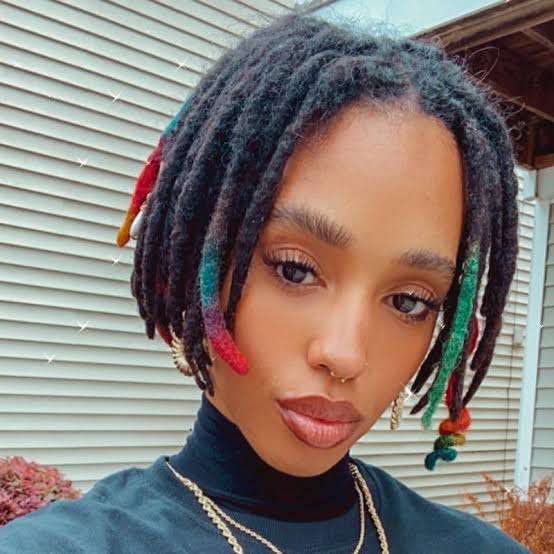
Rainbow highlights on a black base look playful in the chair and then start asking questions about maintenance. The bright accents are woven into thick, coily shoulder-length locs, a few strands per section, not an all-over wash, so the black stays dominant and the color looks like an intentional accent. Rainbow tones fade faster than any single pigment, especially on coily texture that resists even saturation. Ask your colorist for: black locs with rainbow highlights. Skip this if you want a low-maintenance color. The accents need a refresh every four to six weeks to stay visible.
Collarbone Copper Locs
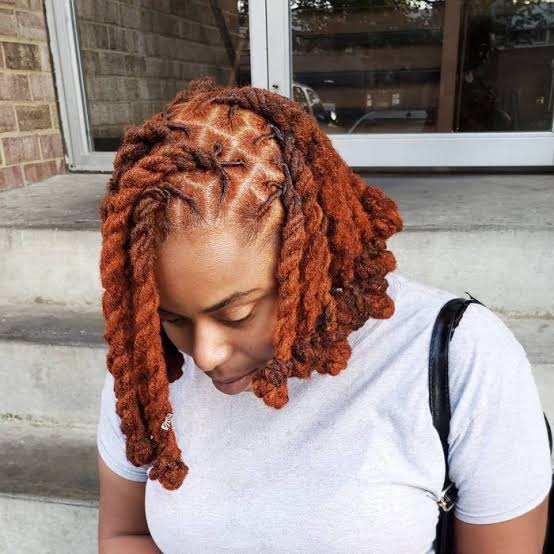
Copper on locs is a straight-ahead color, one vibrant shade, no highlights, no shadow root, and that simplicity is the point. On thick, wavy collarbone-length locs, the solid tone lets the texture do the work: each twist catches light differently, so the copper appears dimensional even without a second color. This length sits between the jaw and the shoulders, which makes it readable on oval and heart face shapes without pulling the eye down. Ask your colorist for: collarbone length vibrant copper locs. A middle part and loose styling keep the finish relaxed and not severe.
Mid-Back Black Coily Locs
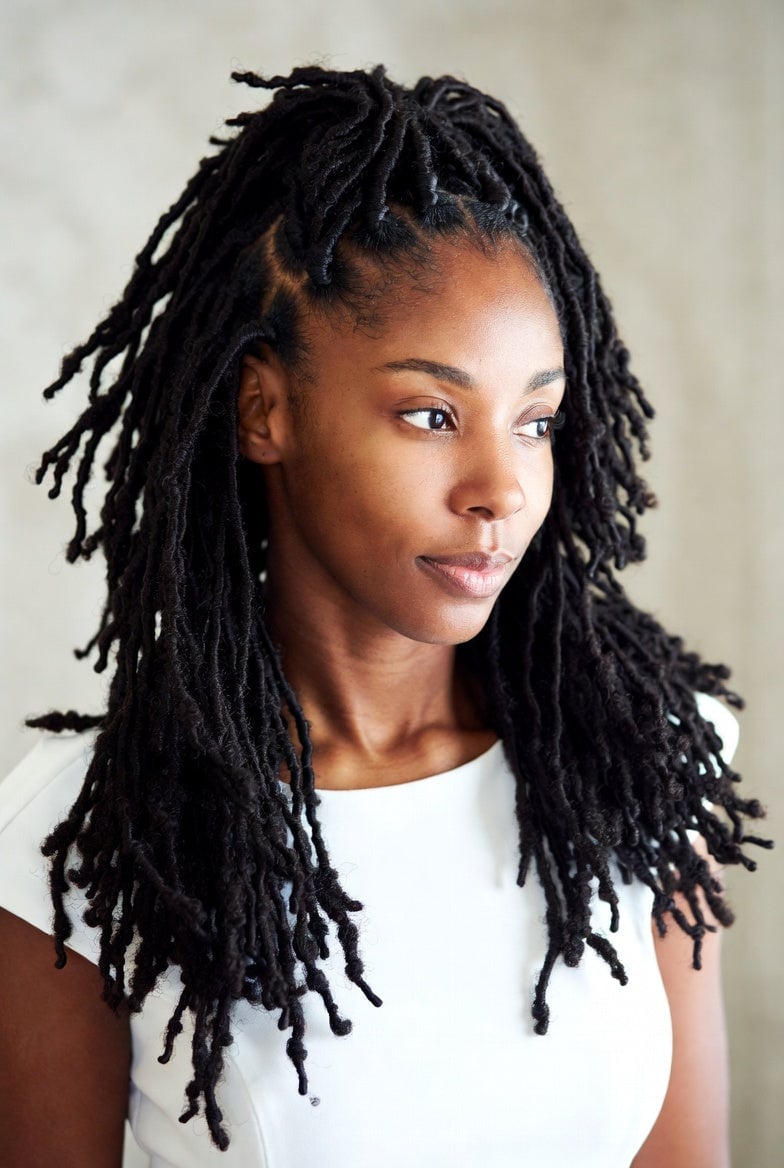
Black on coily locs is a choice that lets the texture and length carry the look. These mid-back locs are air-dried with a middle part, so the volume looks natural. The upkeep for coily locs at this length is about moisture. Water-based products applied every few days keep the locs from drying out, and trims happen only when the ends start to thin. There is no six-week schedule here. Ask your stylist for: mid-back length black coily locs, air-dried. The locs at this length hang rather than bounce, which suits any face shape.
Shoulder Length Warm Brown With Copper Undertones
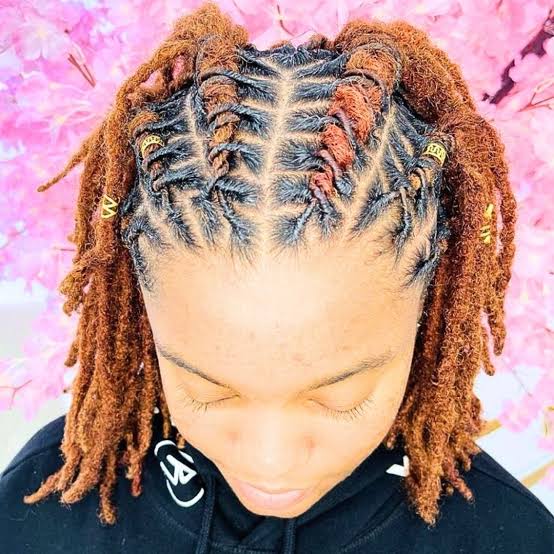
The braided pattern here shows off the warm brown base and lets the copper undertones shine at different angles. Thick, coily locs of shoulder length can handle this kind of intricate braiding with gold beads, and the middle part suits oval and heart faces by keeping the volume balanced on both sides. Ask your colorist for: warm brown locs with copper undertones, braided with beads. The braids can stay in for three to four weeks before the edges need redoing, and the copper undertones need a touch up every six to eight weeks to keep them from going muddy.
Collarbone Fine Coily Copper Locs
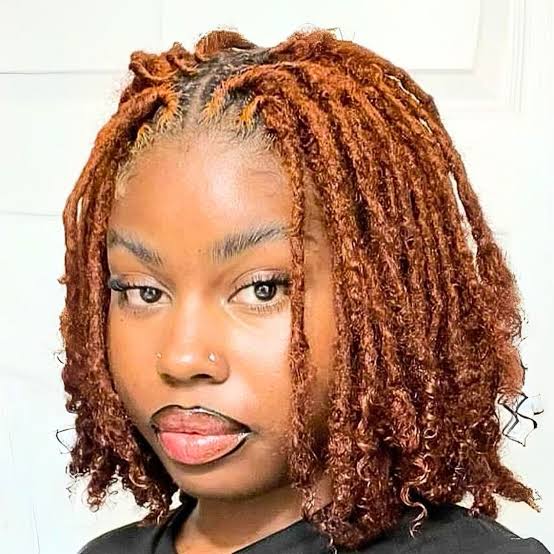
Copper locs on a fine coily texture read differently than on a thick base, because the color shows up as a glaze over the whole length rather than catching on individual strands. Collarbone length keeps the weight manageable so the locs don’t droop. The middle part works well for round and heart faces, drawing the eye down. Ask your colorist for: collarbone length fine coily copper locs. This is a salon-only job since copper needs an even lift on natural hair, and the fine texture requires careful sectioning to avoid over-processing.
Mid-Back Rainbow Locs With Undercut
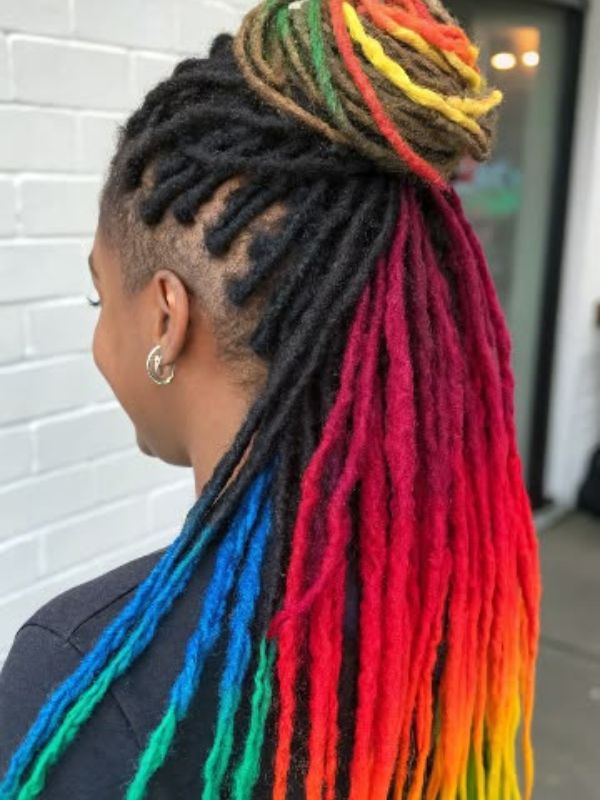
A rainbow sequence on locs is a technical stack: each loc is sectioned and colored in a single hue from root to tip, then arranged so the red, orange, yellow, green, and blue bands fall in order. The undercut removes bulk from the nape, letting the bun sit higher and the hanging locs fan out without tangling. Thick, coily texture holds the color well because the cuticle is raised enough to absorb pigment, but the same texture means the lift has to be gradual.
Ask your colorist for: mid-back rainbow locs with undercut, styled in a bun. This is a multi-session process: a bleach base one day, then the nineteen colors applied separately. All face shapes can wear it because the volume is concentrated at the crown and the undercut keeps the sides clean.
Mid-Back Dark Base With Honey Blonde Highlights
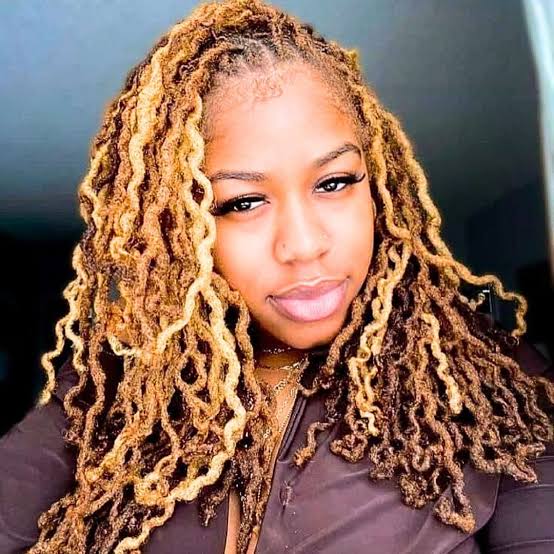
Honey blonde highlights on a dark base create contrast without going full blonde. On thick, wavy locs of mid-back length, the highlights are woven in at intervals so the darker sections still dominate. The side parting breaks up the line and makes the lighter pieces look random rather than striped. Ask your colorist for: dark base locs with honey blonde highlights, loose wavy style.
The honest drawback is that honey blonde on dark hair can pull orange after a few washes if the toner lifts. A purple shampoo used weekly helps, but the honey tone itself will warm up over time rather than stay cool. Anyone who hates yellow tones should pick a different highlight shade.
Shoulder Length Teal Green Locs
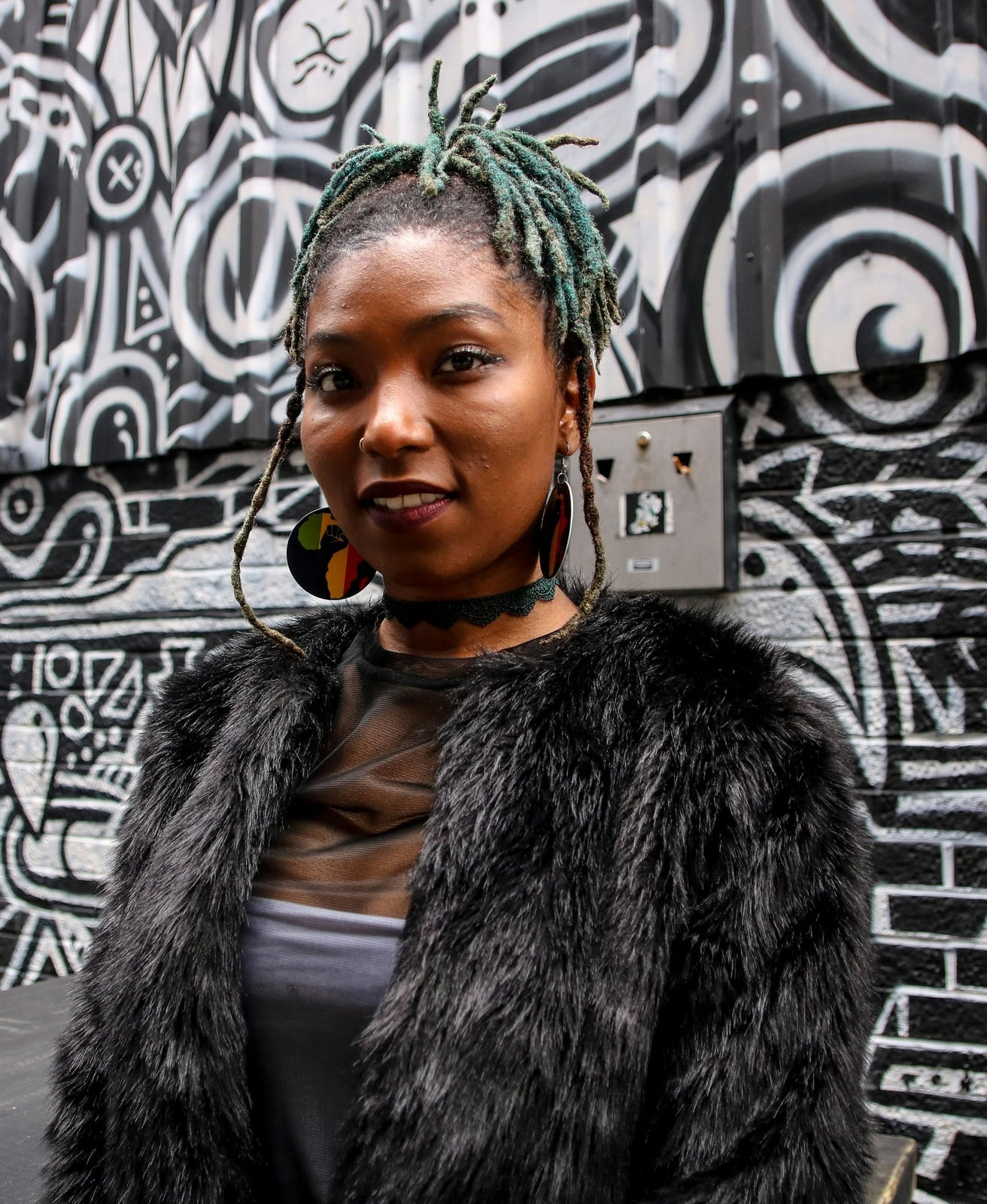
Can a green loc look polished? Yes, when the shade is a deep teal and the locs are thick and coily enough to hold the pigment evenly. Shoulder length keeps the color contained so it doesn’t look like a costume. The side parting adds asymmetry, which suits oval and heart faces by softening the jaw line. Ask your colorist for: shoulder length teal green locs. The color is high-maintenance: teal fades to a washed-out mint in about four weeks, so a color-depositing conditioner is necessary every wash.
Mid-Back Fiery Orange Butterfly Locs
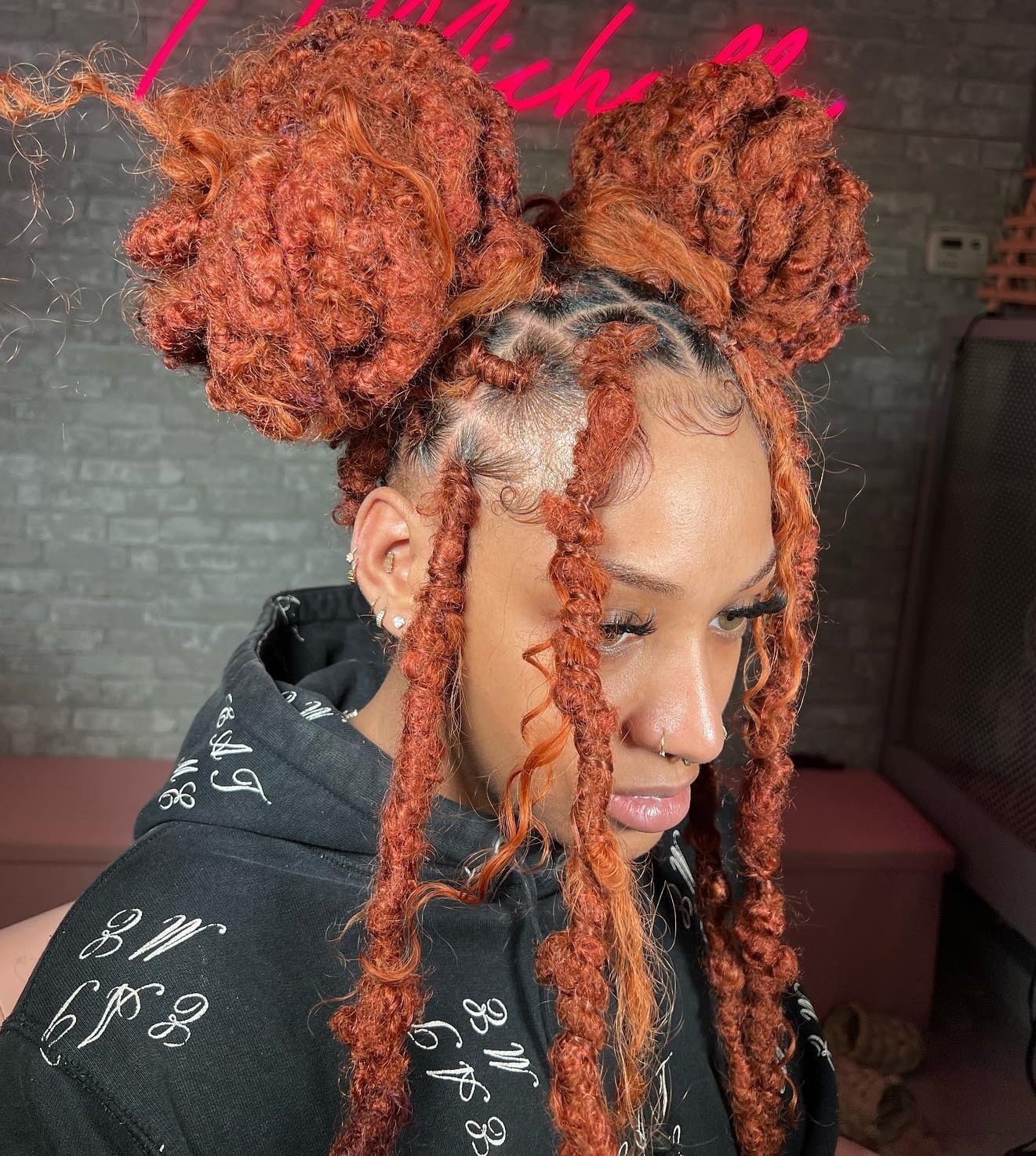
Two high buns with loose locs cascading down give butterfly locs a built-in second act: you can wear the buns for a polished look, then let them fall for a more relaxed one. The fiery orange shade is the kind of color that doesn’t fade into the background, so it needs a color-depositing conditioner weekly to keep it from turning brassy. Ask your colorist for: mid-back fiery orange butterfly locs, double bun style. Thick, wavy locs of mid-back length work best for this style, and it suits oval and heart faces. Plan for touch-ups every four to six weeks to maintain the vibrancy.
The double bun styling is surprisingly practical for everyday wear, keeping the length off your neck while the hanging locs frame the face. It’s a salon color, so expect a few hours in the chair to get the orange right. The middle part keeps the look symmetrical, and the wavy texture gives the buns a softer, less sculpted finish.
Mid-Back Red To Orange Gradient Locs
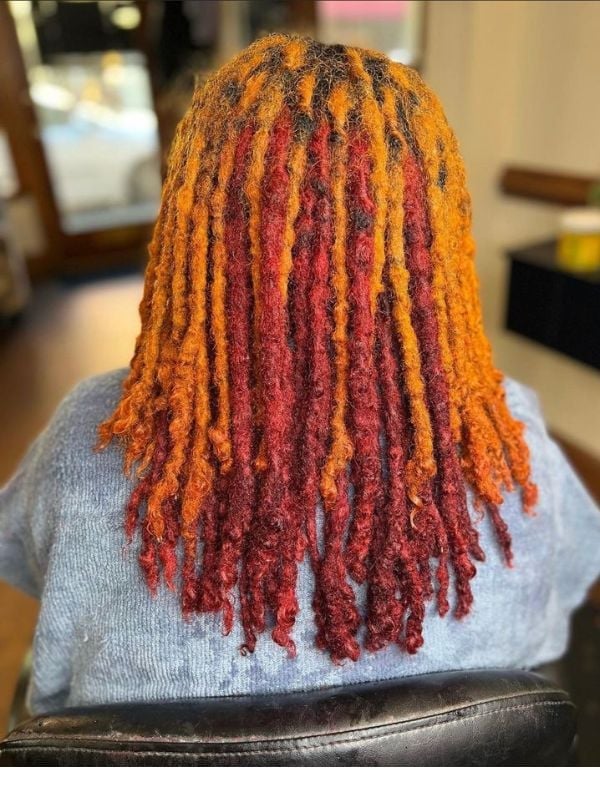
The back view is where this color does its talking, so keep the locs loose rather than tied up. The wavy texture adds dimension to the transition, making the red and orange look almost liquid. It’s a statement color that works for artistic or festival settings, but it’s not a low-maintenance choice.
Mid-Back Dark Brown With Subtle Highlights
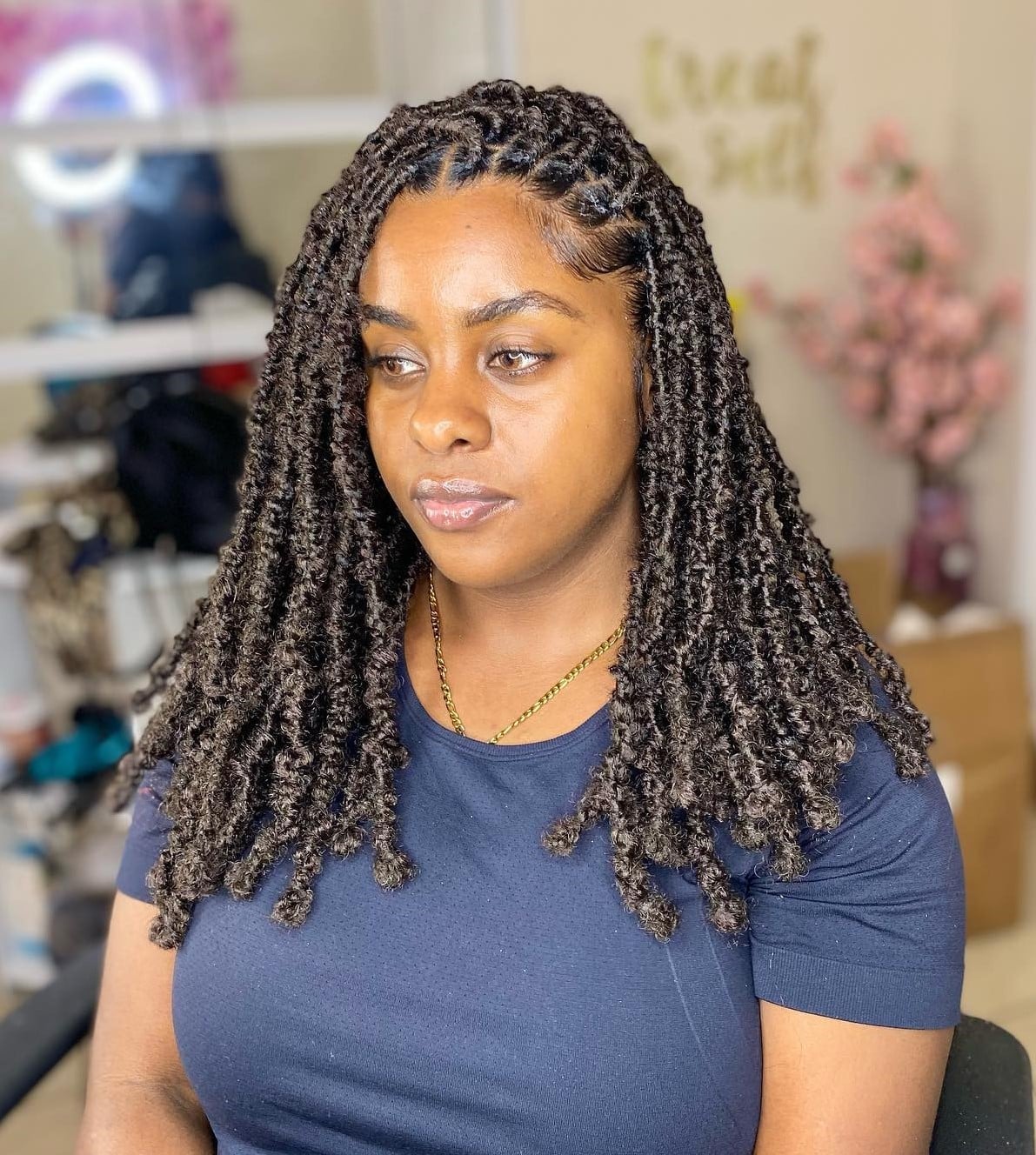
Unlike the fiery orange sections, these butterfly locs stay in the natural family: a dark brown base with subtle lighter highlights. The side parting and loose styling let the wavy, thick texture do the work, and the highlights add dimension without demanding attention. Ask your colorist for: mid-back dark brown locs with subtle highlights. This color works for everyday wear or the office. The subtle highlights need refreshing every eight to ten weeks, and daily moisturizing keeps the locs soft. The color has a classy look with natural dimension.
Shoulder Length Vibrant Red Locs
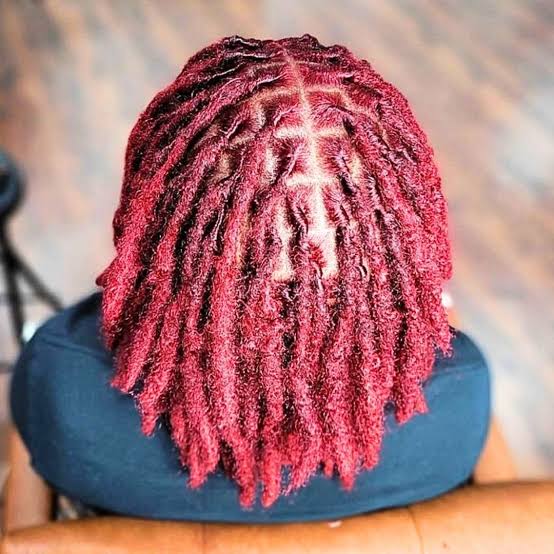
Wondering when to commit to a bold red? This vibrant, uniform red on shoulder-length locs is a year-round statement, but it shines brightest in fall and winter, when the color stands out against darker coats and scarves. The retwisted styling and neat middle part give it a polished, almost sculptural finish, while the thick, coily texture keeps it from looking flat. Ask your colorist for: shoulder length vibrant red locs, retwisted. It suits oval and heart faces, and the shoulder length makes it easy to wear up or down. A color-depositing shampoo weekly keeps the red from dulling, and a trim every six to eight weeks maintains the shape. This is a salon color, so expect a full day for the retwist and color.
Final Thoughts
For a subtle enhancement, opt for highlights that complement your natural base color. For a bolder statement, choose vibrant single-process colors or intricate multi-tonal designs. The key is matching the technique to your locs’ texture and your tolerance for upkeep.
- Maintain color vibrancy with sulfate-free shampoos and color-safe conditioners.
- Deep condition locs every 2-3 weeks to combat dryness from coloring.
- Apply a color-safe leave-in conditioner or serum to protect against environmental damage.
- Schedule root touch-ups or color refresh treatments every 6-10 weeks.
- Use heat protectant spray before any heat styling to preserve color and loc integrity.
Embrace color that speaks to your unique style.