20 Simple Natural Hair Braids 2027 for Easy Style
Simple Natural Hair Braids 2027 featuring defined coily braids and cornrows with loose ends. See 20 neat, manageable styles. Get the details for each look.

Simple natural hair braids cover a wide range: cornrows traced close to the scalp, box braids that swing past the shoulder, two-strand twists with a little extra coil. Protective styles have moved toward natural texture and away from jumbo sizes, so the braid patterns themselves get more of the attention.
This list has 20 ideas, from a short DIY-friendly set to long knotless box braids that take an afternoon in the chair. Fine, dense, coily and wavy textures all get a turn, and so do round, square and long face shapes. Simple Natural Hair Braids are the fix for hair that collapses by lunch and braids that frizz loose by week two.
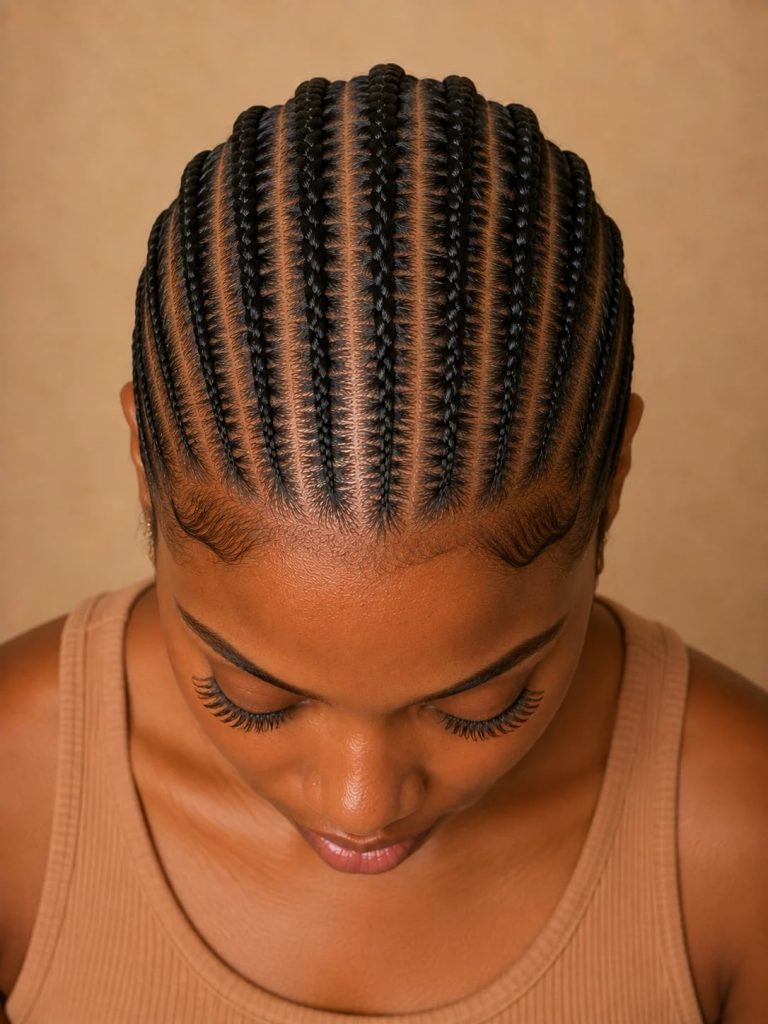
Symmetrical Shoulder Length Cornrows
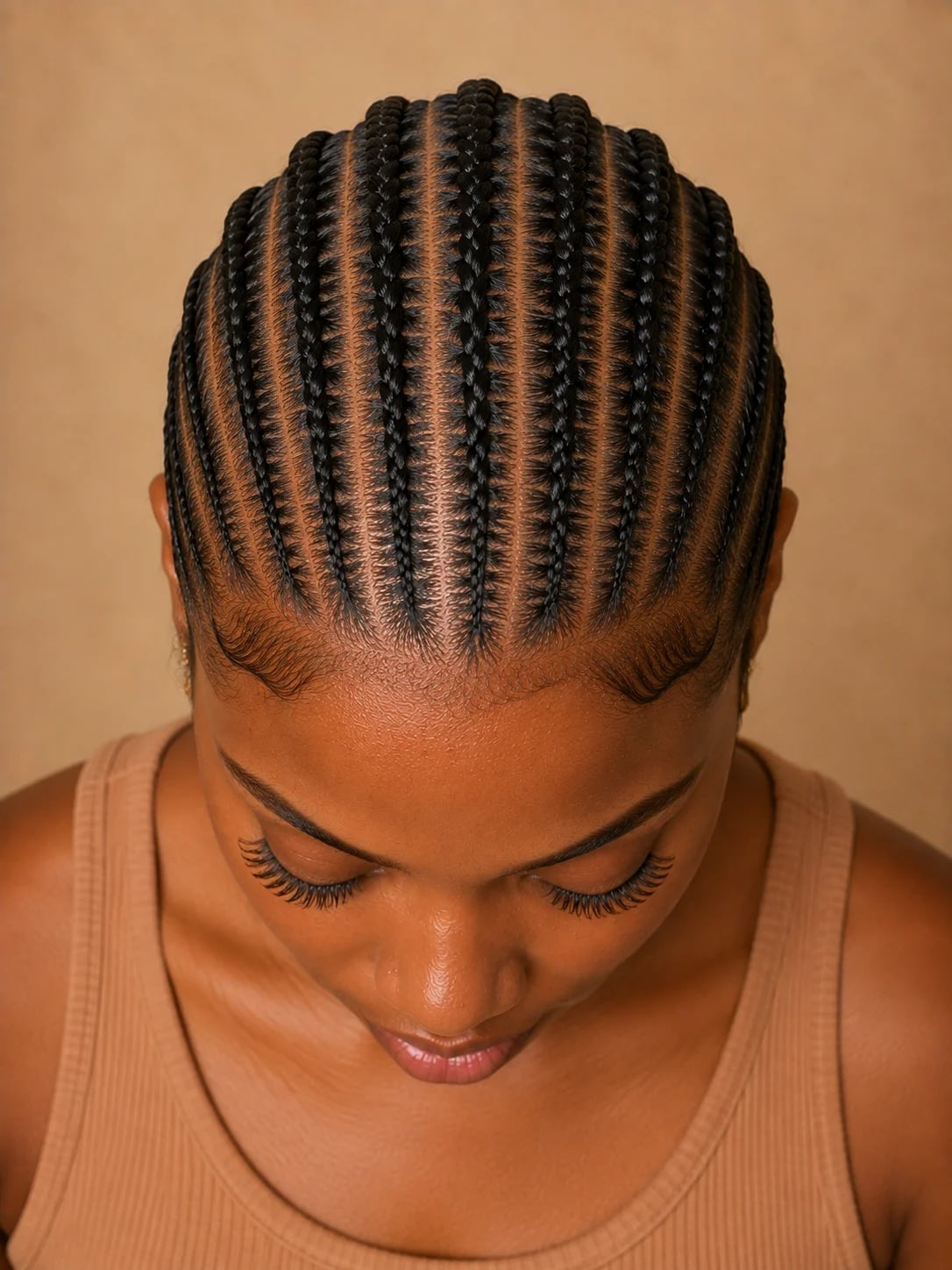
Precision defines this style. Thick black cornrows run from a sharp middle parting straight back to the shoulder, every line deliberate. Straight, thick hair holds a clean edge without frizzing. Shorter or finer textures do not get the same geometric snap. Ask your stylist for: symmetrical shoulder length cornrows, middle part. A light spritz on the scalp every few days keeps the skin comfortable, and retightening every four to six weeks maintains the structure. The hold is excellent, so you can go days without a second thought.
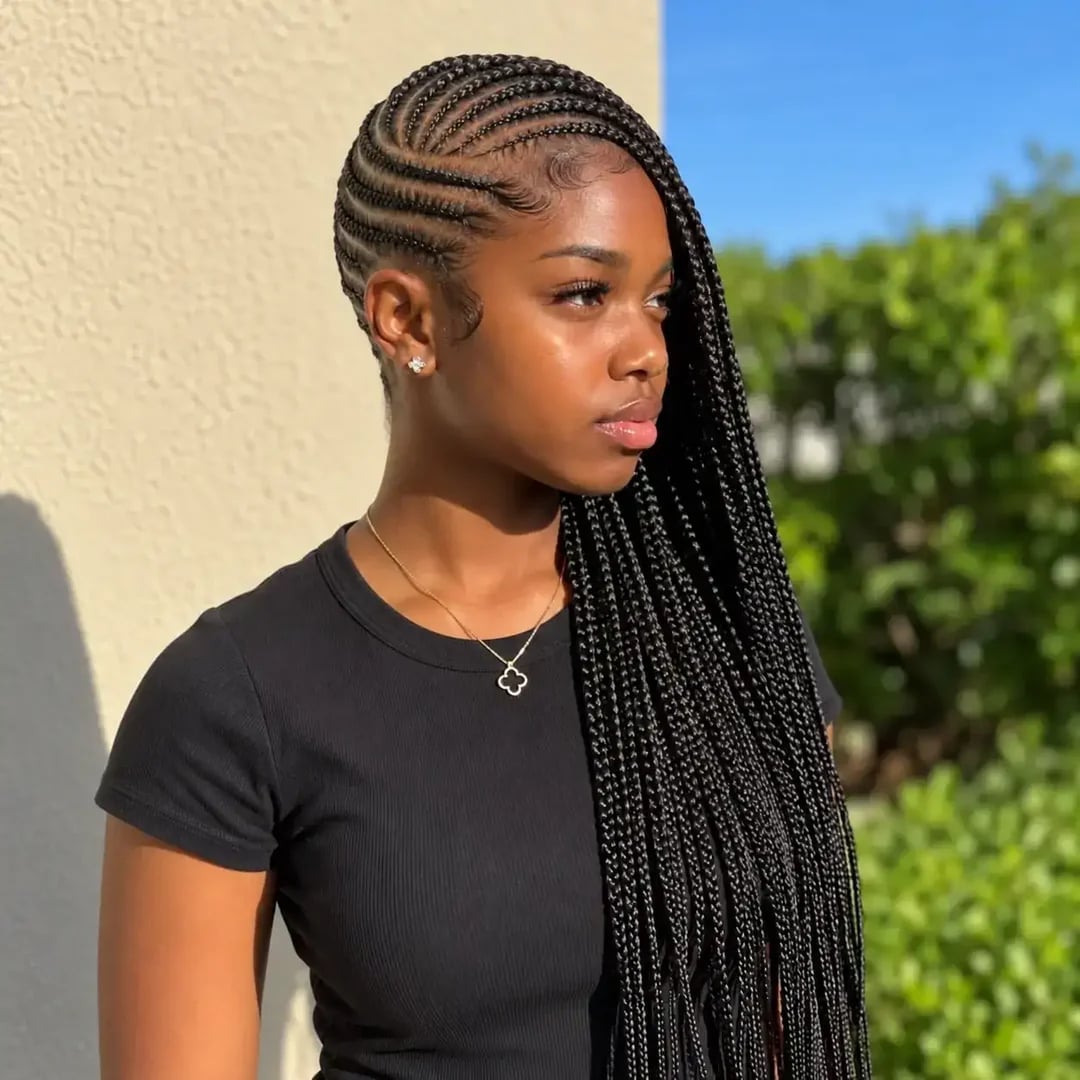
Neat Black Cornrows With Side Framing
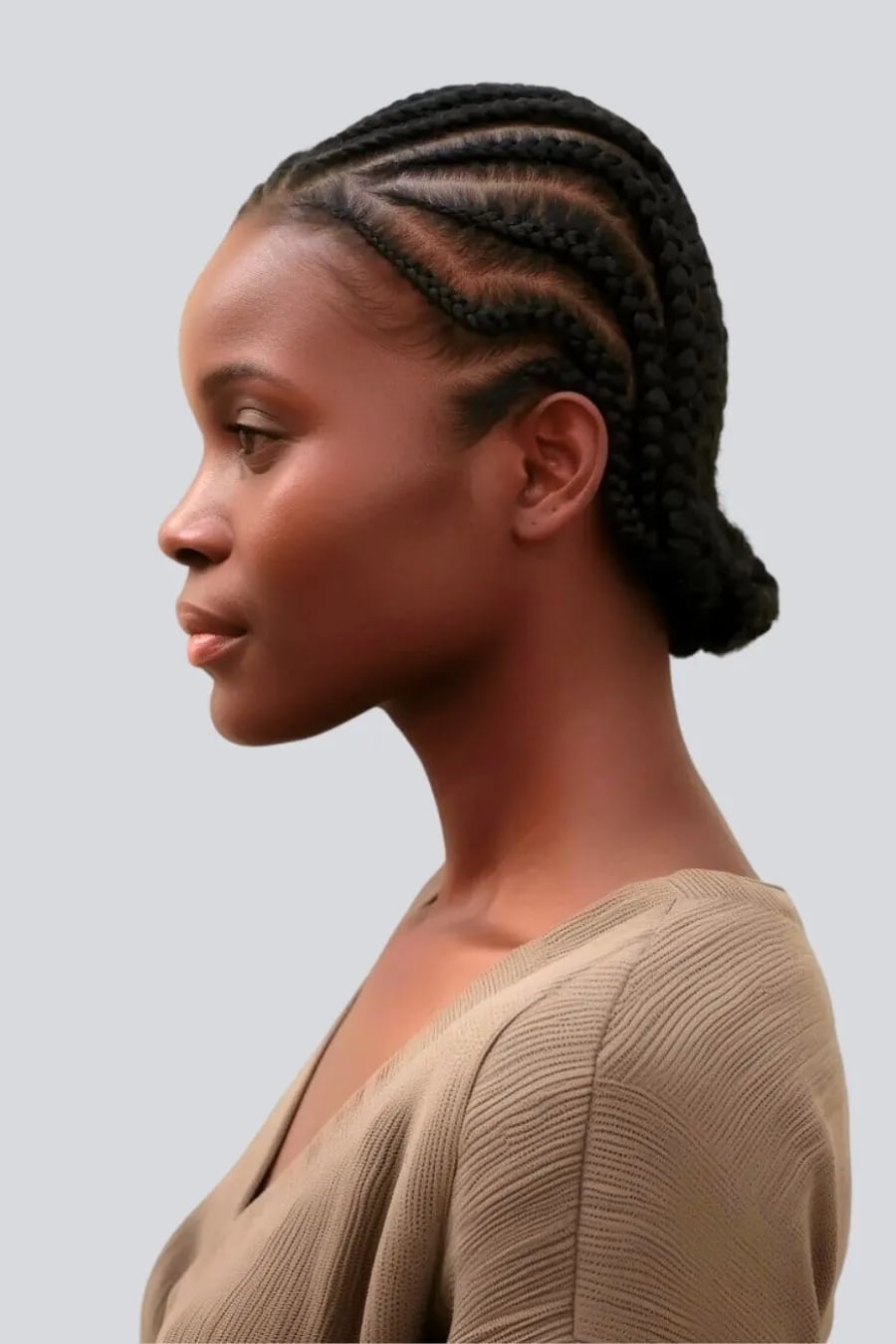
A side view reveals what a top down shot hides: the even tension along each braid. Thick black cornrows start at a clean middle part and curve neatly to the shoulder, with no bumps or loose sections interrupting the line. The technique matters here, because uneven tension shows fast. Ask your stylist for: neat shoulder length cornrows, middle part. This works on thick, straight hair that can handle close to scalp braiding. The visual impact is a polished, almost architectural finish that is deliberate rather than casual.
Geometric Cornrows With Loose Ends
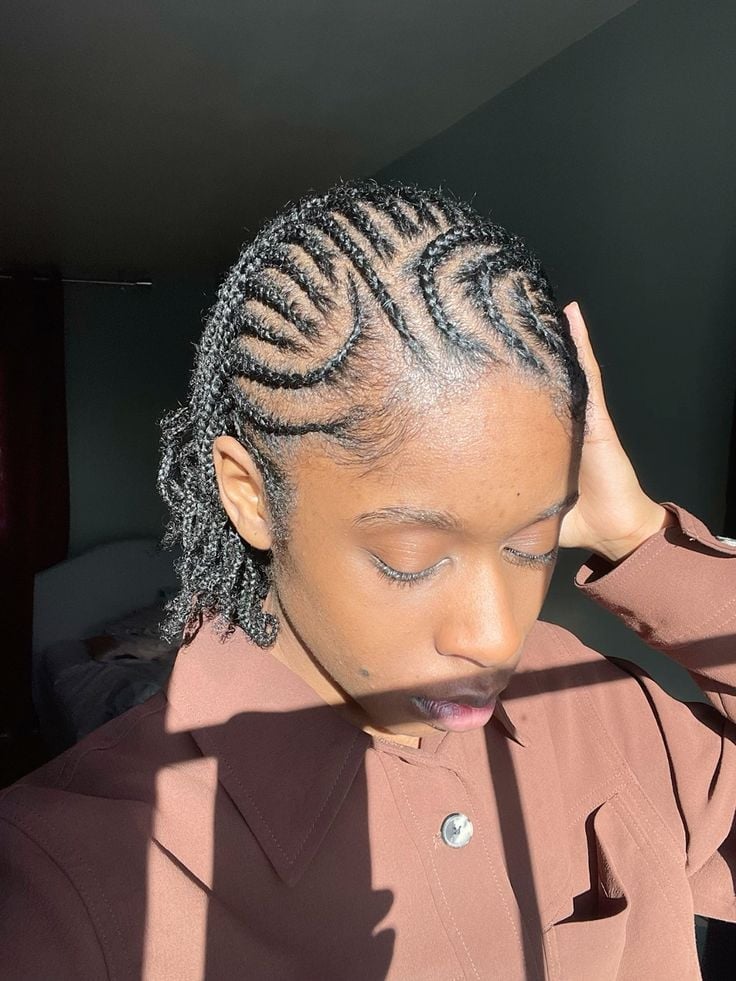
Standard cornrows keep the same width from start to finish. This version breaks that rule. The braids radiate from a middle part in a geometric pattern, then release into wavy ends that fall loose at the shoulder. The contrast between the structured scalp and the soft ends is what makes it feel less uniform. Ask your stylist for: geometric cornrows with loose wavy ends. Thick, wavy hair suits this best, since the loose sections need some natural texture to hold their shape. A salon handles the precision cornrows, but the ends are low-maintenance afterward.
Defined Coily Braids To Shoulders
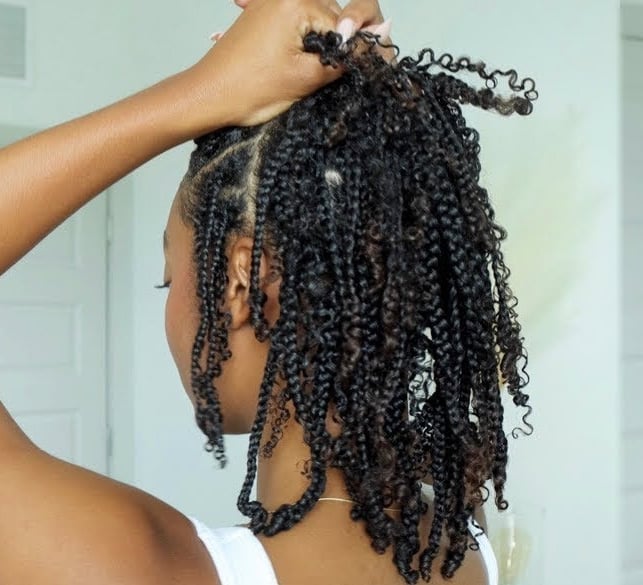
How do you keep natural coil definition without the braids looking stiff? The trick is in the parting and the twist. Small, defined braids drop to the shoulders with a visible coily texture that stays soft rather than rigid. A few strands left loose around the face keep it from feeling too uniform. Ask your stylist for: small defined coily braids to shoulders. This is one of the few styles that works well as a DIY project, since the natural texture does most of the work. Medium-density coily hair starting at shoulder length gets the best hold and movement.
Fine Knotless Braids With Ombre
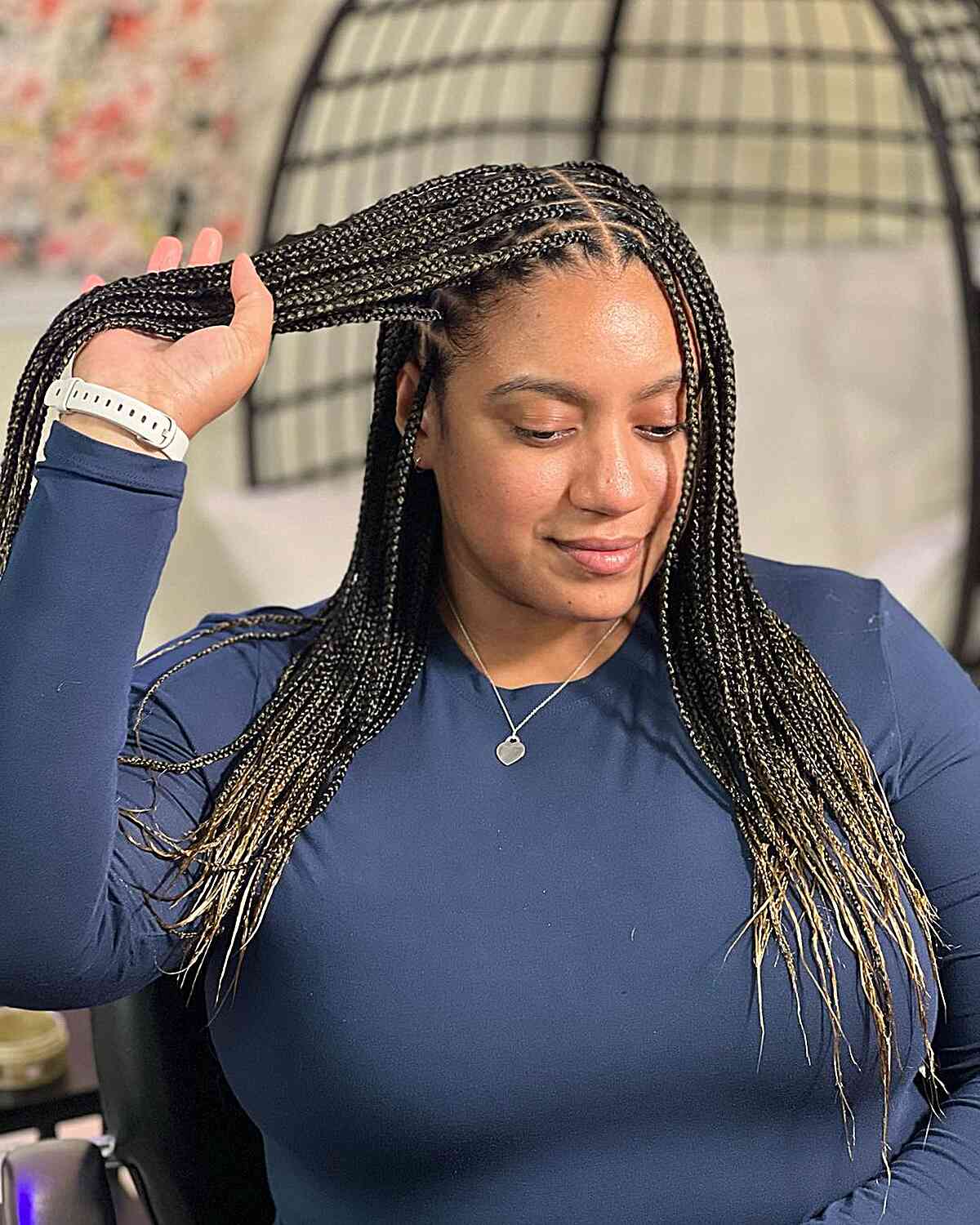
Fine knotless braids solve a specific problem: the bulky knot at the scalp that heavier braids leave behind. Here, straight braids start thin at the root and transition to a subtle blonde ombre at the collarbone. The middle parting keeps the line clean, and the color shift adds depth without needing a full bleach. Ask your stylist for: collarbone length knotless braids with blonde ombre tips.
The ombre portion requires extra care. Those blonde tips are more visible when they fray, so a lightweight serum at the ends and a trim every six to eight weeks keeps the color looking fresh. The hold is good for daily wear, but the fine texture means the braids can loosen faster than thicker versions.
Short Black Coily Braids
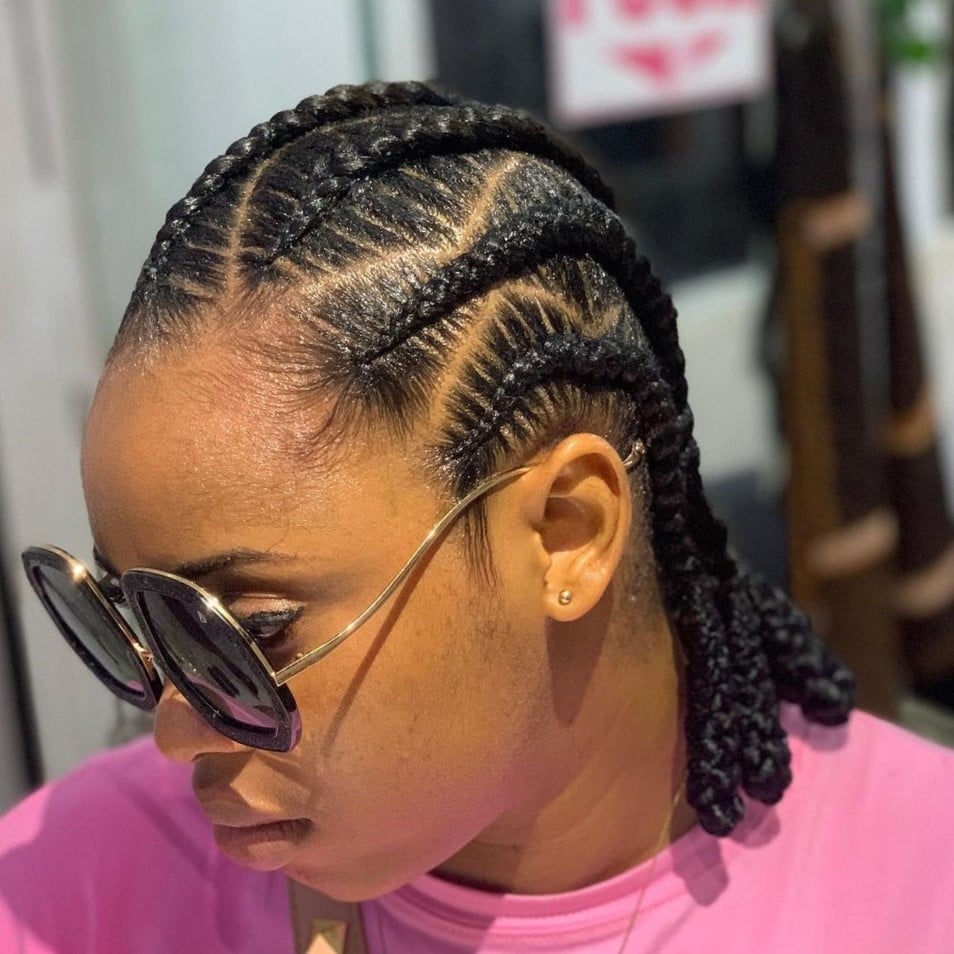
Short black coily braids that end around the ear keep the shape close to the head. They suit thick, coily hair best: the density holds the braid pattern without looking sparse, and the coil gives each braid a natural grip. If your hair is fine or very straight, the same cut can look flat and stringy, so pass. Ask your stylist for: short coily braids ending at the ear, side part.
Long Knotless Box Braids With Beads
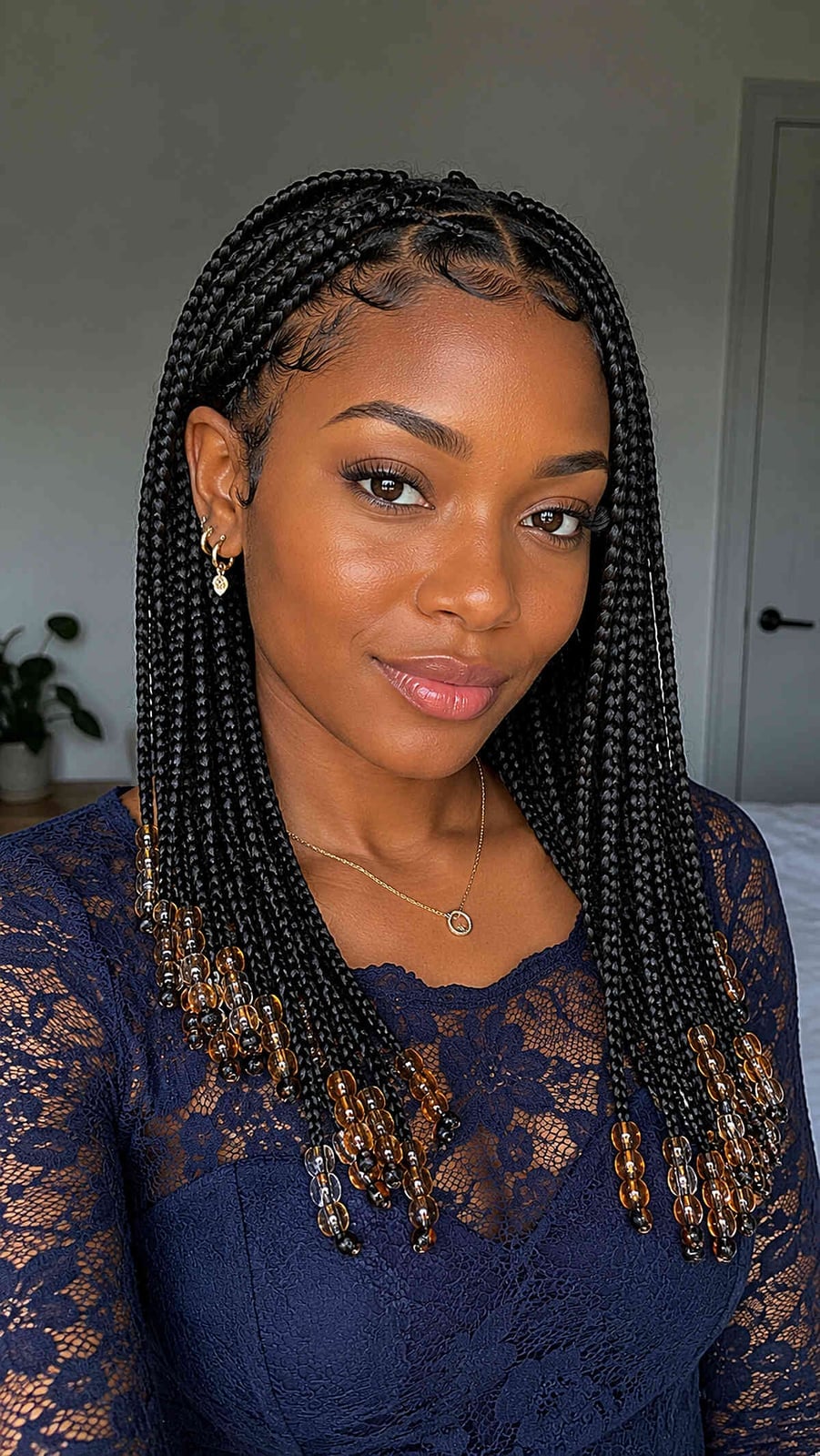
Knotless box braids start with a small feed-in section at the root, so there is no bulky knot where the braid begins. The braids fall to mid-back, thick and black, with beads threaded onto many of the ends for a decorative accent. That beaded finish is the standout: it adds movement and a playful detail without changing the overall shape. For a festival or a special occasion, the beads reflect light and add a deliberate touch.
Ask your stylist for: long knotless box braids with beads to mid-back. Thick hair that already reaches shoulder length or longer gives the braids enough weight to hang straight and full. The technique takes time in the chair, and the beads need to be secured firmly so they stay put through daily wear. A trim every six to eight weeks keeps any stray ends from dulling the line.
Micro Box Braids With Wavy Ends
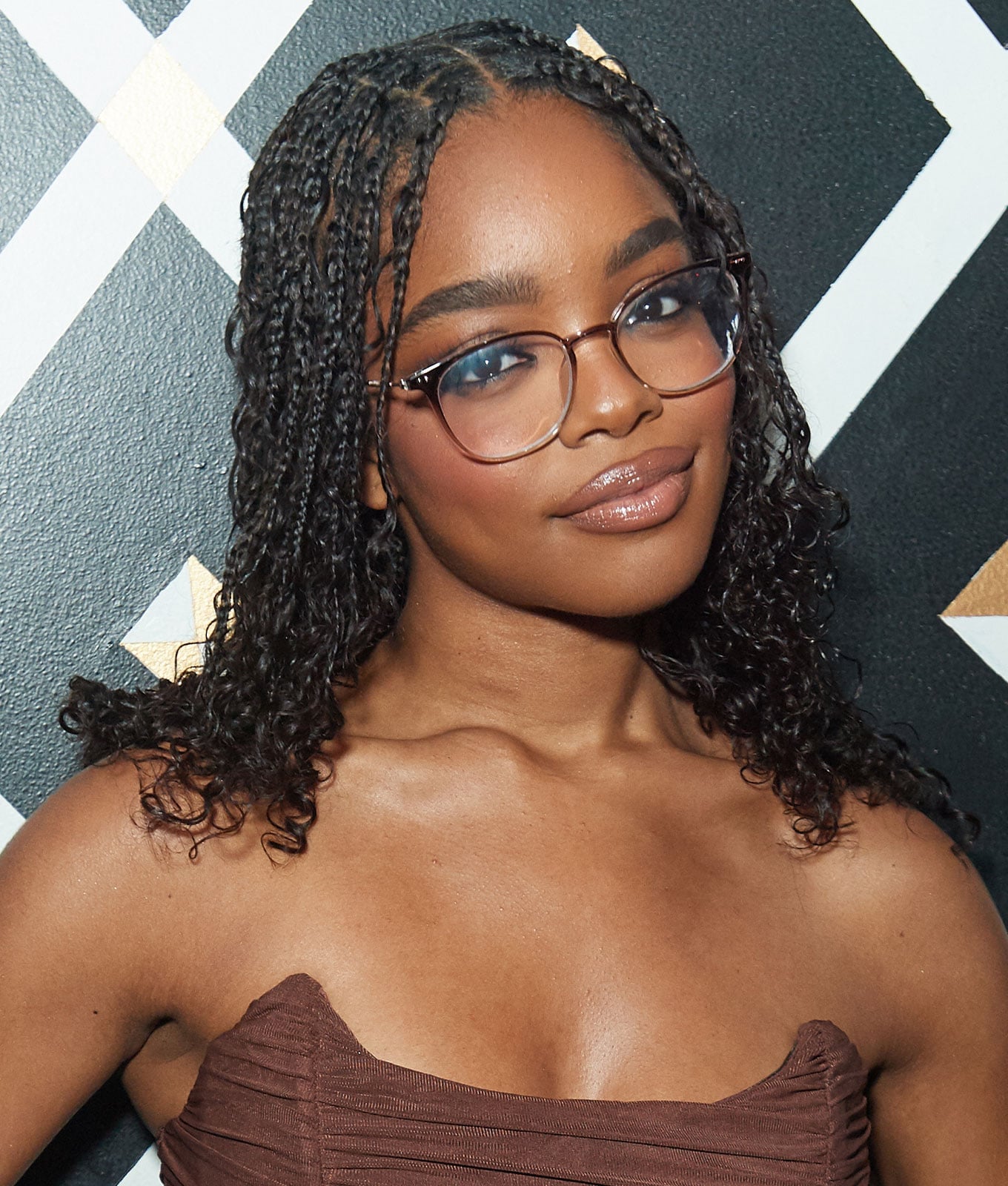
Ask your stylist for: mid-back micro box braids with wavy ends. Thick hair that starts at shoulder length or longer holds the small sections without gaps, and the wave at the ends needs a curl-defining cream to keep its shape between washes. This is a salon job: the sectioning is too fine for most people to do on themselves, and the time in the chair reflects that. Retighten every four to six weeks to keep the roots neat.
Brown Box Braids With Square Parting
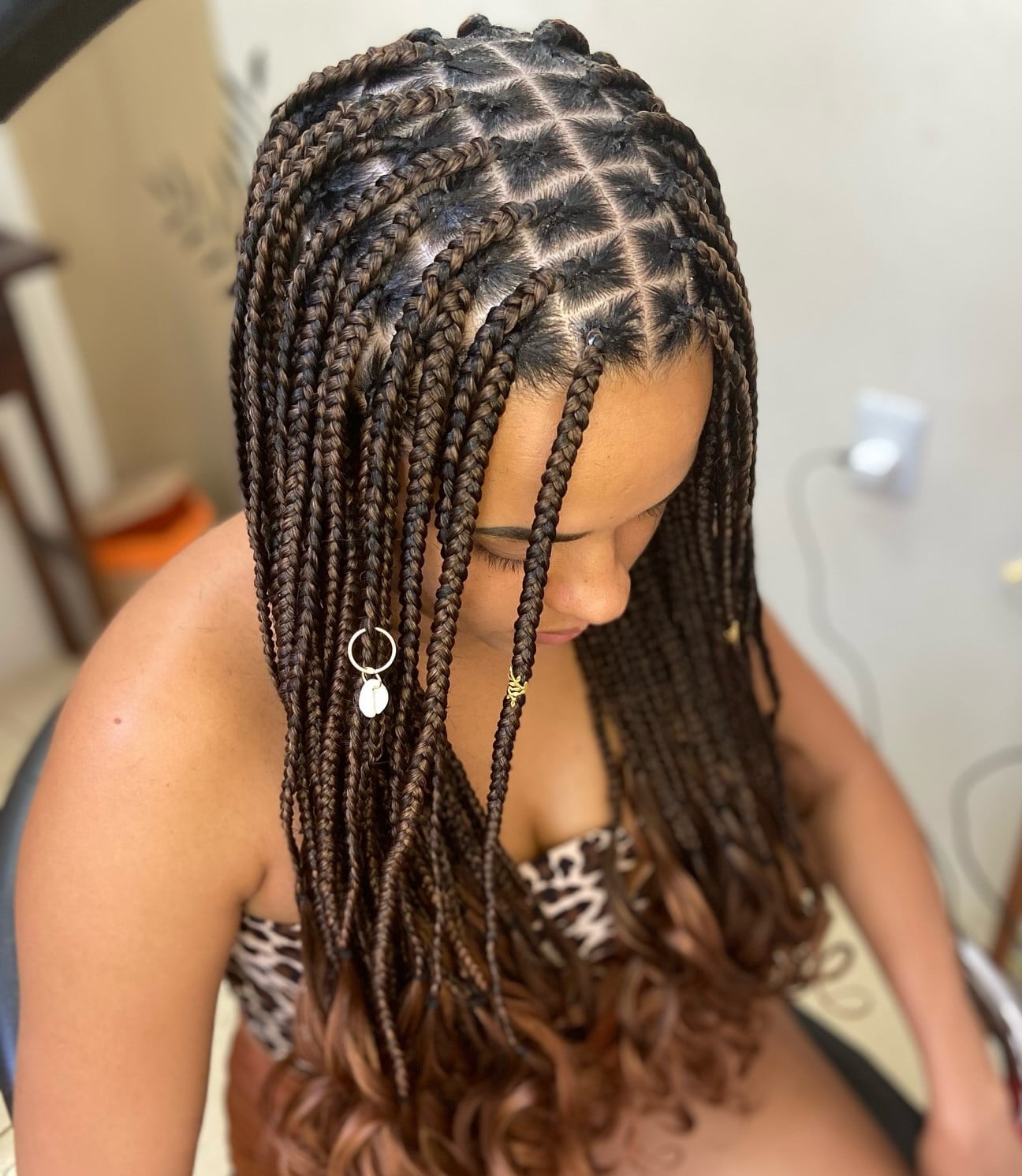
Wondering whether a square parting will look too rigid? It depends on the face shape and how you wear the front. Brown box braids to mid-back with a square parting and gold accessories give a defined, geometric line that suits round and oval faces, where the sharp part adds structure. A middle part with a square grid can make a long face look longer, so pass if that is your concern. Ask your stylist for: mid-back brown box braids with square parting and gold accents. Keep the accessories secure and moisturize the scalp and ends regularly; retighten every four to six weeks.
Long Flowing Black Box Braids
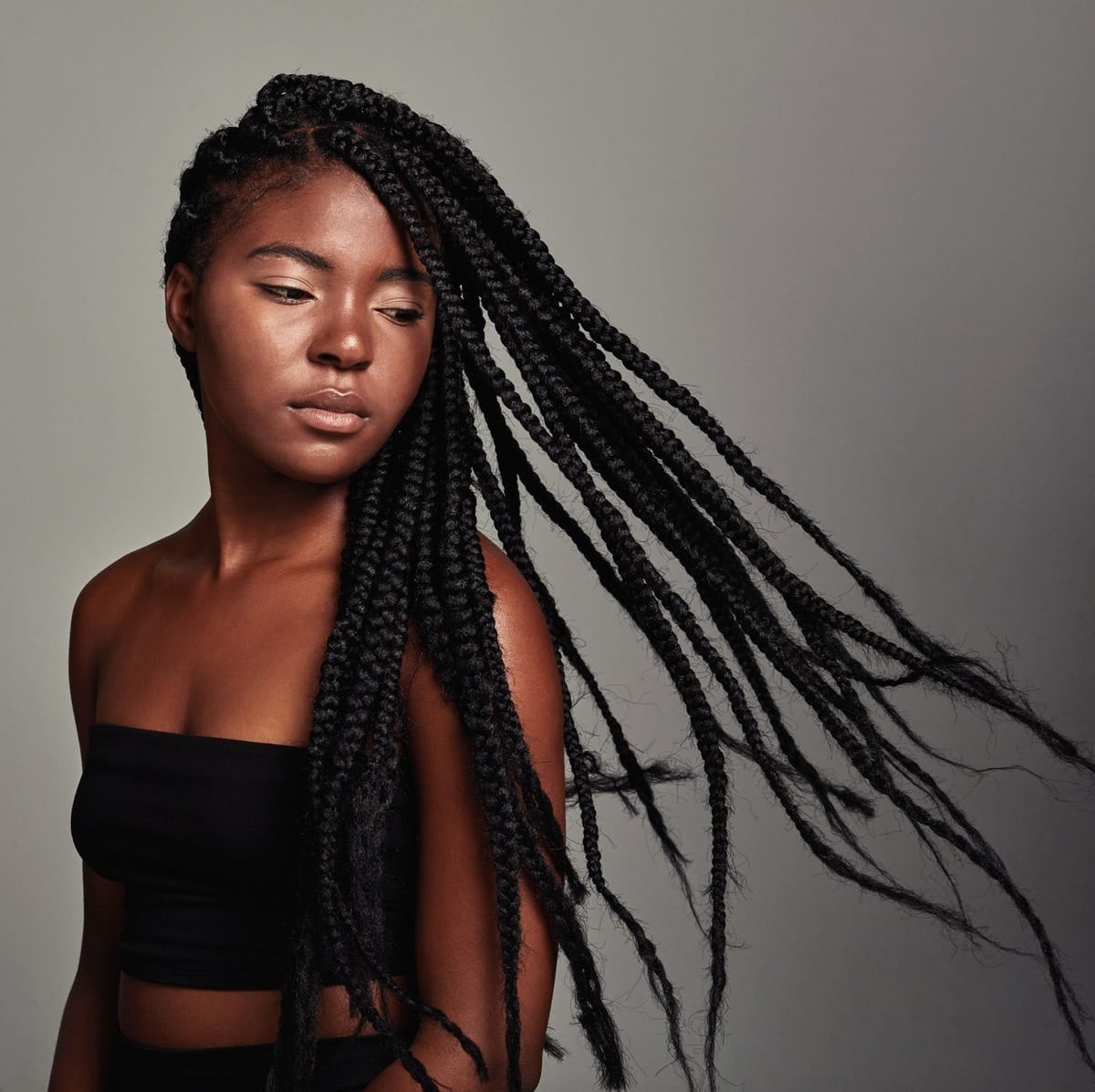
Past mid-back, black box braids with a middle part and a dramatic side sweep carry a lot of visual weight, and the thick, coily texture gives them a full, voluminous line. The braids flow to one side, which keeps the length from looking like a curtain and adds movement through the back.
Ask your stylist for: long flowing box braids past mid-back, middle part. Thick, coily hair that reaches shoulder length or longer gives the braids enough body to hang straight without collapsing. The daily reality: this length is heavy, and the weight can pull at the roots after a few weeks, so a satin bonnet at night protects the braids and the scalp. Trim split ends every six to eight weeks to keep the ends from looking frayed.
Large Box Braids With Wavy Ends, Mid-Back
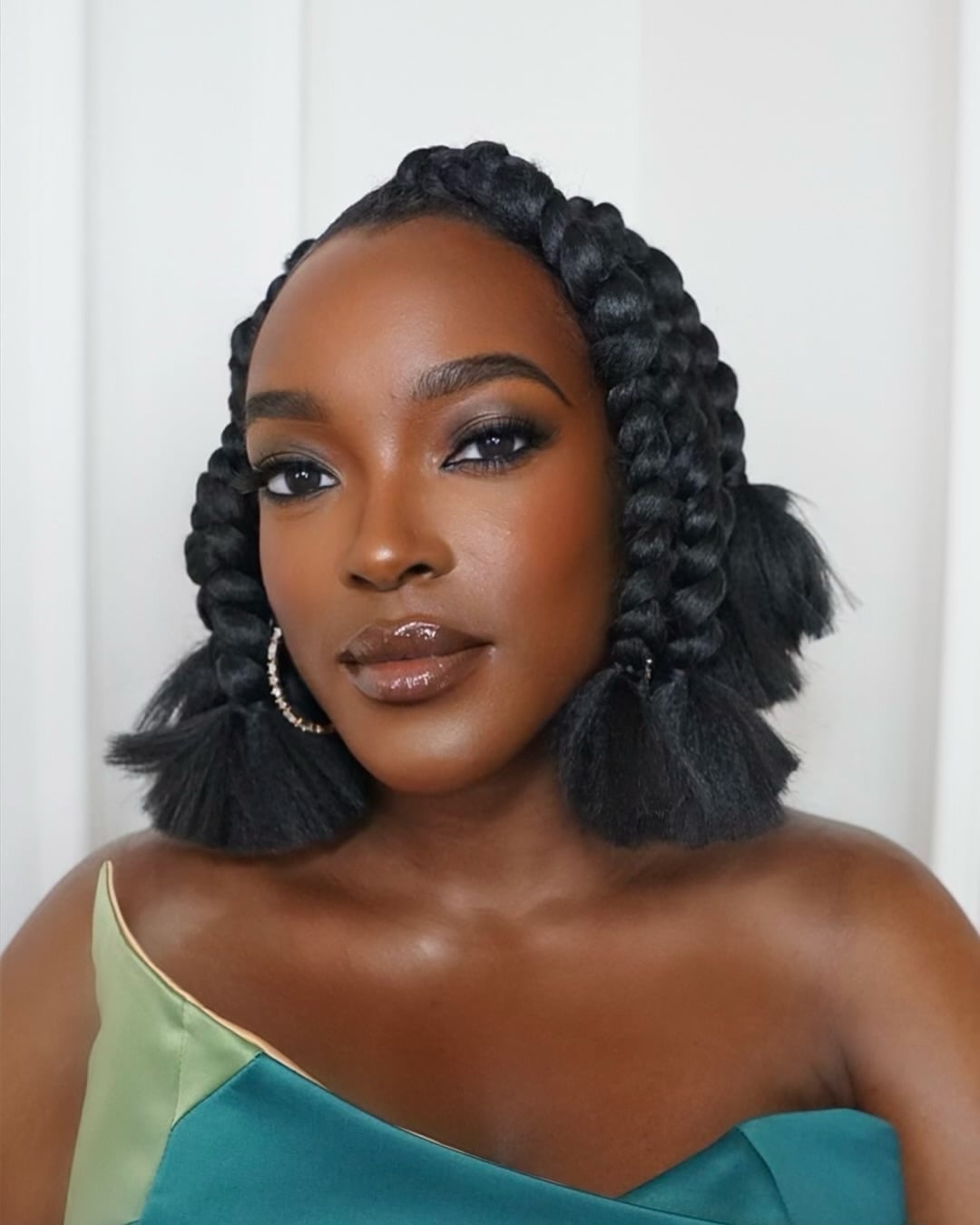
Each braid is thick enough to read as a statement on its own, and the wavy ends keep them from looking too rigid. The size cuts installation time compared to micro braids, but the weight means they pull at the roots for the first day or two. You need hair at least shoulder length to start, and the braiding hair should match your natural density so the transition looks seamless. Ask your stylist for: large box braids with wavy ends to mid-back. The waves are set with hot water at the end, so they hold until you wash them out.
The style works best on thick hair that can handle the tension of large sections. A lightweight spray on the ends refreshes the wave pattern between washes, and you will want a satin scarf at night to stop the braids from frizzing at the crown. Retightening every four to six weeks keeps the part lines clean.
Uniform Dark Brown Box Braids
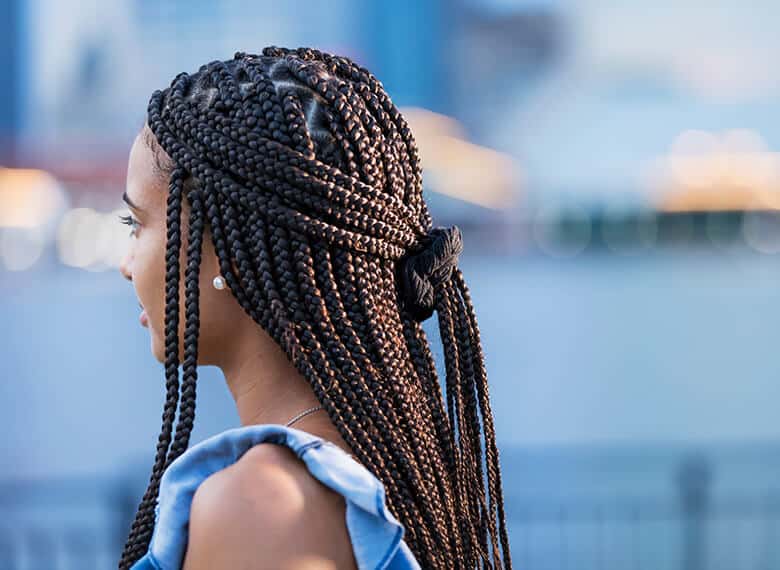
To get box braids that look this consistent from root to tip, start with a middle part and keep the sections the same size from the hairline to the nape. The braids here are straight and dark brown, extending past the shoulders with no taper at the ends, so the weight hangs evenly. This is a classic salon style, not a DIY project, simply because keeping each braid the same thickness across the whole head takes practice. Ask your stylist for: long dark brown straight box braids with middle part. The uniform texture means they resist frizz longer than wavy or curly braids, and a moisturizing serum on the length keeps the shine even.
Cornrows With Curly Ends
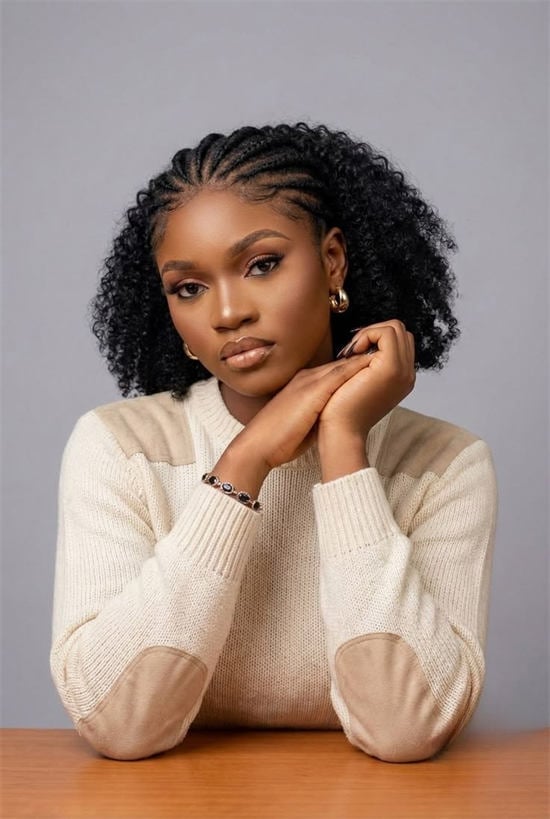
A full head of cornrows can feel uniform, but letting the ends loose into their natural curl pattern changes the whole effect. Here the front is braided tight and close to the scalp with a side part, then the hair falls free in thick curls at the shoulders. Compared to a style where the braids run all the way to the tips, this one moves more and shows off your natural texture. The contrast works best on thick, curly hair that holds a defined coil without extra product. Ask your stylist for: cornrows at the front with loose curly ends. This is a salon style for the braided section, but you can maintain the curls at home with a curl enhancer and regular scalp moisturizing.
Thick Curly Braids To Shoulders
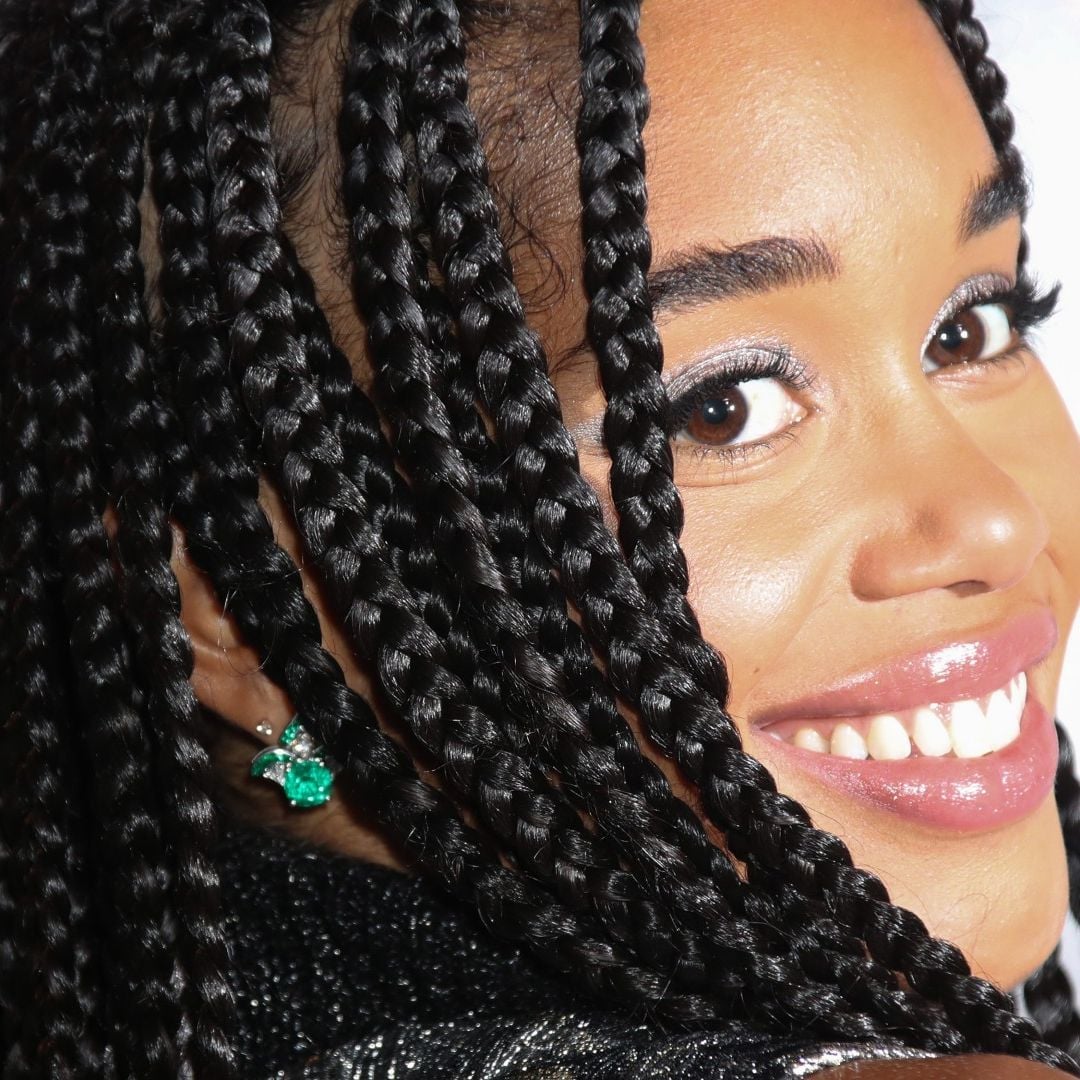
These braids keep the natural curl pattern intact, so they look textured and full. The middle part splits the hair evenly, and the braids stop at the shoulders, a length that suits dense hair without weighing it down. If your hair is fine or low density, the thickness of each braid can look sparse, so this style works best for those with medium to high density and a naturally curly texture. Ask your stylist for: neat medium curly braids to shoulders. A hydrating product keeps the curls hydrated between washes, and you should retighten the roots every four to six weeks to maintain the part lines.
Braids With Natural Curls And Geometric Parting
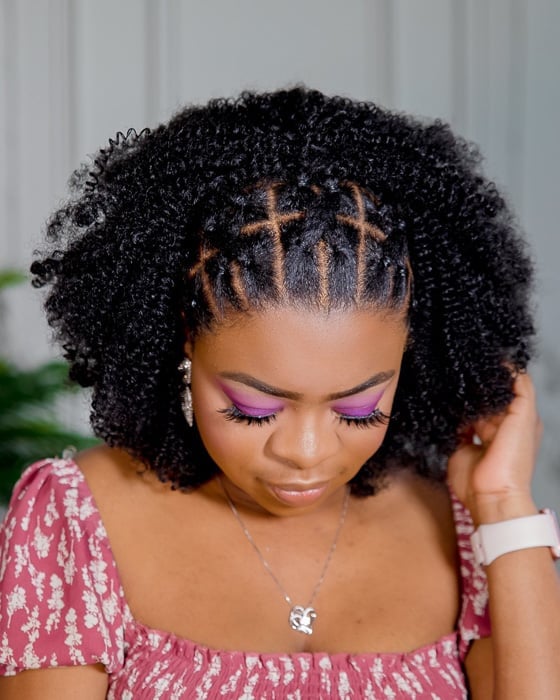
The geometric parting here is the structural anchor: small, precise braids at the front create clean lines, while the rest of the hair stays loose in voluminous curls that fall to the shoulders. The contrast between the structured braids and the free curls gives the style two distinct textures in one look. Building the braids requires a steady hand and a clear sectioning plan, so this is strictly a salon style. Ask your stylist for: small front braids with natural curls, geometric parting. The parting pattern is what makes it stand out, so bring a reference photo to get the angles right.
Half Up Half Down Micro Braids
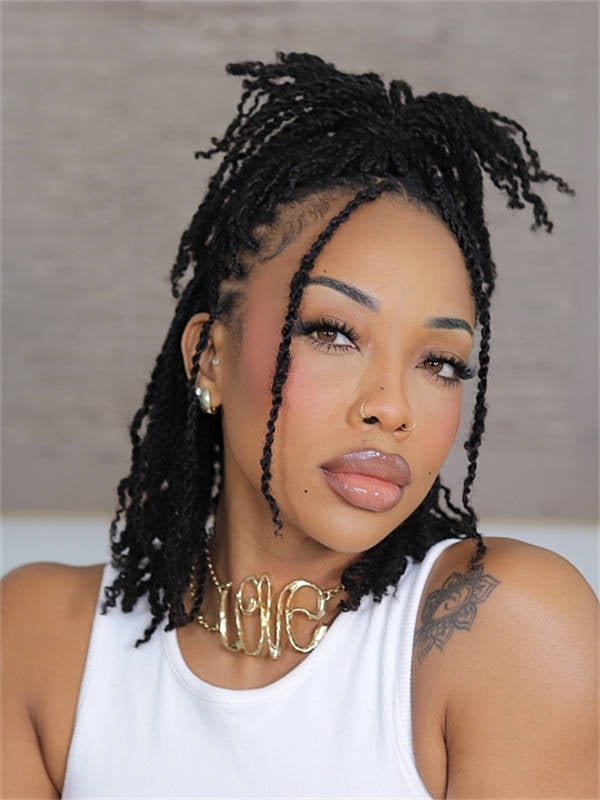
Can you get the volume of a half-up style with hair this fine? Yes, if the braids are micro and dense. The top section is pulled back firmly, which keeps the part clean and the hair off your face, while the rest falls to the shoulders. Those subtle blonde highlights woven through the black add depth without extra bulk.
Ask your stylist for: half up half down micro braids with blonde highlights. The style suits fine-density hair starting at shoulder length. One honest drawback: the fine braids can feel tight at the crown for the first few days. Secure the top section with a strong elastic and use a light serum on the ends to prevent flyaways.
Box Braids In A High Ponytail
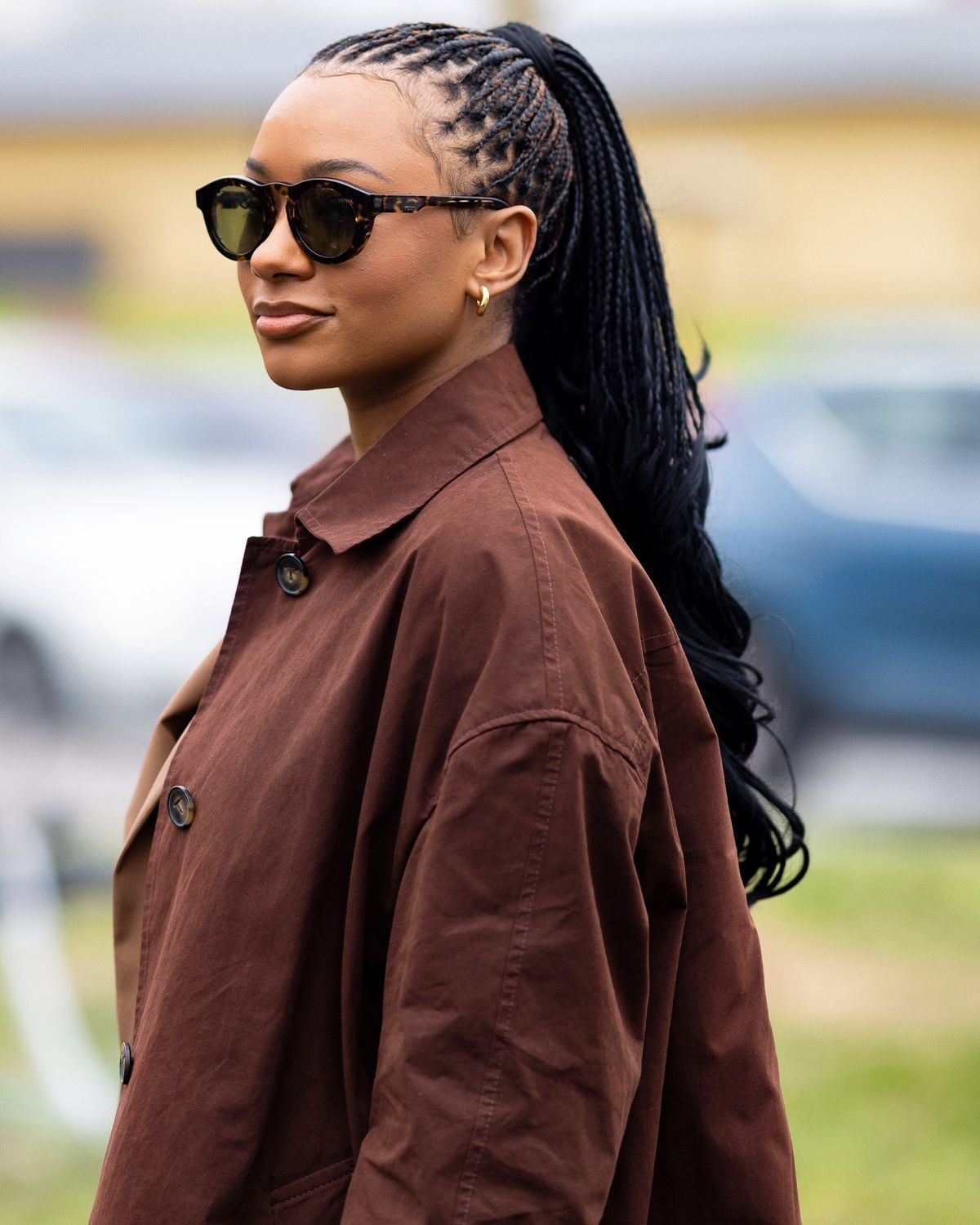
The ponytail here does not rely on a single elastic at the base. The medium-thick box braids are gathered high on the crown, and a few braids wrap around the tie to hide it entirely. That gives the style a finished look from every angle, even from the back. The wavy texture of the braids adds movement as the ponytail falls to mid-back.
Ask your stylist for: mid-back box braids in a high ponytail. This works on medium-thick hair starting at shoulder length or longer. Specify that you want the ponytail secured tightly at the crown, not the occipital bone, for the lifted silhouette. A few things to tell your braider: you want a middle part, the braids should be uniform in thickness, and you need a strong hair tie at the base that can hold for a week or more without slipping.
Cornrows Into A Low Bun
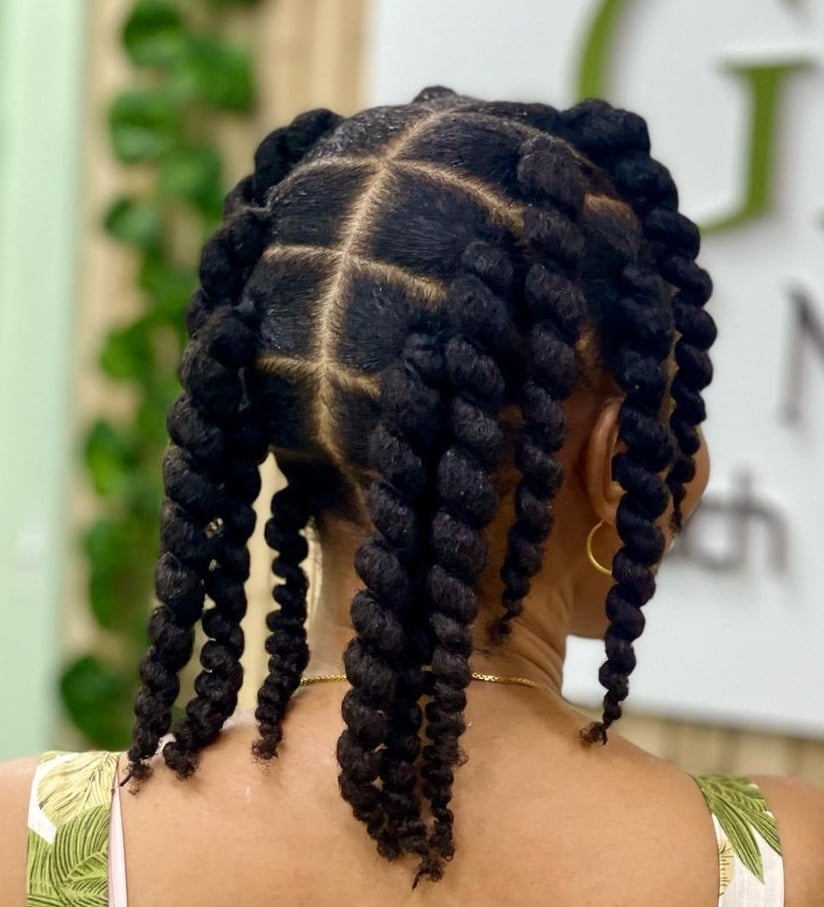
A high bun is faster to install but pulls on the nape. This low bun sits at the nape, which reduces tension and makes the style more comfortable for long wear. The neat cornrows follow a middle parting and feed directly into the bun, so there is no loose hair or visible ends. The back view shows the smooth transition from braid to bun.
Ask your stylist for: neat cornrows into a low bun at the nape. The style suits thick, natural hair starting at mid-back length. This is a salon-only design; the cornrows need even tension and the bun must be anchored securely to last the full two to three weeks. The trade-off against a high bun is less lift but more endurance. Moisturize the scalp every few days to keep the parts from drying out.
Two Large Straight Cornrows
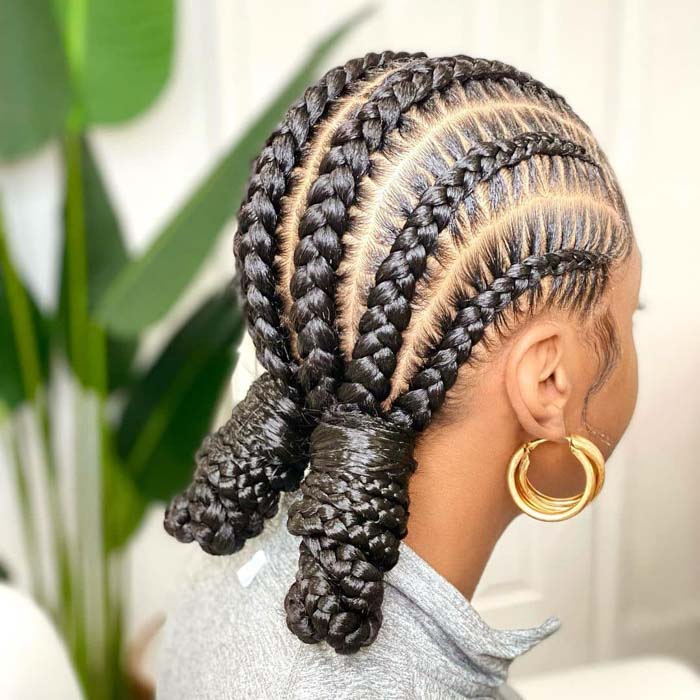
Two large cornrows mean fewer parts to maintain and a bolder graphic line down the back. The straight texture here is thick enough that each braid holds its shape without frizz or loose strands. The middle parting is clean and runs from the hairline to the nape, and the braids extend to mid-back. Keep the parts clean with a dry cloth between washes, and moisturize the scalp to prevent flaking. A trim every eight weeks keeps the ends blunt. The hold is solid for up to two weeks before the roots need refreshing.
Mixed Braids And Loose Waves
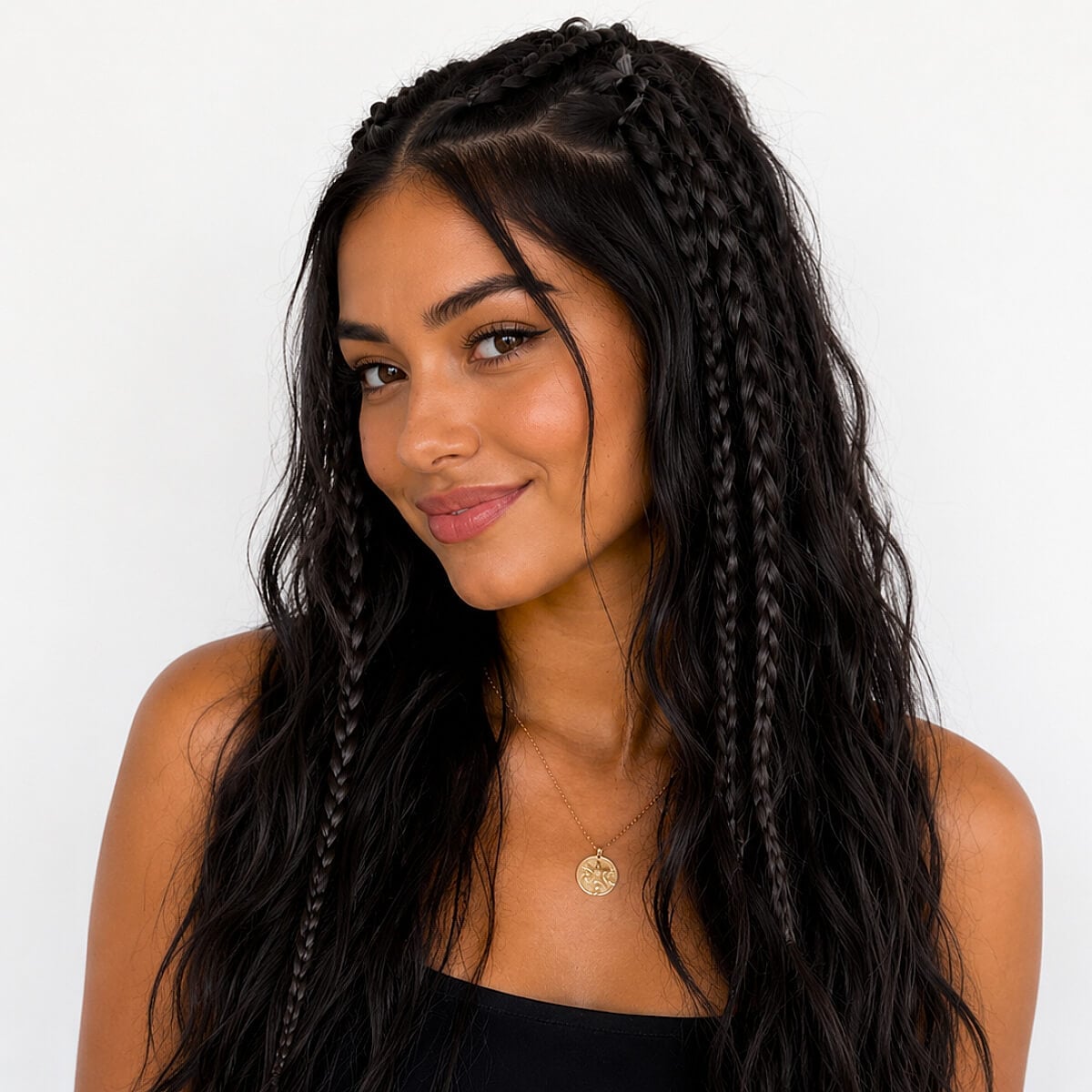
The thin braids here are distributed throughout the head, not clustered at the front or back. That creates a uniform texture where the loose waves and the braids combine into one cohesive style. The middle part keeps the symmetry clean, and the black hair shows the contrast between the braided and wavy sections.
Ask your stylist for: thin braids mixed with loose waves, middle part. This suits medium to thick hair starting at mid-back length. The loose sections can frizz faster than the braids. A texturizing spray helps the waves hold their shape, and misting the braids with water keeps them from looking dry. The style lasts about a week before the loose sections need refreshing.
Final Thoughts
Let density pick the scale. Fine or thinning hair does better with micro braids or smaller cornrows, which build visible fullness; thicker hair carries large box braids or two-strand twists with less retightening. Then match the size to your routine, not the other way around.
- Retighten cornrows or box braids every 4 to 6 weeks.
- Moisturize the scalp weekly with a lightweight oil or spray.
- Cover braids at night to limit friction and frizz.
- Keep manipulation low between appointments to prevent breakage.
Choose braids that complement your lifestyle and hair goals.