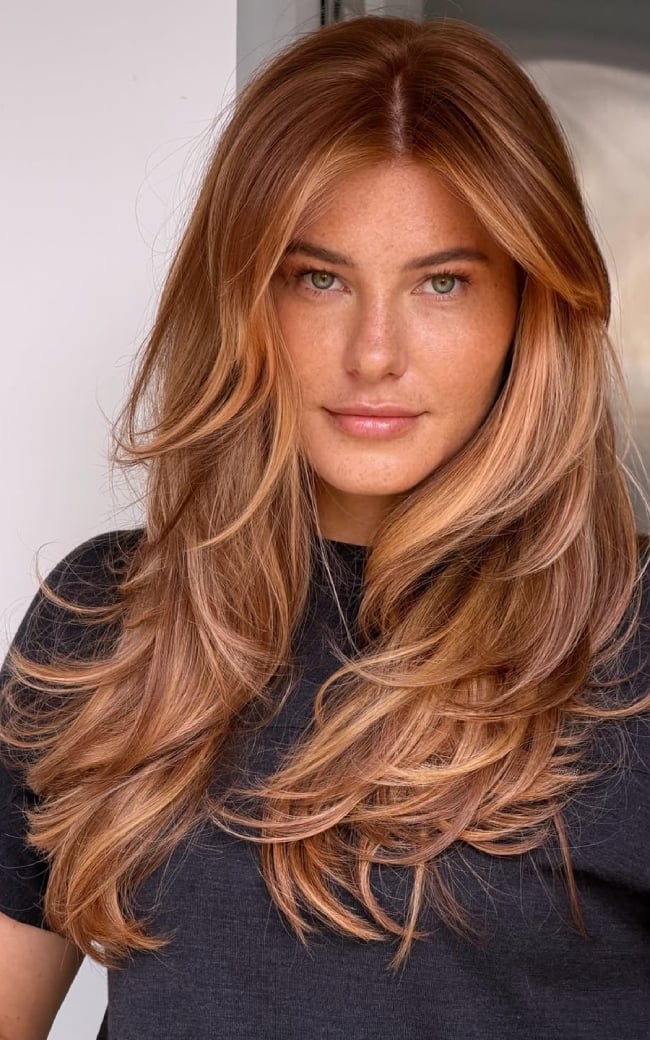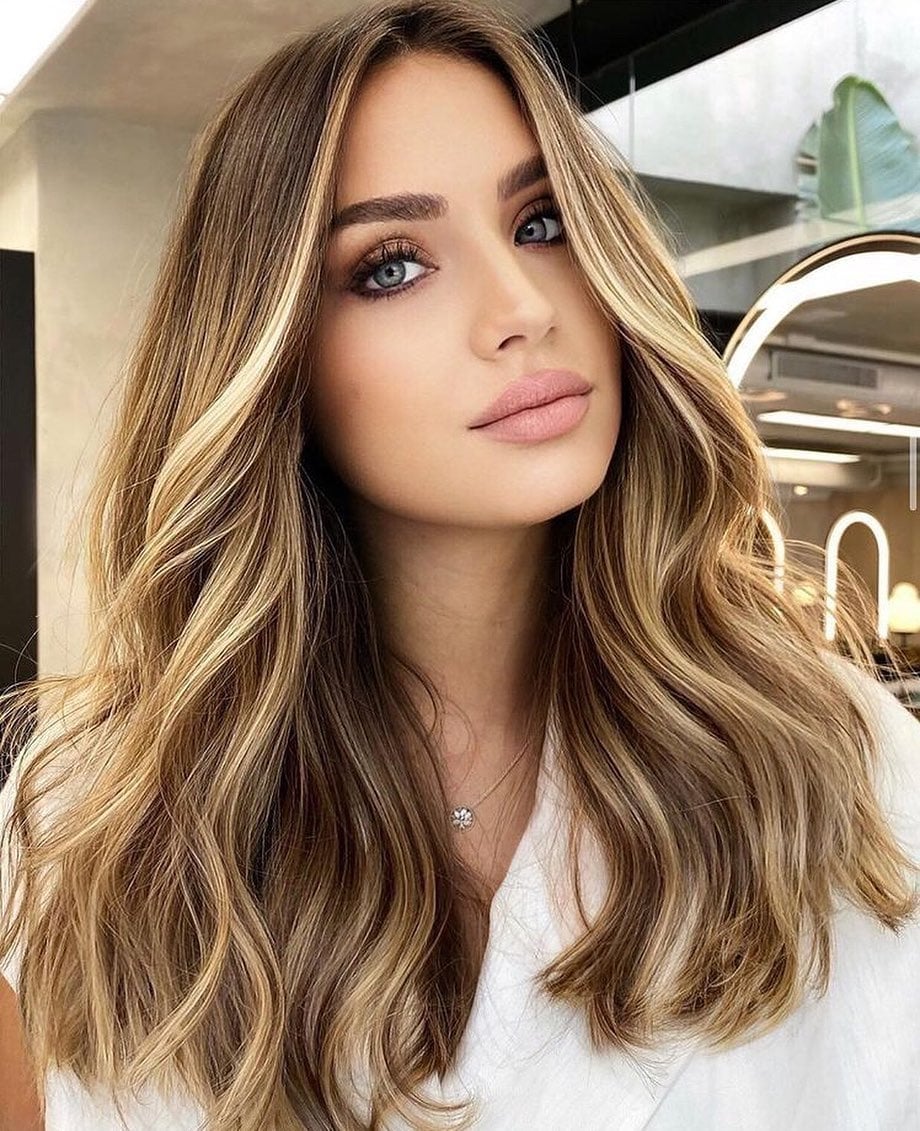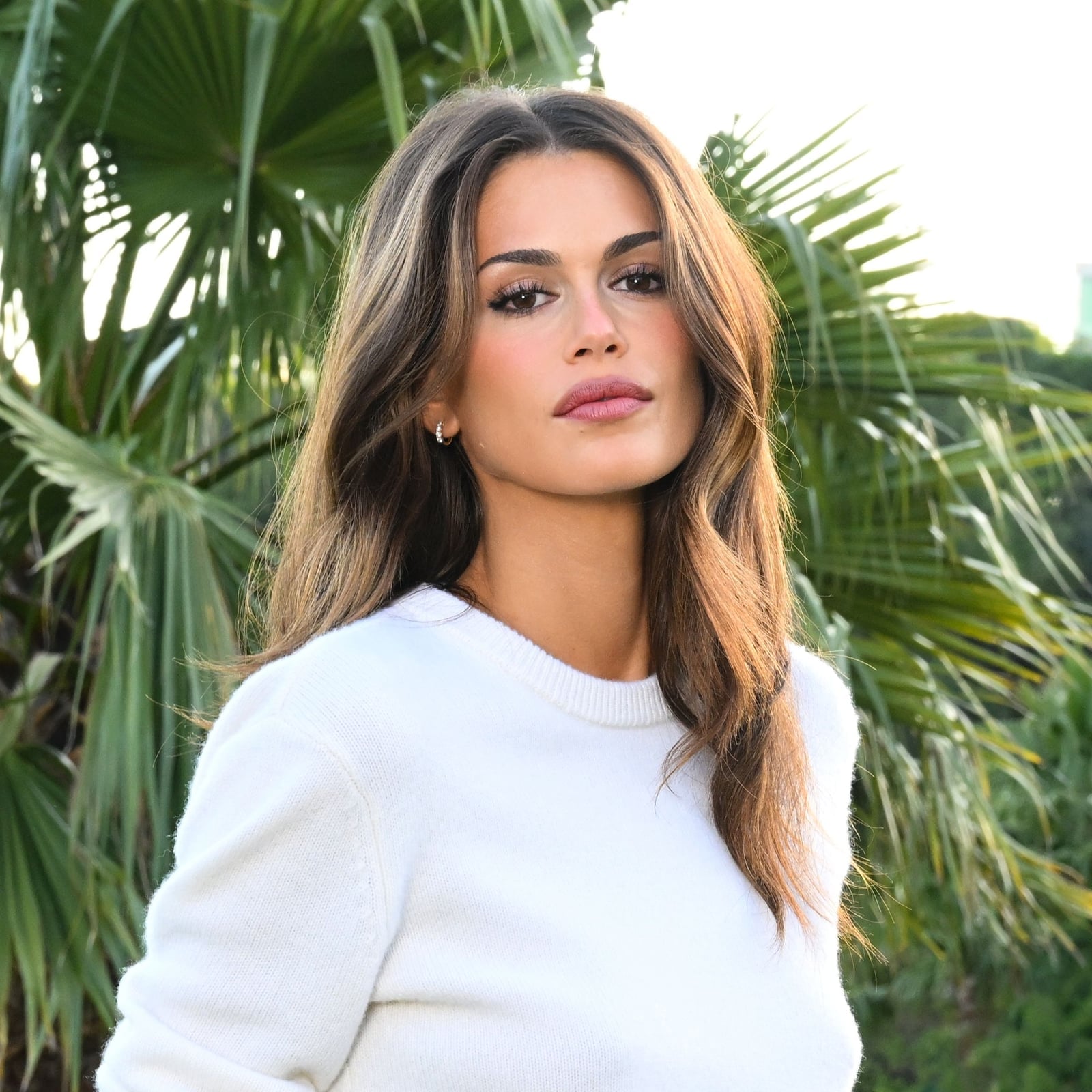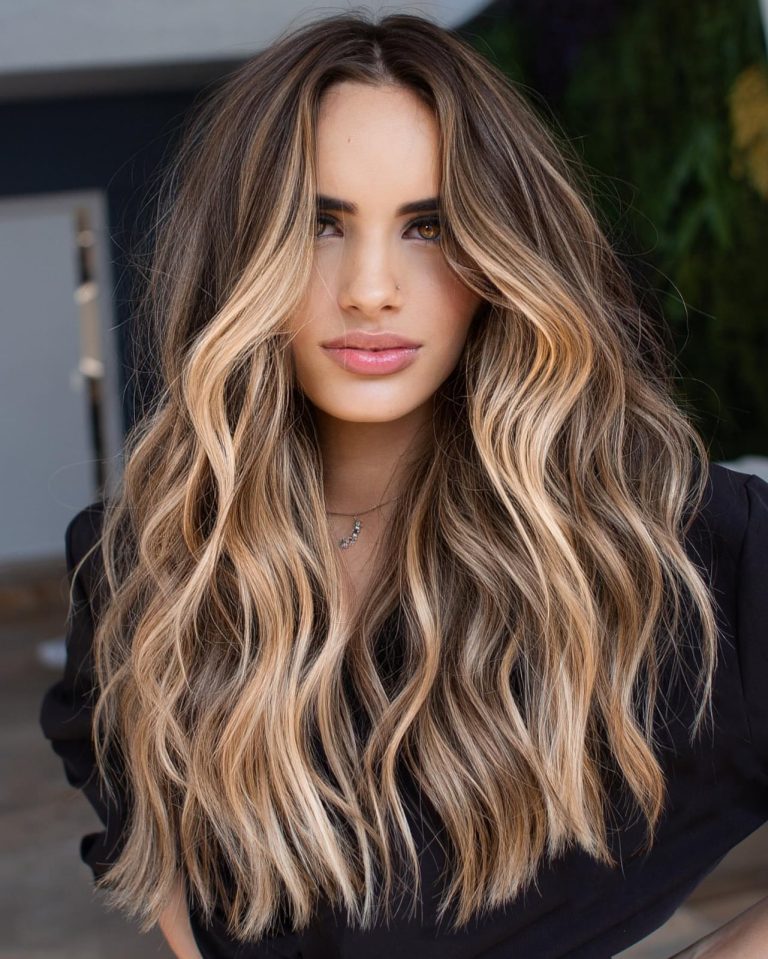
19 Simple Bronde Balayage Hair Color Ideas for 2027
Simple Bronde Balayage 2027: 19 hair color ideas featuring mid-back and collarbone lengths, plus textured and angled bob cuts. Save your favorite.

Bronde balayage blends brown and blonde into one seamless color, and the 2027 version leans softer, with less contrast and more natural dimension. The shift is toward lived-in shades that grow out gracefully, no harsh regrowth lines.
This collection of 19 ideas covers every length and texture, from a short angled bob to mid-back layers, with options for fine or thick hair. Simple Bronde Balayage works best when you match the tone to your base: cooler ash for darker starts, warmer honey for lighter ones. No more guessing how to hide a grow-out line or why your color looks flat by week three.
Mid-Back Bronde Balayage With Loose Waves
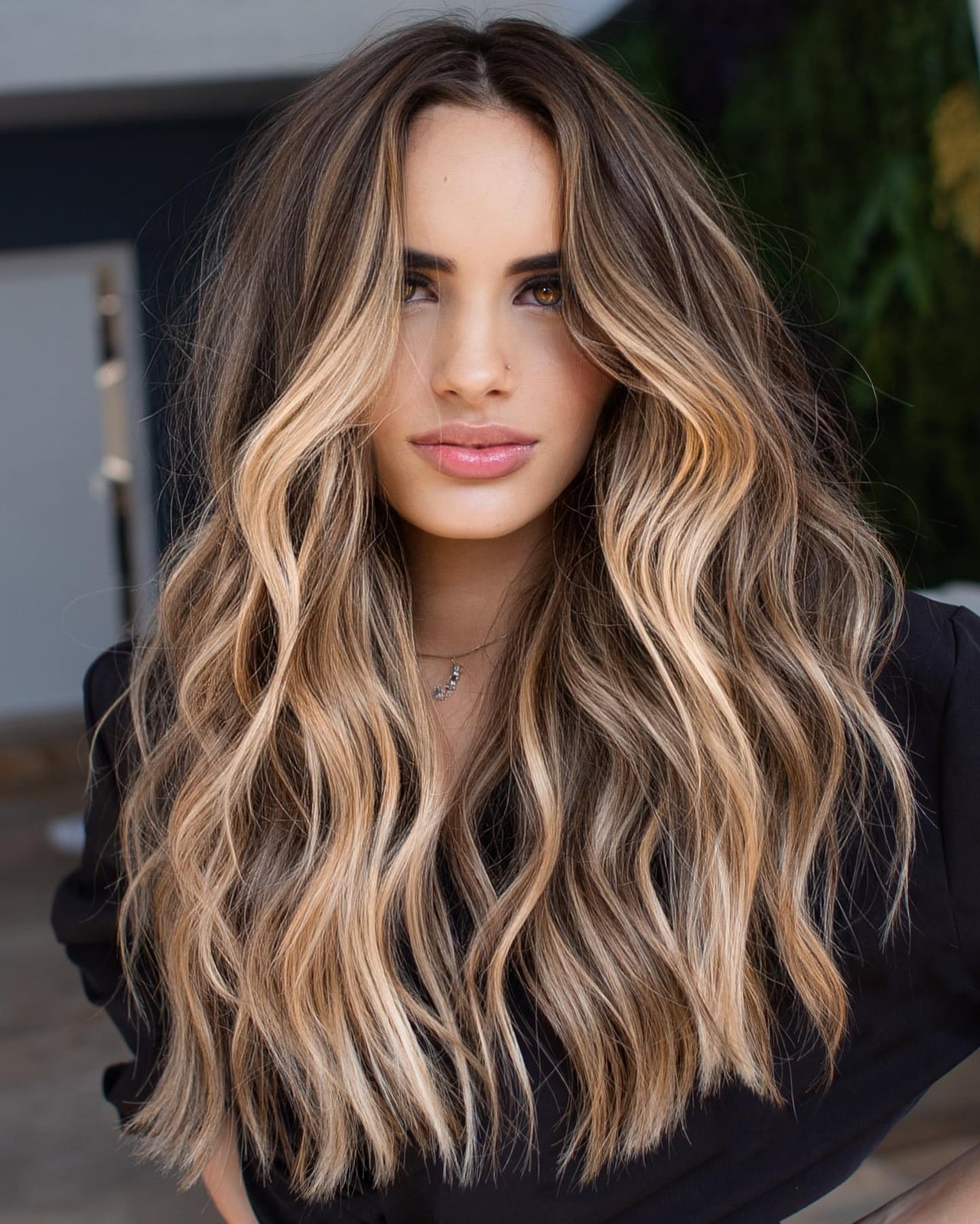
The trick to a bronde balayage that looks grown in is a dark root that ghosts into honey tones without a hard line. This version starts deep brown at the part and softens through mid-back lengths into warm blonde, so the contrast creates dimension. Long layers keep the thick wavy texture moving instead of pooling at the ends.
Ask your colorist for: mid-back length bronde balayage with honey tones, long layers. A middle part and length below the chin elongate a round face naturally. Maintain the shape with a trim every eight to ten weeks, and refresh the tone with a gloss every six to eight weeks if the blonde starts pulling brassy. A texturizing spray on damp hair enhances the wave pattern without heat.
Textured Bob Bronde Balayage With Curtain Bangs
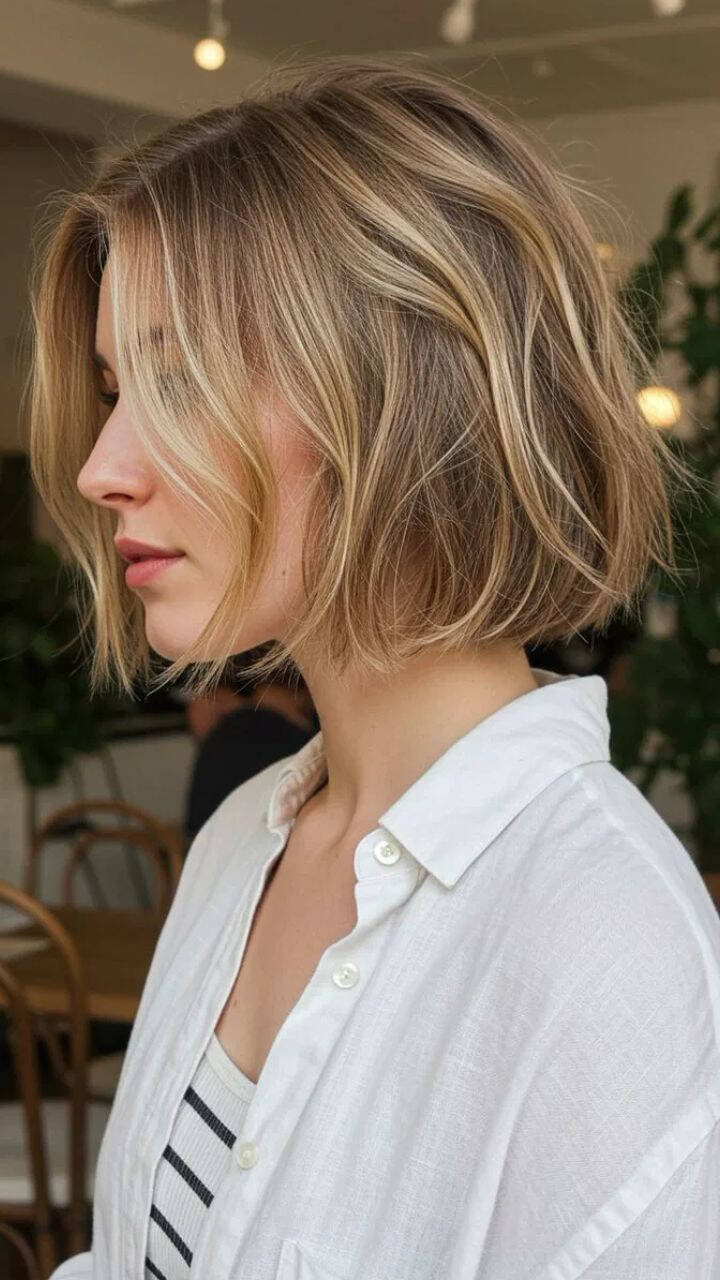
Wondering if a bob can hold a balayage without looking chopped? It can, as long as the lighter pieces stay concentrated around the face and the cut stays textured. This chin-length bob uses a middle part and soft curtain bangs to bring the blonde tones forward, so fine wavy hair looks fuller. The balayage placement means the roots stay dark and the ends lift subtly, which keeps grow-out low-maintenance. Ask your colorist for: chin-length textured bob, soft curtain bangs, face-framing bronde. Curtain bangs soften angular jawlines, and the middle part works for oval and heart-shaped faces. This one leans salon for the cut, but the color grows out gracefully on its own.
Layered Bronde Balayage With Caramel Tones
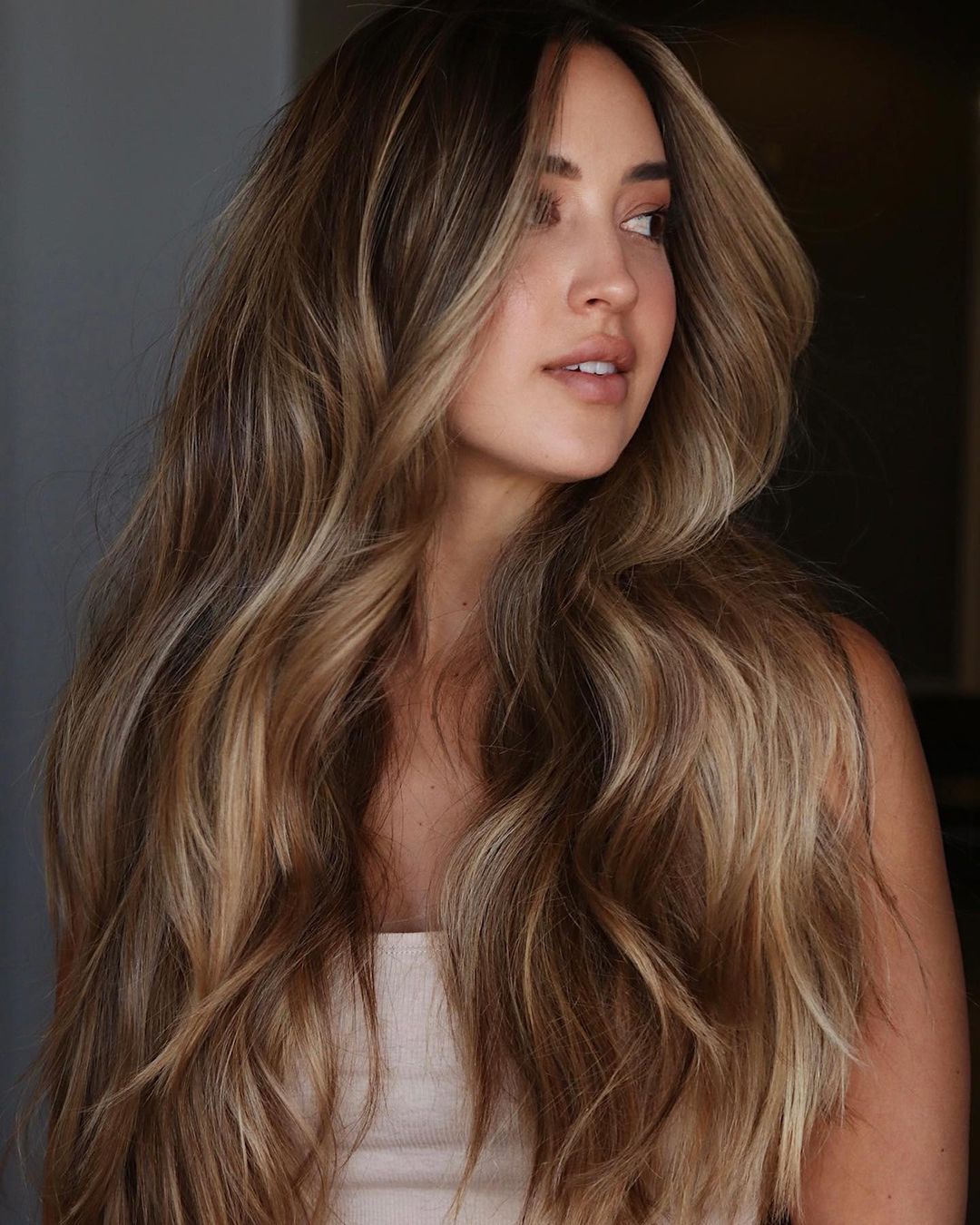
A balayage that skips ash tones in favor of caramel reads warmer and more dimensional on thick wavy hair. The colorist weaves blonde and caramel strands through the mid-section and ends, leaving the root area darker so the lift feels gradual. Long layers with a side parting let the waves fall in a single direction rather than fanning out. Ask your colorist for: long layered hair, bronde balayage with caramel tones, side parting. The side part suits long and oval faces by adding asymmetry. A few things to mention at your consultation:
- The caramel should be painted slightly wider than the blonde pieces to keep the overall tone warm.
- The part line should stay dark to preserve the lived-in feel.
- The ends can be slightly lighter than the mid-lengths to create a soft melt.
This is a salon-only job because the caramel and blonde need to sit in the right order to avoid muddiness.
Angled Bob Bronde Balayage With Side Swept Bangs
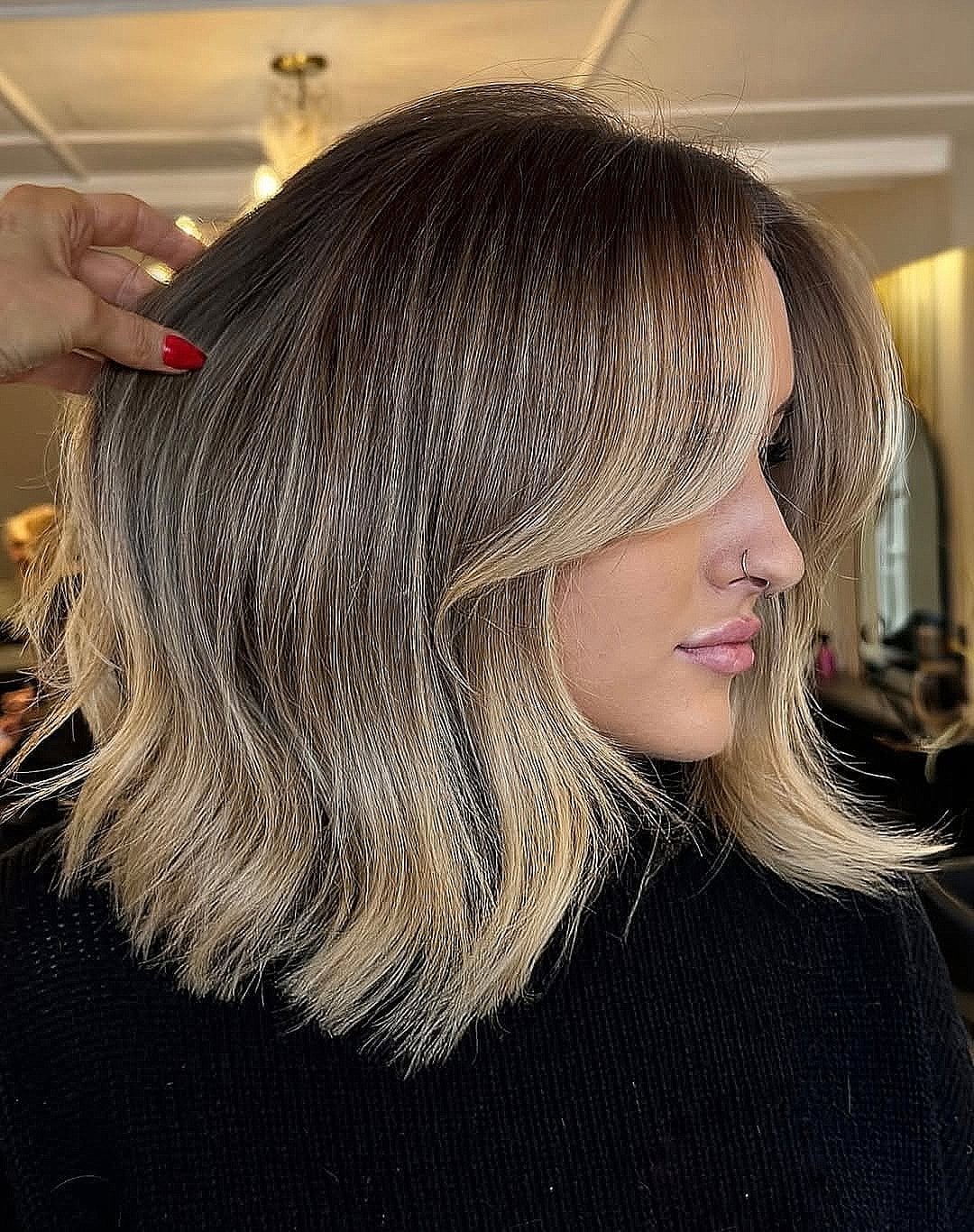
How do you ask for a bob that feels sharp without looking severe? Start with the angle. A chin-length bob that drops shorter in the back and graduates longer toward the chin keeps the shape modern, and the side swept bangs soften the line. The bronde balayage here uses blonde highlights concentrated on the angled front sections, so the lighter pieces catch movement as the hair shifts. Ask your colorist for: chin-length angled bob, side swept bangs, bronde balayage. The side part and angled cut balance a heart-shaped face by narrowing the forehead. This is a salon-only job: the bob needs precise graduation, and the highlights need to follow the angle. Plan for about two and a half hours in the chair.
Collarbone Layers Bronde Balayage With Curtain Bangs
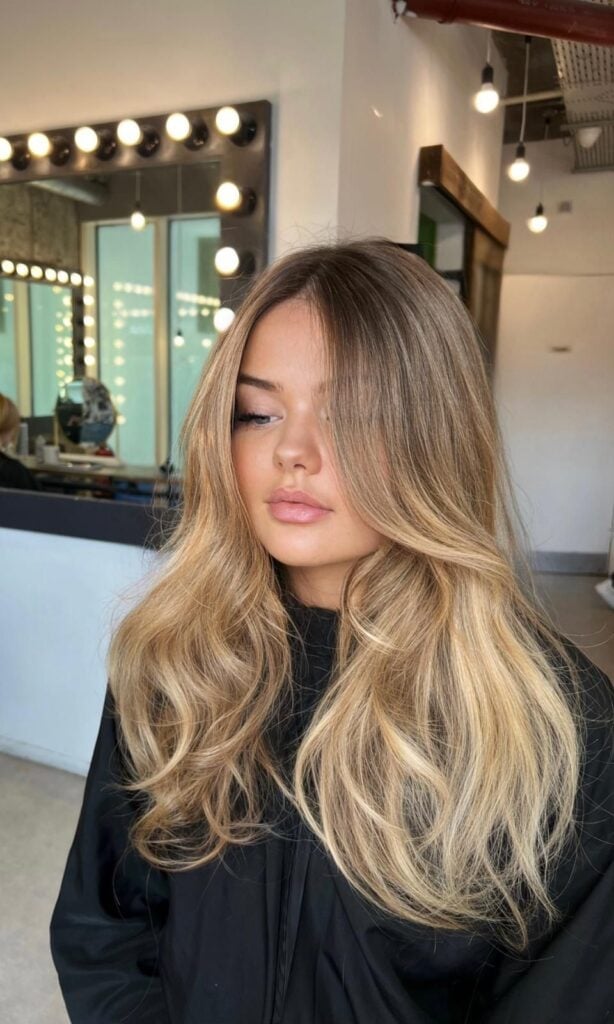
A collarbone cut with curtain bangs sits between a bob and long hair, making it a practical choice for someone who wants length without weight. The layered cut keeps the thick wavy texture from feeling bulky, while the curtain bangs frame the face without commitment. The bronde balayage blends brown roots into soft blonde through the ends, creating a seamless transition that works for both work and evenings. Compare this to a blunt collarbone cut: the layers here add movement, which helps the balayage look dimensional. Ask your colorist for: collarbone length layers, curtain bangs, seamless bronde balayage. The curtain bangs suit most face shapes, and the collarbone length flatters both straight and wavy textures. This is a year-round look that needs a trim every six to eight weeks to keep the bangs in shape.
Collarbone Lob Bronde Balayage With Face Framing
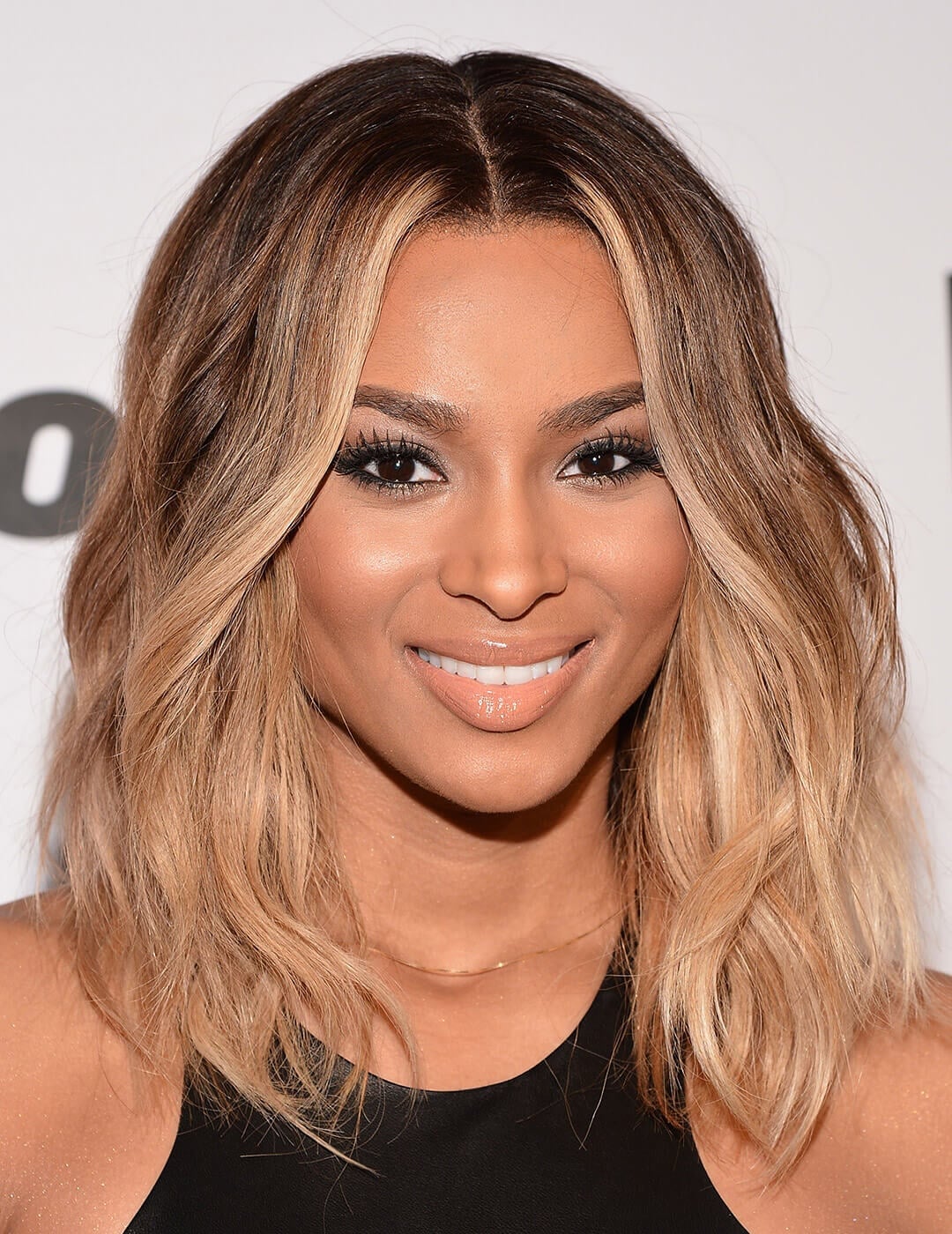
The genius of a collarbone lob with face-framing curtain bangs is that the layers do the work for you. A thick, wavy texture and a middle parting give this bronde balayage a glossy, natural finish. Ask your colorist for: collarbone lob, face-framing curtain bangs, seamless bronde balayage.
This cut suits thick, wavy hair that already reaches collarbone length or longer, and the curtain bangs soften most face shapes. Expect to spend about ten minutes coaxing it into a wavy blowout with a round brush and a texturizing spray. The lob needs a trim every six to eight weeks to keep the face-framing pieces from losing their shape, and a gloss treatment every four to six weeks maintains the seamless balayage blend.
Collarbone Bob Dark Brown With Subtle Blonde Balayage, Close-Up Take
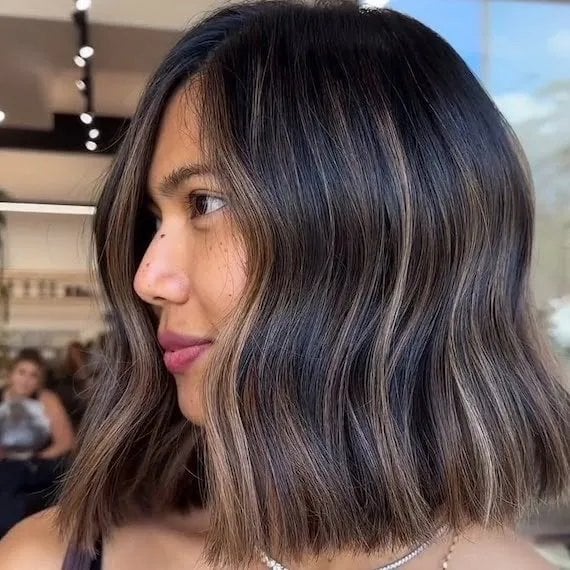
This collarbone bob proves that a dark brown base with subtle blonde balayage can add dimension. The neutral blonde pieces are painted sparingly, so the overall tone stays grounded. Loose waves let the lighter strands show at different angles, which helps the blend look natural. The drawback: on a dark base, subtle balayage can skew warm after a few weeks, so a toning gloss every six to eight weeks keeps the blonde from veering into orange territory. Ask your colorist for: collarbone bob, dark brown base with subtle blonde balayage. A trim at the same interval keeps the bob precise.
Medium Bronde Balayage With Curtain Bangs
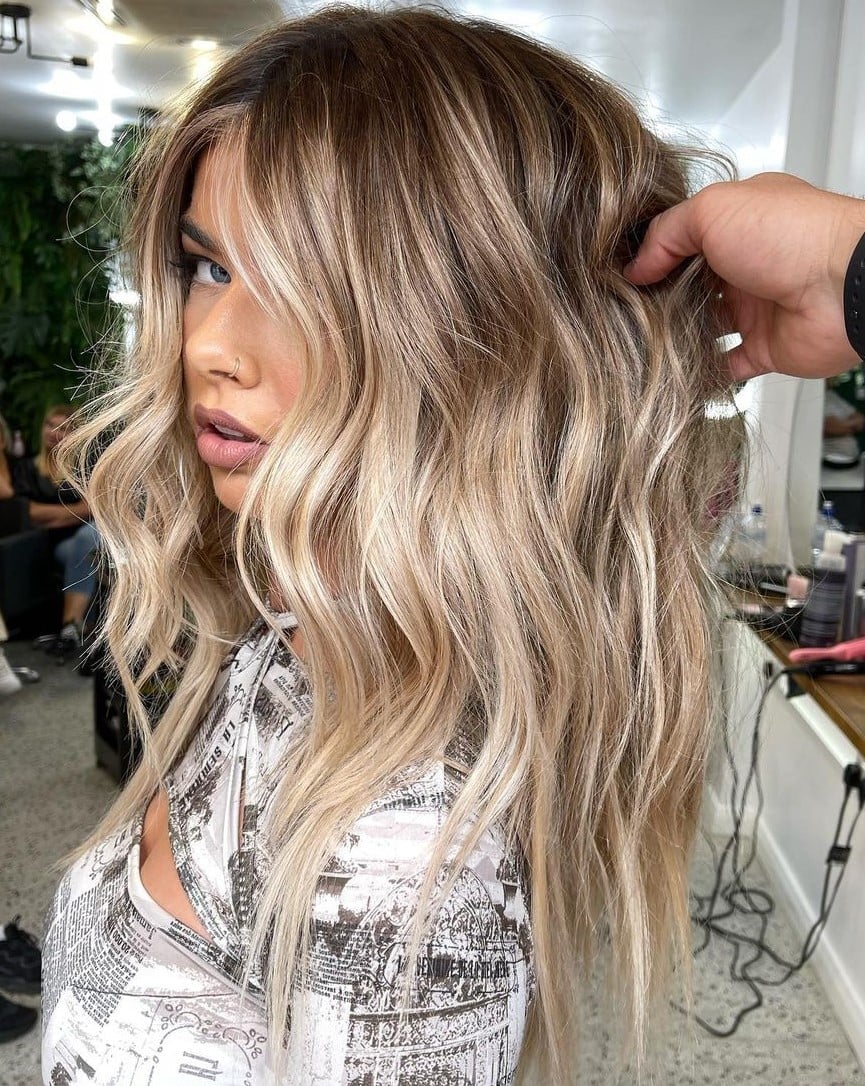
A medium-length layered cut with curtain bangs and a middle parting relies on the balayage highlights landing in the right places. The common mistake is letting the lighter pieces start too high, which creates a stripe effect rather than a sun-softened blend. Ask your colorist for: medium length layered hair, curtain bangs, bronde balayage with lighter ends. The lighter pieces should concentrate toward the ends, keeping the base darker at the root for a lived-in grow-out. Thick, wavy hair of collarbone length or longer gives the layers enough weight to hold the shape, and curtain bangs soften most face shapes. A volumizing spray at the roots prevents the middle part from falling flat, and trims every eight to ten weeks keep the curtain bangs from turning into a solid fringe.
Mid-Back Bronde Balayage With Face Framing
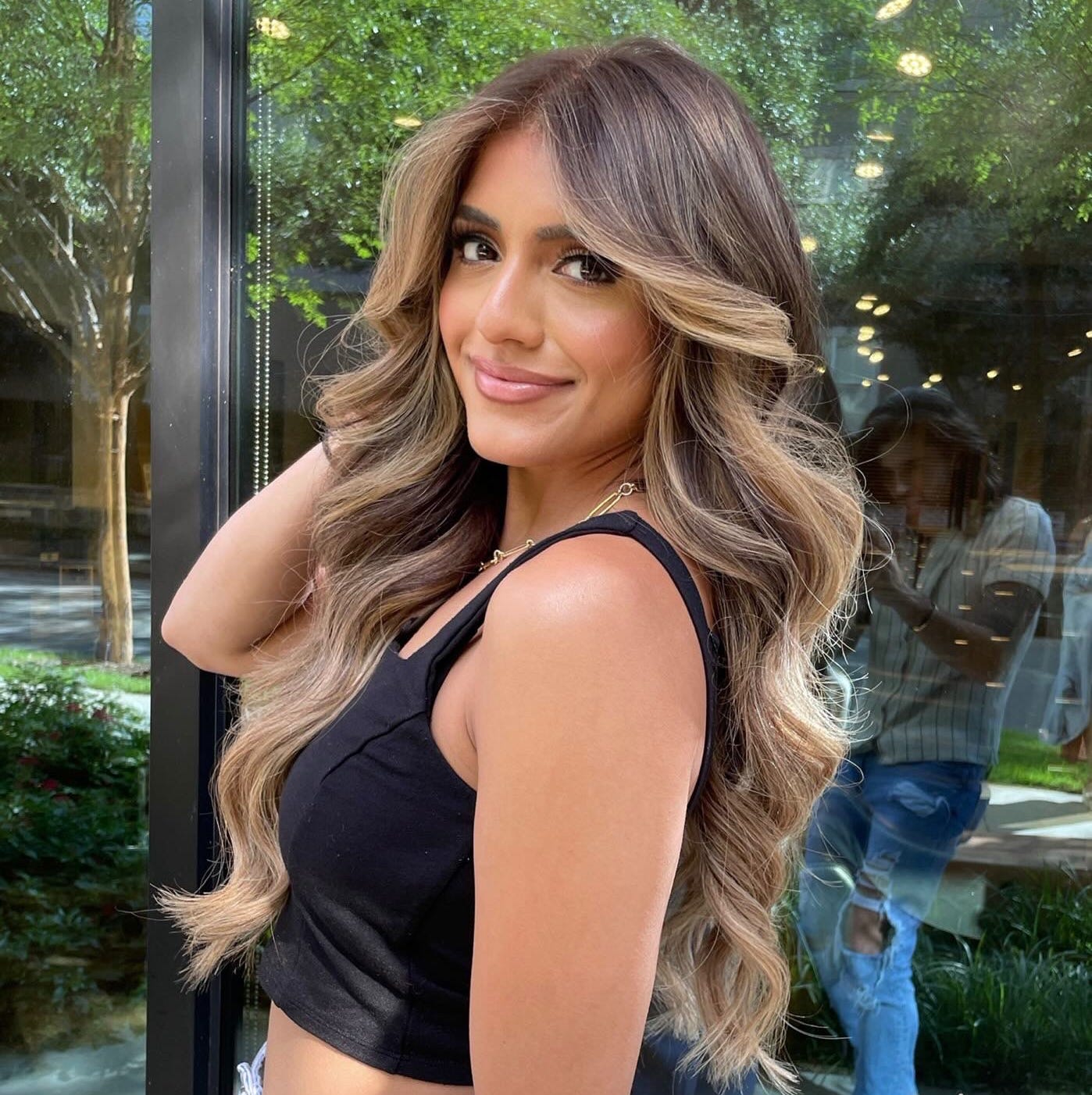
Does a mid-back bronde balayage with face-framing pieces actually work for wavy, thick hair, or is it one of those looks that only behaves for the photo? It works, provided the long layers are cut to match the texture. The blonde and caramel tones woven through the dimensional balayage create movement that loose curls amplify, and the middle parting adds volume without extra effort. Ask your colorist for: mid-back length, long layers, face-framing bronde balayage with caramel.
Thick, wavy hair of mid-back length or longer is the ideal candidate, because the weight helps the face-framing pieces fall forward rather than disappearing into the rest of the hair. Those with finer or straighter textures might find the face-framing layers lack the grip to stay visible without daily curling. The face-framing pieces suit most face shapes, though they are especially effective at softening a square jawline. Trims every eight to ten weeks keep the long layers from looking stringy.
Collarbone Lob High Contrast Warm Blonde Balayage
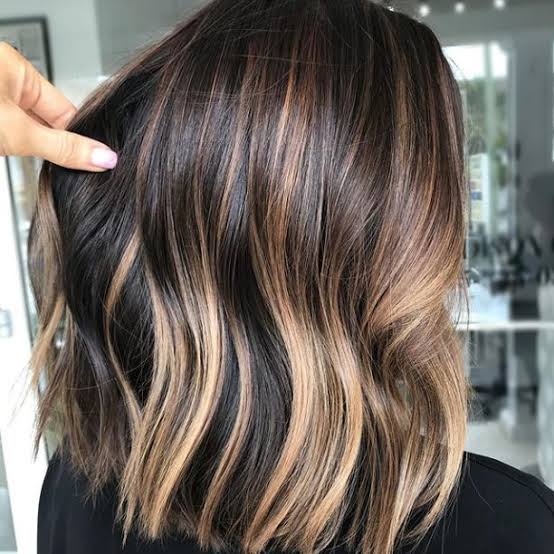
A warm blonde balayage on a dark brown base is the kind of high contrast that lands best when the weather shifts from summer to autumn. The noticeable separation between the dark root and the lighter pieces looks deliberate instead of overdue for a touch-up, and the loose waves with a side parting keep the lob from feeling severe. Ask your colorist for: collarbone lob, dark brown base with high contrast warm blonde balayage. It suits medium density, wavy hair of collarbone length or longer and works well for oval and long face shapes, where the darker base at the root adds visual weight near the jaw. A sea salt spray can enhance the texture on second-day hair, and trims every six to eight weeks prevent the lob from creeping past the collarbone into shapeless territory.
Mid-Back Layered Bronde Balayage With Caramel Tones
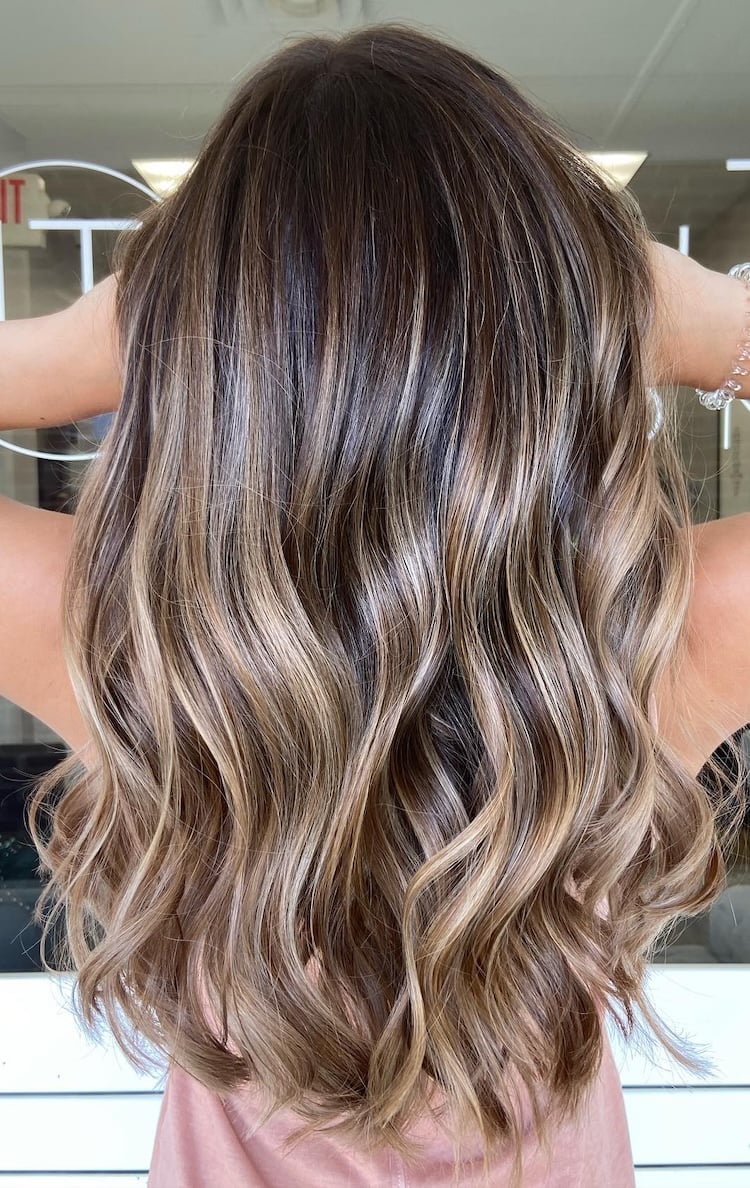
The rich blend here combines caramel and golden tones woven through a darker base, not applied as separate streaks. Long layers catch those lighter pieces so the color shows depth instead of a uniform stripe. Thick, wavy texture helps the balayage diffused look hold its shape without fighting gravity. Ask your colorist for: mid-back length layers, rich bronde balayage with caramel and golden tones. A heat protectant before the blowout keeps the gloss intact, and a trim every eight to ten weeks preserves the layers without sacrificing length.
This color gives the impression of a week at the beach rather than an afternoon in the chair. The back view shows exactly how the caramel tones travel through the mid-lengths and ends, leaving the root area darker for a lived-in grow-out. No bangs means the focus stays on that seamless transition from root to highlight.
Mid-Back Bronde Balayage With Ash Blonde Tones
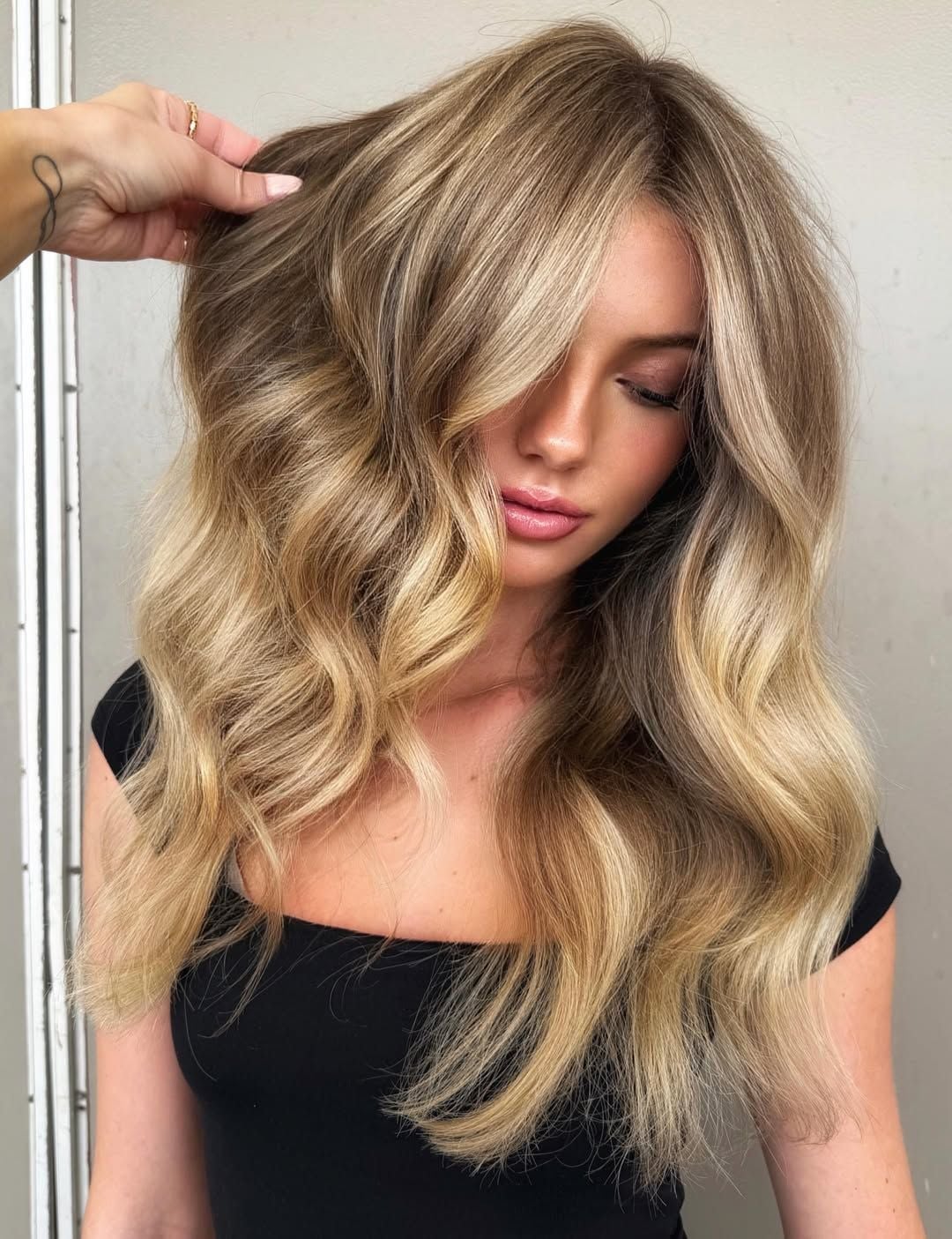
Ash blonde tones in a bronde balayage require a cooler base to start, so your colorist lifts sections from mid-shaft to ends, then tones them with a violet-tinged gloss to neutralize warmth. The result is a glossy finish that reads as silver-gold rather than yellow. A side part adds volume at the root, which thick, wavy hair takes to naturally. Ask your colorist for: mid-back length layers, bronde balayage with ash blonde tones, voluminous blowout. Styling steps: apply a volumizing mousse to damp roots, blow-dry with a round brush lifting at the crown, then wrap sections around a large-barrel iron for soft waves. The side part is key here. It directs the eye along the lighter pieces framing the face.
A gloss treatment every four to six weeks keeps the ash tone from drifting brassy, especially if you wash with a purple shampoo once a week.
Mid-Back Bronde Balayage With Lighter Ends
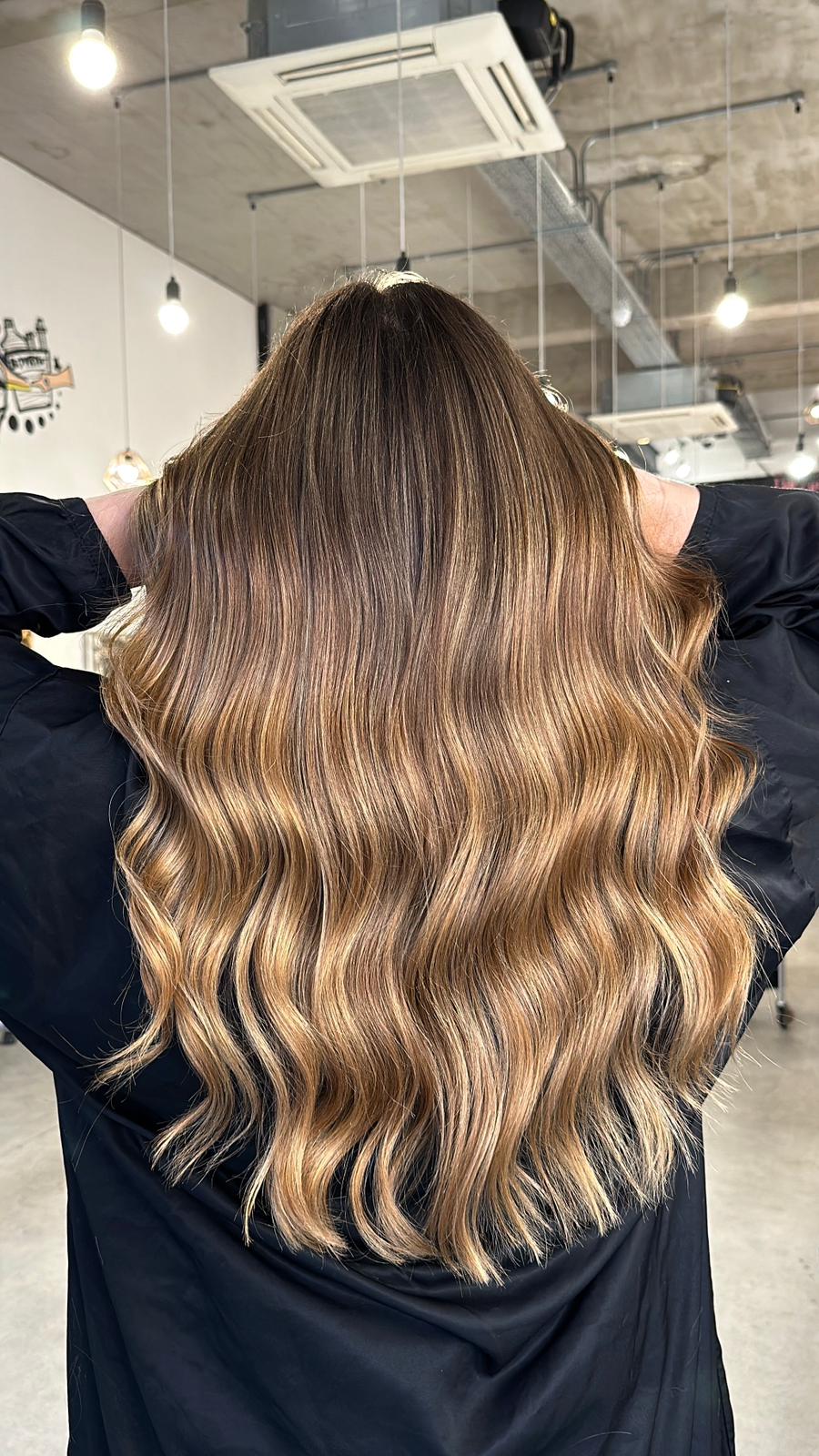
The transition from a darker root to lighter ends is what makes this balayage so low-maintenance: the root grows out for weeks without a harsh line. Long layers keep the weight distributed so the lighter ends don’t look sparse, and loose waves soften the color shift even further. Thick, wavy texture helps the lighter pieces sit naturally. Ask your colorist for: mid-back length, long layers, bronde balayage with lighter ends. A texturizing spray enhances the lived-in feel between washes. Trim every eight to ten weeks to keep the ends healthy; split ends show more on lighter hair because the porous cuticle reflects light differently.
Collarbone Bronde Balayage With Soft Curtain Bangs, Wavy
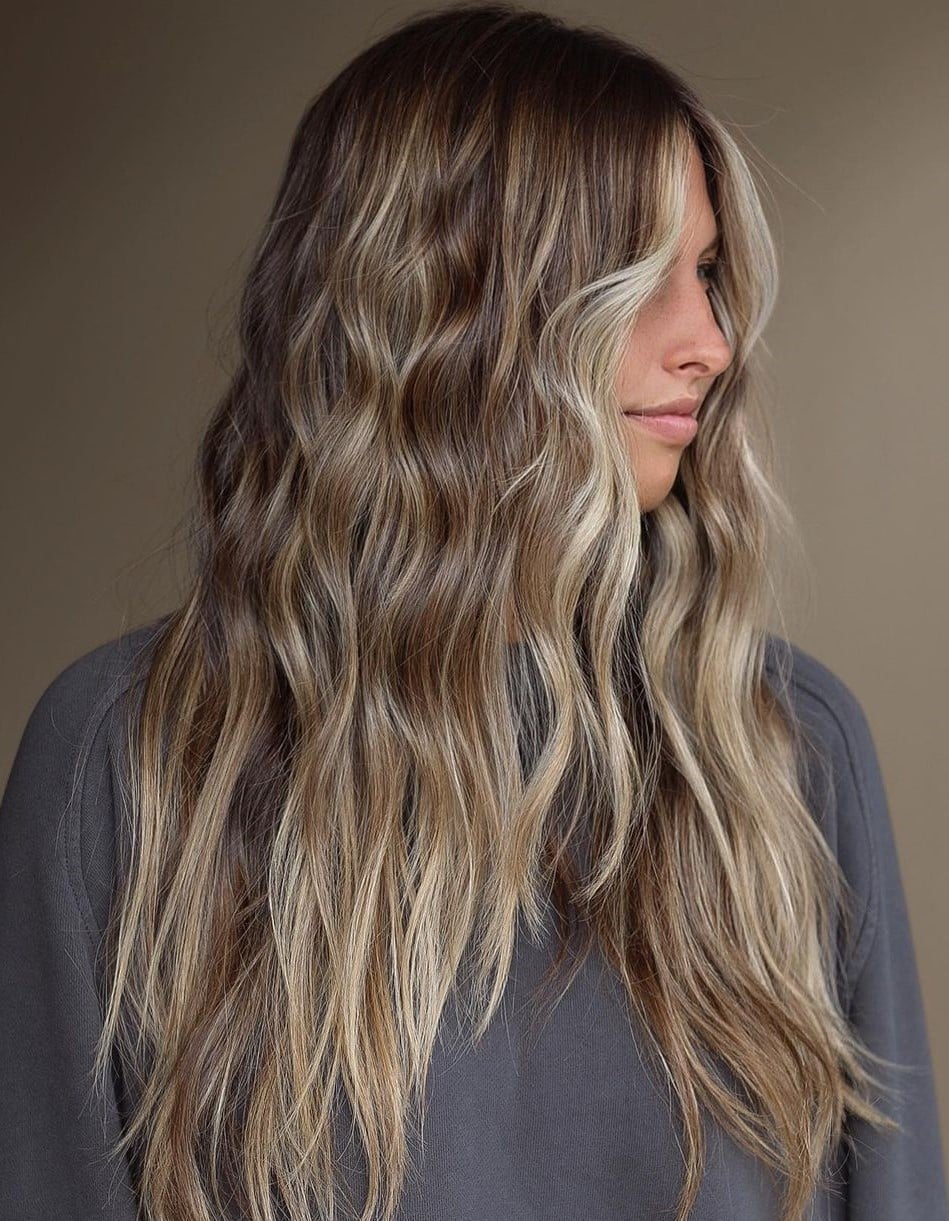
Wondering how to get curtain bangs that actually blend with a collarbone-length balayage? The trick is asking for them cut dry, so the stylist sees how your natural wave sits. Soft curtain bangs should hit just below the cheekbone when dry, framing the face without shortening the overall length. The middle parting directs the lighter balayage pieces forward, creating dimension around the jaw. Ask your colorist for: collarbone length layers, soft curtain bangs, natural bronde balayage. This is a salon-only color job. The balayage needs a skilled hand to keep the highlights soft and diffused rather than chunky. At home, a round brush and a blow-dryer are enough to shape the bangs into that curved sweep.
Mid-Back Bronde Balayage With Blonde Highlights
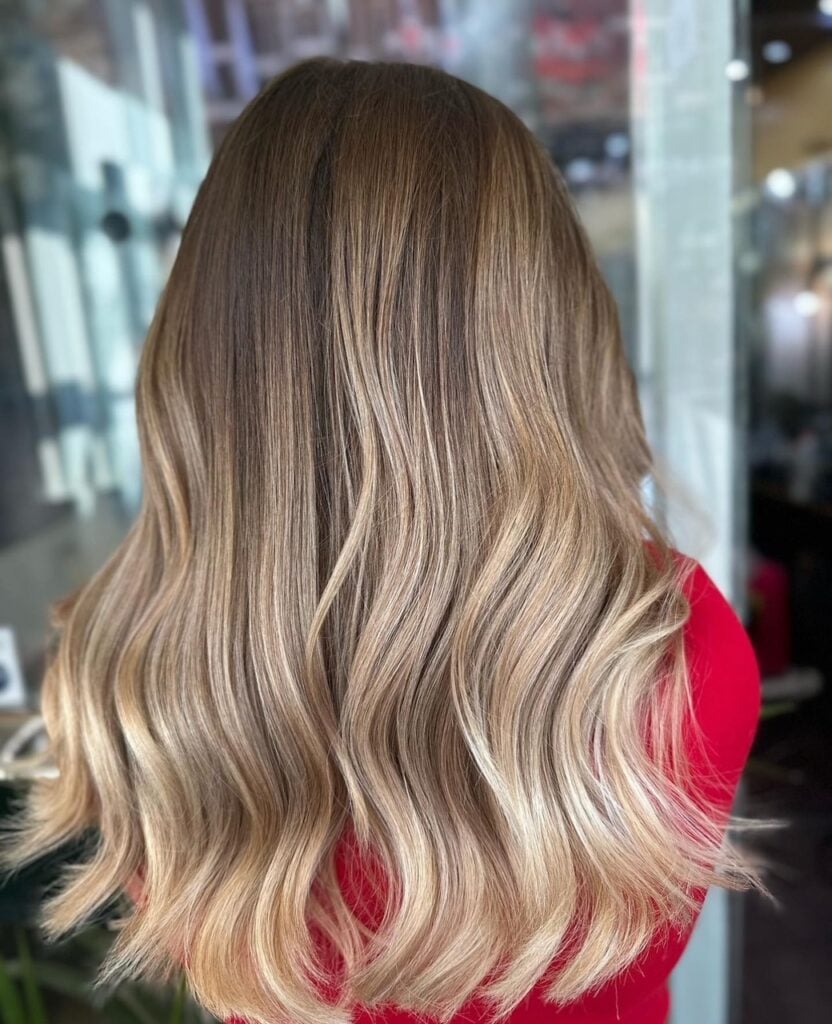
Balayage with blonde highlights sits somewhere between a full highlight and a classic balayage: the lightener is painted freehand but concentrated on the top layers and face-framing sections, giving a brighter pop than a standard balayage. The middle parting splits the lighter pieces evenly on both sides, so the dimension reads from every angle. Thick, wavy texture masks the grow-out line better than fine, straight hair does. Ask your colorist for: mid-back length layers, bronde balayage with blonde highlights. The drawback here is that the lighter pieces on the top layers are more exposed to heat styling and sun, so split ends can show up faster on those sections. A trim every eight weeks keeps the ends looking dense rather than stringy.
Compared to a full foil highlight, this technique leaves more dark base visible, which means less frequent touch-ups and a softer regrowth.
Mid-Back Mushroom Beige Bronde Balayage
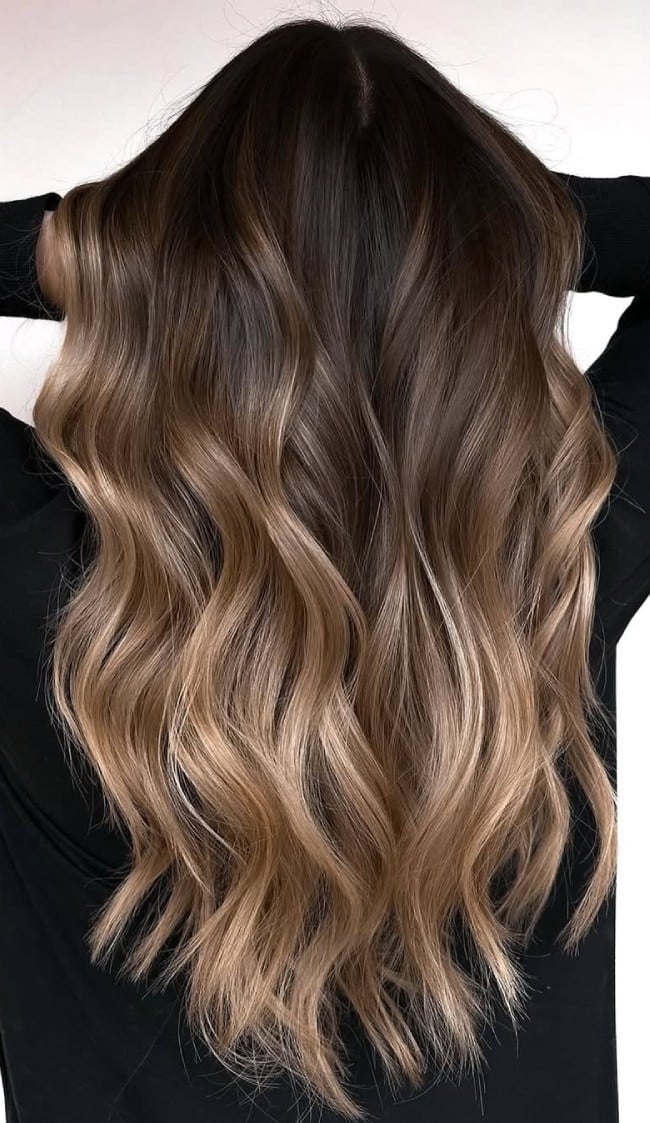
Mushroom beige is exactly what it sounds like: a cool, ashy brown that leans just shy of gray, with a root melt that keeps the grow-out line invisible for weeks. This mid-back length version uses a balayage technique to feather lighter pieces through the ends, so the overall tone stays soft rather than stark. The loose waves and thick, wavy texture give the color depth, letting the darker root and lighter lengths read as one seamless piece.
Ask your colorist for: mid-back length layers, mushroom beige bronde balayage with root melt. The color works best on mid-back length or longer hair, with enough weight to carry the gradual shift. A dry shampoo can refresh volume between washes, and a trim every eight to ten weeks keeps the layers from losing shape.
Mid-Back Dark Brown With Gradual Blonde Melt
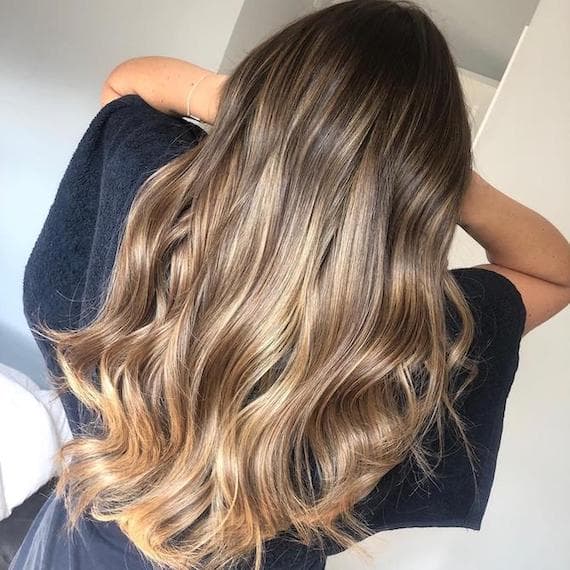
A gradual blonde melt starts with a dark brown base at the root and builds lightness in stages, so there is no hard line between the two. On this mid-back length, the balayage is painted in soft, sweeping sections that concentrate the blonde toward the ends, while the long layers and loose waves help the transition read as smooth and natural. The middle part keeps the color distribution even on both sides.
Ask your colorist for: mid-back length, dark brown base with gradual blonde melt. The technique suits wavy, thick hair of mid-back length or longer, where there is enough length to show the gradient fully. A color-depositing conditioner helps maintain the blonde tone between salon visits, and a trim every eight to ten weeks keeps the ends healthy.
Long Bronde Balayage With Creamy Blonde Highlights
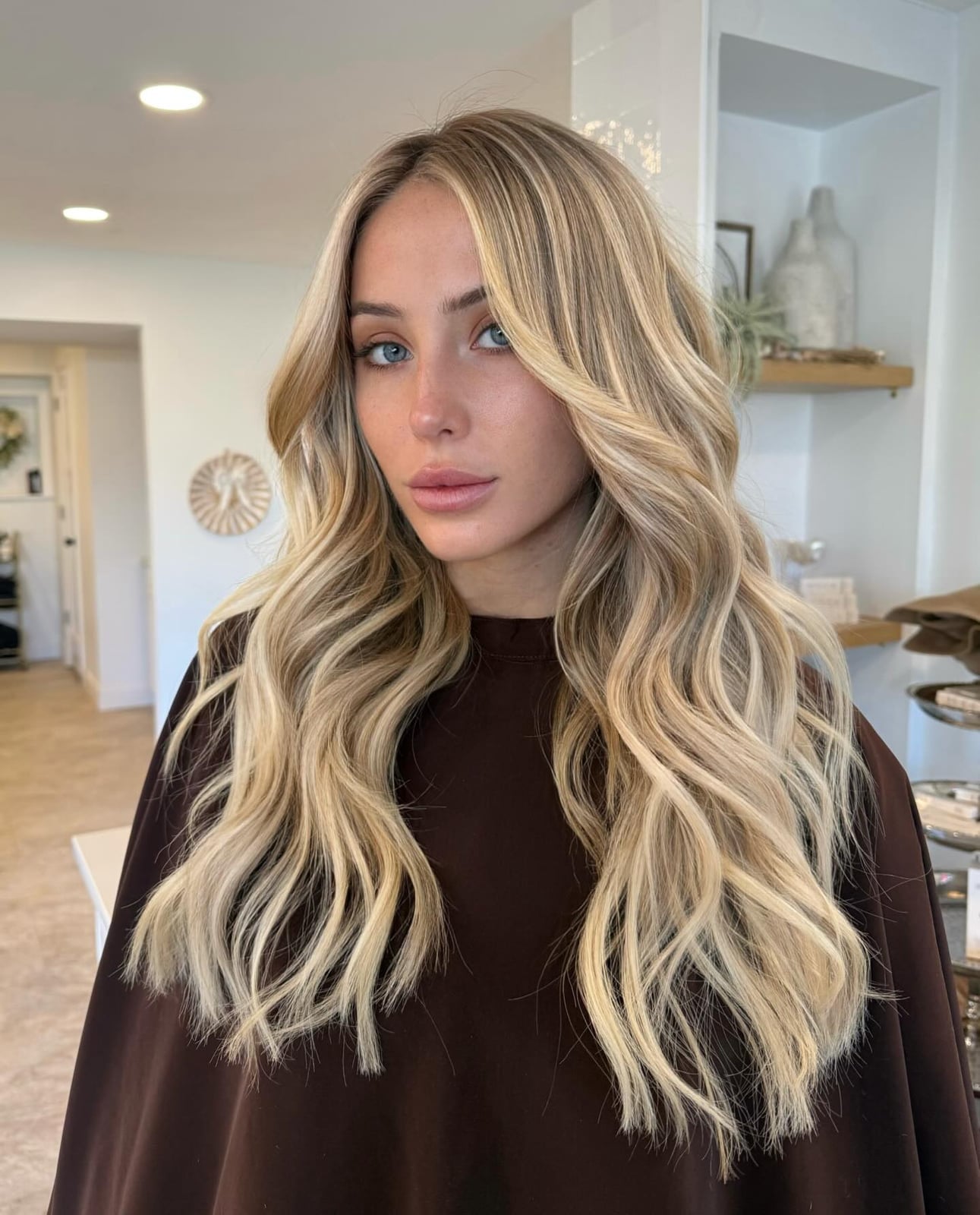
Curtain bangs and long layers frame the face without shortening the overall length, making this a good choice if you want the lightness of blonde highlights but prefer to keep your hair long. The creamy blonde pieces are painted as a balayage, so they sit mostly on the surface layers and the ends, while the base stays a warm bronde. This means the grow-out is soft rather than stripey, and the curtain bangs catch just enough light to brighten the front without needing a full highlight.
Ask your colorist for: long hair, bronde balayage with creamy blonde highlights, curtain bangs. The look works well on thick, wavy hair of long length, with enough density to carry the dimension. A wide-tooth comb is best for detangling, and a trim every eight to ten weeks keeps the layers and bangs on shape.
Collarbone Honey Bronde Balayage
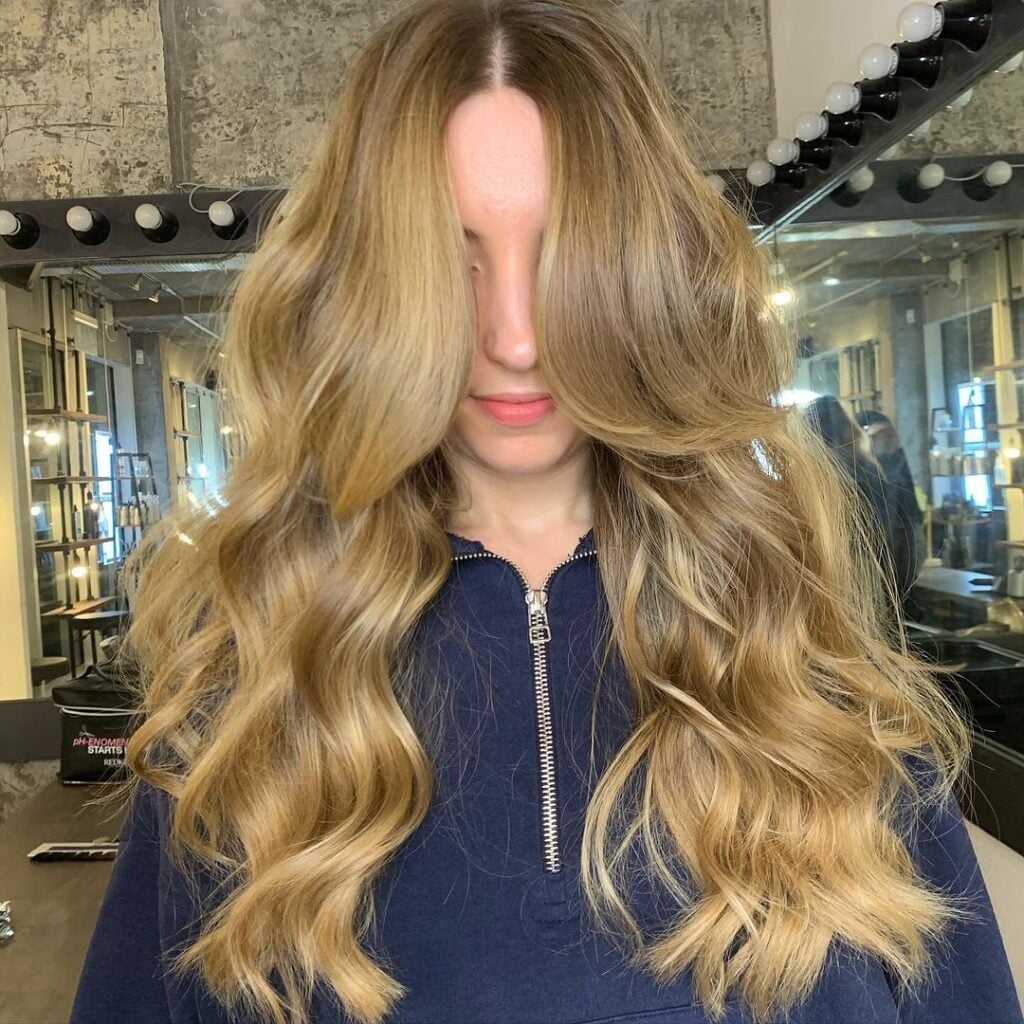
Honey bronde balayage lands somewhere between a warm brown and a golden blonde, with a darker base that keeps the overall tone grounded. On collarbone-length hair, the loose waves let the honey pieces show in different spots, so the color looks dimensional and not flat. The middle part and lack of bangs keep the look clean and low maintenance.
Ask your colorist for: collarbone length, honey bronde balayage with warm tones. A glossing spray can enhance the shine between washes, and the warm tone means a purple shampoo is not necessary. A trim every six to eight weeks keeps the collarbone length precise and the ends healthy.
Final Thoughts
Choose a bronde balayage with cooler ash tones if your base is naturally dark, or warmer honey tones if your base is lighter for a more seamless blend. Embrace the subtle art of bronde balayage for a lived-in, dimensional color.
- Maintain toning treatments every 6-8 weeks to keep blonde tones bright.
- Schedule balayage touch-ups every 10-12 weeks for seamless grow-out.
- Use color-safe shampoo and conditioner to preserve vibrancy.
- Apply heat protectant before styling to maintain hair health.